Krishna & mohsha

UK: Emails – Looking for “Inner” Moksha! (22.8.2026)

Younger people today, perhaps due to the instant gratification the internet entails, seem to lack the ability to be diplomatic and to ration perception. This leads to violence and aggression between groups due to differences in perception. The interior differences spill-out into the material world – and violence ensues. The stone passage in the temple prevents any unnecessary lateral movement of the body – but the individual should also limit the inner movement of the mind. Then it does not matter whether the body “moves” through the gap or not. Remember, Western sentiment does not operate in this temple. Even if the body “dies” – a mind free of the cycle of birth, life, and death – is a mind (and spiritual-being) free of all suffering. Losing the body in this context is viewed as a win-win for the liberated individual. A disembodied spiritual being is now free to roam in any dimension (and epoch of time) whilst being no longer limited to this plane of existence. What, then, is the issue? Well, it seems that a trapped-body results in a confused and frightened mind – which fastens the individual ever-tighter to the cycle of birth. life, and death. Once the Indian Fire Brigade extracts the compressed being from the birth-canal – an enhanced suffering unfolds!

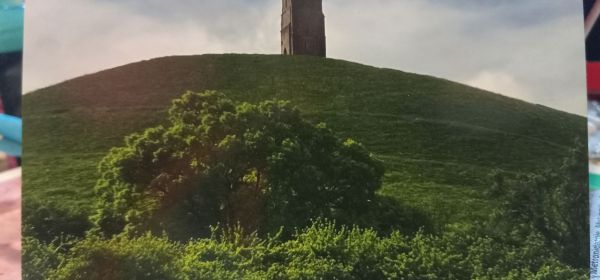
Glastonbury Tor - Spiritual Centre of England!

UK: My Father’s “Celtic Cross” Has Arrived! (27.7.2026)

I ordered this sometime ago from a small business in the UK – who sent me a wonderful postcard of Glastonbury and a bundle of free incense. Although we are modern people – and not religious – we may be described as “spiritual”. The Celtic Cross, I believe, is pre-Christian, and that the Christians may have encountered it amongst the Pagans – and decided to co-opt it into their religion. All the Celtic Cross means is that the seasons (in the Western-world) are separated into four-seasons. The cross represents this – and this only. A cross like this can be found within Viking and Anglo-Saxon cultures. Christians, for centuries, used two-fishes, and an “X” with a “P” (a Greek character) – and various other symbols (Christ is depicted as using a “wand” at one-point) – but never a “croos”.

King Arthur May Well Have Been a Historical Personage!

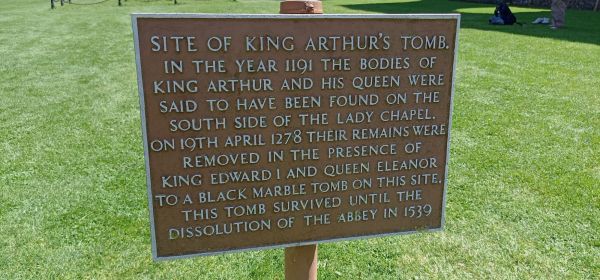
Glastonbury Abbey – King Arthur’s Grave! (29.7.2024)

The Celtic Church (from Egypt) was probably in Britain from the 2nd century CE onwards – with it being destroyed by the incoming Roman Catholic Church by the 11th century CE. Its monastic nature encouraged not only cloistered monks who lived in draughty stone cells – but also Hermits who lived in natural caves or various other meditation cells. Celtic Christianity did not persecute – but encouraged and accommodated the Pagan beliefs of indigenous people. There was a mutual respect between both groups of believers and this explains why leaders like King Arthur would strive to protect the Church – and the Church to honour him in death. This type of Asiatic respect does not require a slavish attachment to belief to be functional. Freedom of belief equates to respect for difference. There are many theories dating King Arthur from the 6th, 7th and 8th centuries, etc, which include many geographical areas associated with his life and death. We favour Tintagel in Cornwall – a place we have visited many times. King Arthur was a wise man, a compassionate man, and a great warrior!

Long Live the 1381 Peasants' Revolt!

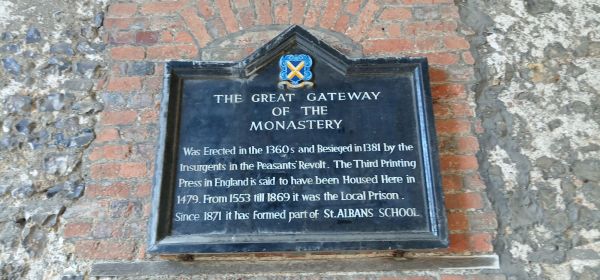
St Albans Abbey: Main-Gate! (28.5.2024)

During 1381 – England came within a hair’s breadth of becoming a People’s Republic! This great effort led by Wat Tyler was eventually defeated through the duplicity of the ruling classes – but its example echoes down through history! The beginnings of this gate stem from the 11th century and the consolidation of the Norman Conquest. This was when Roman Catholicism landed in England as part of the ruling government structure. Prior to this, Celtic Christianity (probably from Egypt) held sway in England, Wales, Scotland and Ireland. What Catholic presence there was prior to 1066 CE was piece-meal and generally lacked any real political power or influence. The differwence between these two forms of Christianity is that although both possessed a monastic tradition – the Celtic version saw the monastery (not the Church) as the centre of society. Furthermore, the Celtic version possessed a tolerant attitude toward non-Christian beliefs – a position rejected by the Catholic variant. With the coming of the politically empowered Catholic Church – Celtic Christianity was all but wiped-out by the 12th century.

Liberating Waverley Abbey! 2024

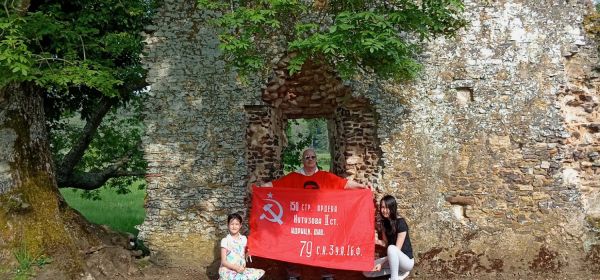
Meditating & Meandering Through the Beautiful Ruins of Waverley Abbey! (11.5.2024)

This was a place where a group of Cistercian monastics (following the Rule of St Benedict) – also known as “Trappist” monks – spent years in silent contemplation of the Bible and their inner minds. The lifestyle of such a monk is designed to “still” the mind and empty the interior of all desire. Only when the mind and body of the monk is “empty” might God grant “grace” and make himself known – but he might not. Either way, once the monk is empty of all desire – the love of Jesus Christ can shrine view. The monk possesses no opinion and so the cycle of each da peacefully unfolds.

1 2 3