
Blogger’s Note: For a number of years in the UK – I regularly lived with a North Indian (high-caste) family who had migrated from the British colony of India and had settled in North London. Indeed, I met their son whilst at college in Hereford during the 1980s – he had been born in India, but his family left for the UK soon after (all citizens born in a British colony were legally “British” from birth and could travel to re-settle in the UK at anytime – only abject poverty stopped this from happening en mass at the time). This family are Gujarati and of the “Khatri” (Warrior and King) caste – the same caste as the Buddha and just one caste down from the dominant Brahmins (Priests). I had the privilege of staying in this family’s house for weeks on end in London – and during that time I lived like an Indian – sleeping on the floor (which I do anyway – a Buddhist habit), drank the delicious spiced “Cha” (tea), and ate food with the fingers of my right-hand at meal-times. I perfected eating rice and curry via the use of freshly made chapattis. Due to the patriarchal nature of Hindu culture – the women (the wife and daughter) – made all the food fresh from scratch, and they “served” the men who sat and ate in-front of them whilst being waited upon. I was told not to interfere or comment as it is their culture. In return, my friend would come and spend weeks at a time in our Devon home, learning what it is to be a modern proletariat (our Chinese-side did not intercede at the time – primarily as I had learned fairly quickly that some Hindus possess a negative attitude toward the “Chinese”). Oneday, a relative was visiting the UK from India – an uncle – who was astonished to encounter myself (a “Gori”) wandering around an Indian home! He was a member of then fledgling “Bharatiya Janata Party” (BJP) – a far-right political movement that sort to combine a distorted Hindu theology with Western far-right political ideology (the BJP ideologues thought this combination was the way to “modernising” India toward the Western economic model – whilst retaining their “Hindu” identity). At the time, no one took this movement seriously – but of course – today the BJP are not only in power, but it has subsequently been re-elected many times. The BJP movement is racist toward non-Hindus (i.e. non-ethnic Indians) – and due to US influence – is extremely “anti-Chinese”. The fact that 80% of India’s population is both illiterate and living in abject poverty is viewed as being both “Karmically” correct and “Willed by Brahma” (or whatever Hindu god is being used to justify social injustice). In other words, the affluence the 20% of high-caste Hindus live within – is justified as being “god-given”. These people – the type of people featured in this article – live in opulent gated communities isolated from the lumpen proletariat that is the general Indian population. Indeed, without being from this 20% – there is no way any Indian could afford to travel to the US and pay to attend a US university – all whilst paying to “live” in the US (including very expensive medical care). In the case featured here – these two individuals could not only afford all this – but they could also afford to hire and pay an expensive law firm to put right the injustice they have suffered. Very few Indian peasants could afford to carry-out a similar legal action in India – against the Indian bourgeoisie – or the BJP authorities that currently administer India. Furthermore, anti-Chinese racism is now a normal part of BJP Indian discourse in India. Whilst privileged Indians are paying to receive money as a legal compensation for the Eurocentric racism they suffer in the West – India racism in India (towards non-Indians) continues unchecked. Herein lies the relative nature of these types of cases that strive to conveniently separate the world into convenient “good” and “bad” dichotomies – these two people must be “good” because they have suffered racism. By their very presence in the US – we know they possess Indian (bourgeois) privilege – but this point is too subtle for the Western media to address. Now, I am not saying these two did not suffer racism – I would argue the racism they suffered was actually far worst than the press is suggesting – but as physical entities, we all carry bodies that are historically “coded” in so many different (and contradictory) ways. We can be a “victim” in one instance – and a “perpetuator of injustice” in another. To give two broad and different versions of this story – I have included the BBC broadcast and the Gulf News interpretation. Interestingly, the BBC mentions Laura Loomer – a White racist Zionist (to convey the “White” US attitude) – whilst also emphasising she is “not a racist”. Gulf News, by way of contrast, actually explains just how bad and sinister the US (White) racism was. When the Indian male stood-up to a white racist woman – she implied that she found him a “physical” threat to her well-being (suggesting an unspoken threat of “rape”). As shocking as all this is, it must be remembered that this is the operation of the bourgeoise and is very much business as usual. It is the “spinning plate” mentality. The bourgeoisie controls the working-class by artificially separating it into antagonistic and violently opposing factions. Whilst the working-class is busy tearing itself apart – it cannot unite and pursue a Socialist Path premised upon solidarity and inherent collective strength. Finally, I would argue that this settlement is relatively small compared to the millions paid-out to African-Americans during similar court cases that punish overt racism. Perhaps this is yet another example of US racism. ACW (22.1.2026)

The Indian couple who won a $200,000 settlement over ‘food racism’ at US university
Cherylann Mollan – Mumbai – 22.1.2026
A dispute that began over heating a dish in a microwave has ended with two Indian students winning a $200,000 settlement from a US university.
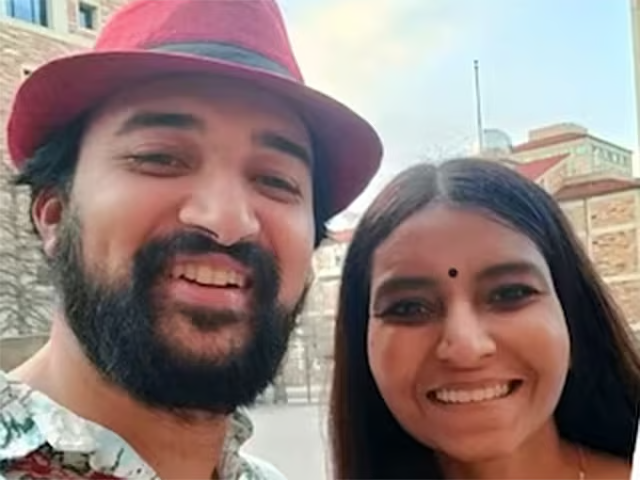
Aditya Prakash and his fiancee, Urmi Bhattacheryya, told the BBC they filed a civil rights lawsuit against the University of Colorado, Boulder, after they faced a series of “microaggressions and retaliatory actions” following the microwave incident.
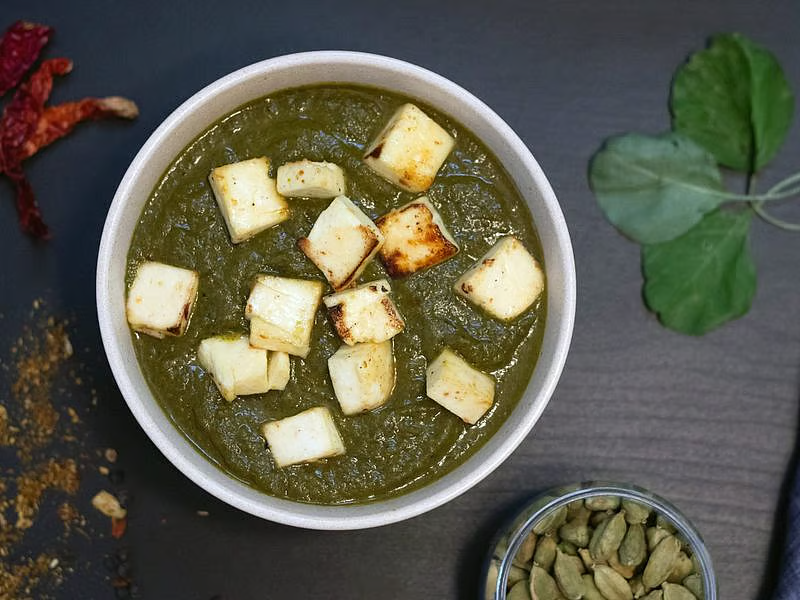
The harassment began, the lawsuit alleged, after a university staff member objected to Prakash heating up his lunch of palak paneer – one of northern India’s most popular dishes, made of pureed spinach and paneer (considered an Indian equivalent of cottage cheese) – in a microwave on campus, because of the way it smelled.
In response to the BBC’s questions, the university said it could not comment on the “specific circumstances” surrounding the students’ claims of discrimination and harassment due to privacy laws, but added it was “committed to fostering an inclusive environment for all students, faculty and staff regardless of national origin, religion, culture and other classes protected under US laws and by university policies”.
“When these allegations arose in 2023, we took them seriously and adhered to established, robust processes to address them, as we do with all claims of discrimination and harassment. We reached an agreement with the students in September [2025] and deny any liability in this case,” the university said.
Prakash said for them, the point of the lawsuit was not the money. “It was about making a point – that there are consequences to discriminating against Indians for their ‘Indianness’.”
The lawsuit has received significant media coverage in India since it was first reported last week, starting a conversation around what many have described as “food racism” in Western countries. Many Indians on social media have shared their own experiences of facing ridicule over their food habits abroad.
Some have also pointed out that discrimination over food is rampant in India as well, where non-vegetarian food is banned in many schools and colleges over perceptions of it being impure or dirty. People from disadvantaged castes and north-eastern states often face bias over their food habits, with some complaining about the smell of the ingredients they use.
And it’s not just Indian or South Asian food – communities from Africa, Latin America and other parts of Asia have also shared their experiences of being shamed over their food habits.
Prakash and Bhattacheryya claim their ordeal began in September 2023. Prakash, a PhD student in the Anthropology Department at the university, was microwaving his lunch of palak paneer when a British staff member allegedly remarked that his food was giving off a “pungent” odour and told him that there was a rule against heating foods with strong odours in that microwave.
Prakash said the rule wasn’t mentioned anywhere and when he later inquired about which foods were considered pungent, he was told that sandwiches were not, while curry was.
Prakash alleged that the exchange was followed by a series of actions by the university which led to him and Bhattacheryya – who was also a PhD student there – losing their research funding, teaching roles and even the PhD advisers they had worked with for months.
In May 2025, Prakash and Bhattacheryya filed a lawsuit against the university, alleging discriminatory treatment and a “pattern of escalating retaliation” against them.
In September, the university settled the lawsuit. Such settlements are usually arrived at to avoid lengthy and expensive court battles for both parties.
According to the terms of the settlement, the university agreed to give the students their degrees but denied all liabilities and banned them from studying or working there in future.
In its statement shared with the BBC, the university added: “CU Boulder’s Anthropology Department has worked to rebuild trust among students, faculty and staff. Among other efforts, department leaders met with graduate students, faculty and staff to listen and discuss changes that best support the department’s efforts to foster an inclusive and supportive environment for all.”
“Individuals who are determined to be responsible for violating university policies preventing discrimination and harassment are held accountable,” it added.
Prakash says that this isn’t his first brush with discrimination over food.
When he was growing up in Italy, his school teachers would often ask him to sit at a separate table during lunch breaks because his classmates found the smell of his food “off-putting”, he says.
“Acts like isolating me from my European classmates or stopping me from using a shared microwave because of how my food smells are how white people control your Indianness and shrink the spaces you can exist in,” he says.
He adds that there is a long history of food being used to put down Indian and other ethnic groups.
“The word ‘curry’ has been conflated with the ‘smell’ of marginalised communities who toil in kitchens and peoples’ homes and has been turned into a pejorative term for ‘Indian’,” he says.
Bhattacheryya says that even someone like former Vice-President Kamala Harris isn’t immune to being insulted over food.
She points to a 2024 social media post by far-right activist Laura Loomer saying that if Harris became president, the White House “will smell like curry”. Loomer has denied being racist.
In the lawsuit, Bhattacheryya also alleged she faced retaliation after she invited Prakash to speak as a guest lecturer on the topic of cultural relativism in her anthropology class. Cultural relativism is the view that no culture is superior or inferior to another as cultural practices of all groups exist within their own cultural context.
During the lecture, Prakash says he shared several examples of food racism he had encountered, including the palak paneer incident, without naming anyone.
Bhattacheryya says that she also faced racist abuse when she posted a thread on X about the “systemic racism” she and Prakash were facing at the university in 2024.
Below the post, there are several comments supporting the couple but also ones that said, “go back to India”, “decolonisation was a mistake” and “it’s not just the food, many of you don’t bathe and we know”.
Prakash and Bhattacheryya said what they wanted from the university was to be heard and understood; for their hurt and pain at being “othered” to be acknowledged and for amends to be made in a meaningful way.
They claim that they never received a meaningful apology from the university. The university did not respond to the BBC’s question about this.
They have since returned to India and say that they might never go back to the US.
“No matter how good you are at what you do, the system is constantly telling you that because of your skin colour or your nationality, you can be sent back any time. The precarity is acute and our experience at the university is a good example of this,” Prakash says.
Palak paneer ‘smell’ dispute: How Indian PhD students won a $200,000 discrimination case in the US
Complaint over food at university spirals into lawsuit — and a landmark settlement
Last updated: January 14, 2026 | 15:40
Stephen N R, Senior Associate Editor – Gulf News
Dubai: What began as a routine lunch break — reheating palak paneer in a shared microwave — ended in a courtroom victory, a $200,000 settlement, and a hard-won affirmation of dignity for two Indian doctoral students in the United States.
For Aditya Prakash and Urmi Bhattacharyya, both PhD scholars at the University of Colorado Boulder, the smell of Indian food became the flashpoint for what they say was systemic discrimination against international students — a fight they ultimately won, though at a personal cost.
The incident dates back to September 5, 2023. Prakash, now 34 and a PhD student in anthropology at the time, was heating his lunch in a departmental microwave when a female staff member approached him and objected to the “smell” of his food.
She told him not to use the microwave to heat his lunch.
“The smell was pungent, she said,” Prakash later recalled. “I told her this was a common space and that I had every right to use it.”
What hurt more than the complaint, he said, was what it represented, multiple Indian media reports said.
“My food is my pride,” Prakash said. “Ideas of what smells good or bad are culturally determined.”
When a facilities staff member later suggested that even reheating broccoli was prohibited because of its odour, Prakash pushed back.
“I asked, how many groups of people do you know who face racism because they eat broccoli?” he said.
From kitchen dispute to academic retaliation
The disagreement didn’t end in the kitchen.
Prakash’s partner, Urmi Bhattacharyya, 35, who was also pursuing a PhD at the university, supported him — and soon found herself drawn into what the couple allege was a pattern of retaliation.
Prakash says he was repeatedly summoned to meetings with senior faculty and accused of making the staff member “feel unsafe”.
Bhattacharyya, meanwhile, was abruptly removed from her teaching assistant role, allegedly without explanation.
Then came the turning point.
The department, they say, refused to confer the master’s degrees that PhD students are typically awarded en route to completing their doctorates — degrees they had already earned.
“That’s when we knew this was no longer about a microwave,” Prakash said. “We decided to seek legal recourse.”
Taking the university to court
In a lawsuit filed in the US District Court for Colorado, Prakash and Bhattacharyya accused the university of creating a hostile academic environment, withholding earned degrees, and discriminating against them based on culture and identity.
The complaint argued that the response to their food was a symptom of deeper systemic bias against international students, particularly those who did not conform to dominant cultural norms.
In September 2025, the University of Colorado Boulder agreed to a $200,000 civil rights settlement (about ₹1.8 crore), formally ending the case.
The university also conferred the master’s degrees that had been withheld.
However, the settlement included a condition: The couple would be barred from future enrolment or employment at the university.
The university has said it agreed to the settlement without admitting liability, adding that it has procedures in place to address allegations of discrimination and harassment.
‘I fought for the freedom to eat what I want’
Earlier this month, Bhattacharyya shared the outcome on Instagram, where her post quickly went viral.
“This year, I fought a fight,” she wrote. “A fight for the freedom to eat what I want and to protest at will — no matter the colour of my skin, my ethnic extraction, or my unflinchingly unchanged Indian accent.”
She spoke of the toll the ordeal took.
“I endured startling health reversals I’d never encountered before,” she wrote. “My self-respect and confidence — things I had always jealously safeguarded — were steadily chipped away.”
But she refused to frame the story as one of defeat.
“I will not be humbled by injustices. I will not be silent. I will certainly kowtow to no one.”
The couple have since returned to India.
A moment that struck a chord
As news of the settlement spread, social media users flooded the comments with messages of support — and humour.
One user wrote that he planned to celebrate with “more palak paneer.”
Another said: “This is what raising your voice the right way looks like.”
“Palak paneer ka sharp smell nahi aaya toh kya khaaya?” one Instagram user joked. “That’s aroma for us.”
Beyond the memes, many said the case resonated because it touched on a familiar experience for immigrants and international students — the subtle policing of culture, food and identity.
For Prakash and Bhattacharyya, the case was never just about compensation.
“It was about dignity,” Prakash said. “And about saying that our culture doesn’t need permission to exist.”
Stephen N R
Senior Associate Editor
A Senior Associate Editor with more than 30 years in the media, Stephen N.R. curates, edits and publishes impactful stories for Gulf News — both in print and online — focusing on Middle East politics, student issues and explainers on global topics. Stephen has spent most of his career in journalism, working behind the scenes — shaping headlines, editing copy and putting together newspaper pages with precision. For the past many years, he has brought that same dedication to the Gulf News digital team, where he curates stories, crafts explainers and helps keep both the web and print editions sharp and engaging.
 SANGHA KOMMUNE (SSR)