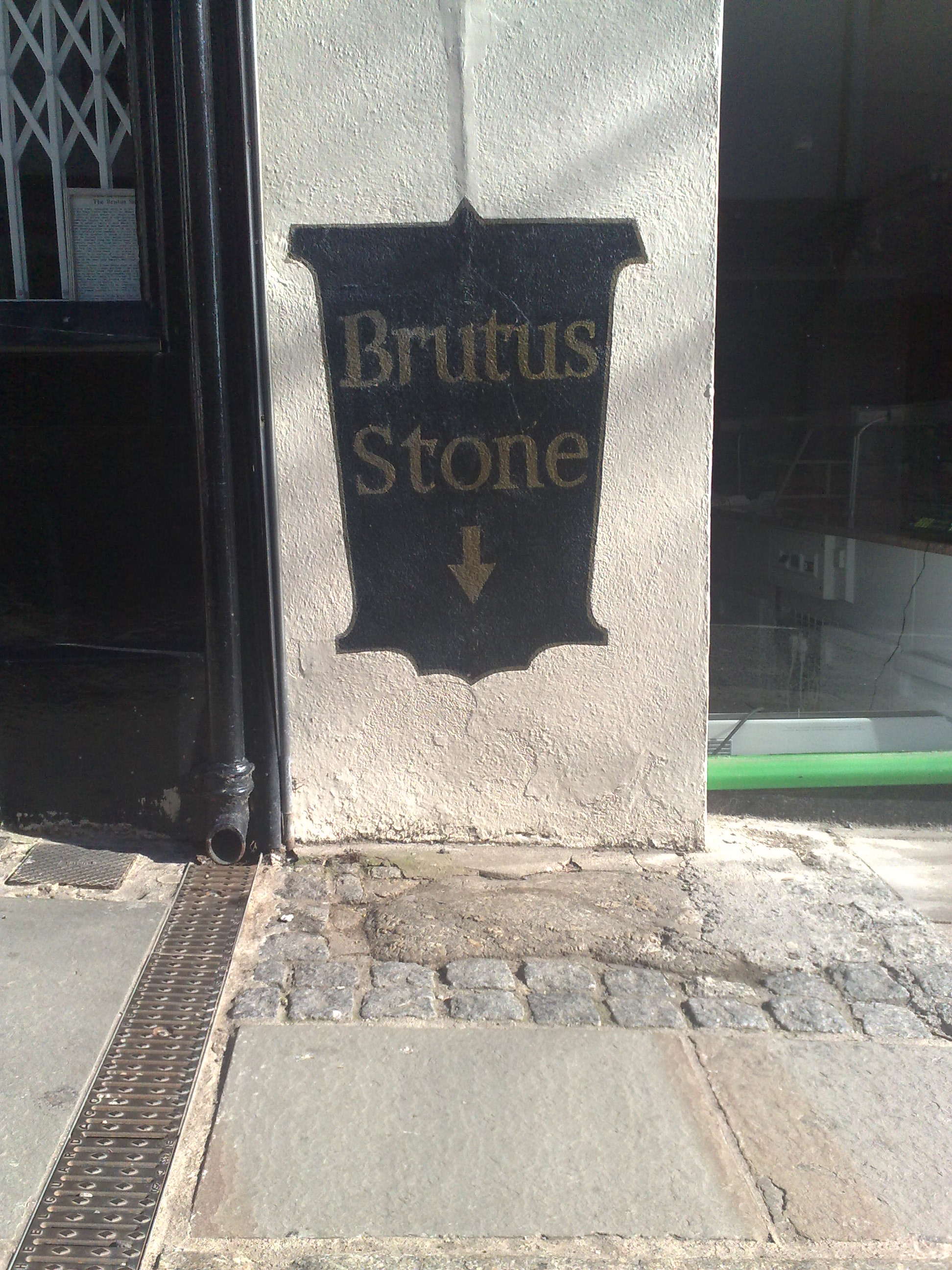
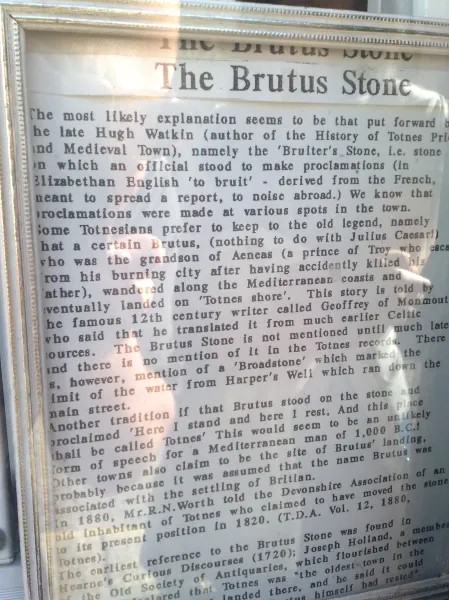
Blogger’s Note: If I remember my Ancient Greek – the Greeks laid siege to the walled city of Troy (an ongoing story relayed in Homer’s Iliad) but could not gain entry to the city – or decisively defeat the Troy military in the field. A ruse was formulated (by the besieging Greeks) which involved their military appearing to “leave” the beach-area and retreat in their ships back to Greece proper. Meanwhile, the Greeks left a gift in the shape of a large, ornate wooden-horse. Perhaps this had some type of religious import. The story is that a unit of crack Greek troops were hiding in the belly of the horse. The Trojans, thinking they had won, wheeled the horse into the city through the gates they had opened – gates the Greeks could not penetrate – or destroy in combat. Remember, the Trojans wwre suffering from starvation, thirst and illness due to the siege – the Trojans were defiant – but were not in a good physical state. The “shock” of Greeks being “inside” the city walls – and the gates being forcibly thrown-open to the returning Greek forces – led to a massacre of the Trojan population. Men, women, and children were struck-down without mercy. The remaining Trojan warriors formed a protective cordon around their main (central) temple – but the Greeks soon broke through their weakened and depleted ranks. For quite some time, it was academically assumed that Troy was a fictional place – and the above story simply imagined. Since then, the ruins of Troy have been discovered in modern Turkey (whiich seems to be spelling its name “Türkiye” these days), proving it historical (material) existence. Archaeologists have confirmed that Troy was abandoned during the Bronze Age – which corelates with the Iliad story. Now, the latest research suggests that the city was empty for 80-90 years before being resettled by Greeks – who constructed their buildings on the stone-work already in situ. This appears how the Greeks conquered the Anatolian people of Troy and turned it into the Greek colony that would become “Byzantine”. Of course, the Muslims began their military invasion during the 11th century – and are still there today. I visited Türkiye in the 1990s and was astonished by the poverty in the countryside. The ruins of Troy, and the subsequent Greek and Roman colonies serve as a basis for the Greek tourist industry. I am harsh in my criticism of the Turk government (they supported Germany against my English ancestors) – but I only encountered kindness and concern from the ordinary Turkish people – the workers. I went to a market one day, and there was an old, blind man who made a modest (meagre) living by reciting the Holy Qur’an on a daily basis – entirely from memory. Finally, in the ancient South Devon town of “Totnes” (a place we love) there is an ancient story that some Trojans who survived the sacking of Troy took to the sea in boats – and made to the English south coast. Thereafter, the Trojan named “Brutus” became “King” of the British Celts! Interestingly, the 3rd century CE philosopher – Plotinus – make it to modern Antakya in South Türkiye (formerly Antioch) – although this is around 600 South of Troy. ACW (11.9.2026)
Source: Xinhua Editor: huaxia 2026-09-10
ISTANBUL, Sept. 10 (Xinhua) — Archaeologists excavating the ancient city of Troy in northwestern Türkiye’s Canakkale province have uncovered the remains of an agora — a public marketplace and gathering place — believed to date back about 2,800 years.
Speaking to reporters on Thursday, Reyhan Korpe, deputy head of the excavations, said the discovery proves Troy wasn’t permanently abandoned after the Bronze Age, solving a long-standing puzzle about how the legendary city became the later Greek city of Ilion.
Korpe said the discovery is part of a dedicated research initiative launched in 2014 to map the connection between Bronze Age Troy and the subsequent city of Ilion.
Archaeological findings show that after the civilization collapsed, the site was left empty for only 80-90 years before new settlers arrived. Rather than starting over, they built their homes atop the ancient stone walls and continued using the old public square as an agora.
Traditionally associated with the legendary city described in Homer’s Iliad, Troy has been designated a UNESCO World Heritage Site since 1998.