
Blogger’s Note: I have added the single comment this article has a) attracted, and/or b) been filtered-out and included by the paper (who knows?). Although the readership does not possess all the details that the Tribunal considered – The Sutton Guardian thinks it is reasonable to include a comment from an obvious right-wing troll. Presumably the “presence” of a disabled child would be considered “disruptive” (regardless of disability or behaviour) – or perhaps the a “wheelchair” would be considered “disruptive” because able-bodied students have to “make adjustments” by walking around it? Or, the school needs to “ensure” that the alleyways and corridors are “wide-enough”? The far-right speculation is endless and it is interesting that Sutton Guardian feels the need to share it with the general readership. This is the same newspaper that thinks that supporting Neo-Nazi Ukraine is a good idea and broadcasts all kinds of pro-Kyiv propaganda. The latest batch involves how well Ukrainian teenagers are doing in Sutton – after their newly-arrived families were given every advantage. ACW (23.8.2026)
By Emily Davison – Multimedia Reporter – 22nd July
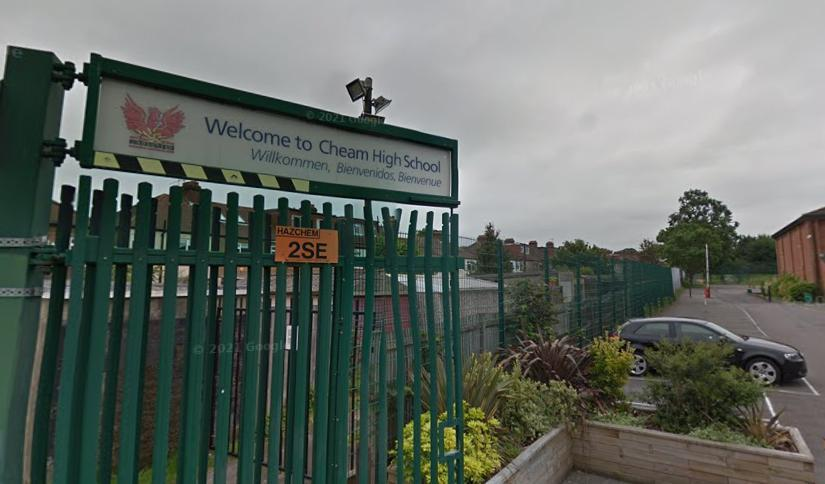
A Sutton school is at the centre of a landmark tribunal ruling which could have major implications for how disabled pupils are disciplined in schools across England.
The Upper Tribunal judgment arose from a legal challenge involving Cheam High School after the parent of a pupil with autism and ADHD claimed the school had failed to make reasonable adjustments when applying its behaviour policy.
According to tribunal documents, the pupil received 41 detentions, several fixed-term exclusions and a permanent exclusion.
In a significant ruling, the tribunal found that duties under the Equality Act 2010 extend to the way behaviour policies are applied, including detentions, disciplinary sanctions and exclusions.
The judgment means schools must consider whether reasonable adjustments are needed for disabled pupils when making decisions about punishment and discipline.
Judge Holly Stout said the duty to make reasonable adjustments applies to “a school’s behaviour policy and its application, including sanctions up to permanent exclusion”, in a decision that education lawyers say could have national significance.
The case centred on a pupil at Cheam High School in Sutton, identified only as C due to a tribunal anonymity order. C, who has diagnoses of autism and ADHD and an Education, Health and Care Plan (EHCP), was the subject of a series of disciplinary measures by the school.
Cheam High School has been at the centre of a landmark legal case which could have major implications for how schools discipline disabled pupils across the country.
The case was brought by the mother of a pupil, known only as C, who has autism and ADHD.
According to tribunal documents, the boy received 41 detentions, several fixed-term exclusions and was later permanently excluded from the Sutton school.
C’s mother argued that the school failed to make reasonable adjustments for his disabilities when applying its behaviour policy.
The dispute eventually reached the Upper Tribunal after an earlier tribunal ruled it could not consider claims that the school’s behaviour policy should have been adapted for a disabled pupil.
However, Upper Tribunal Judge Holly Stout found that approach was wrong, ruling that schools’ duties under the Equality Act 2010 can extend to behaviour policies, disciplinary sanctions and exclusions.
In her judgment, she wrote: “The duty to make reasonable adjustments applies to a school’s behaviour policy and its application, including sanctions up to permanent exclusion”.
Judge Stout also found that disability considerations cannot be separated from decisions about excluding pupils.
The ruling states that exclusion is “a decision not to provide education and to exclude the pupil from the benefit, facility or service of attending school”, meaning schools may be required to consider reasonable adjustments before imposing such sanctions on disabled children.
While the appeal did not overturn the original outcome of the case on procedural grounds, the judgment is being seen as a significant clarification of the law and could influence how schools in Sutton, Croydon and across England apply their behaviour policies in future.
Sutton Guardian has permitted “1” (unquestioned) comment to be added to this article – which is inherently right-wing or far-right in nature:
29 days ago
Just because a child has a disability, that does not mean that he or she has the right to disrupt lessons and ruin the education of other pupils. It is extremely selfish to expect others to put up with your ‘disability’.
In this case, the disruptive child should be removed to a ‘special’ school where the staff can better deal with such uncivilised behaviour.’

