Blogger’s Note: It is incredible to consider that the Qin State (situated to the North-West of China) existed between 897-221 BCE – and that the culture of the Qin spread over most of China (except Fujian) between 221-206 BCE – forming the now famous “Qin Dynasty” (giving China its first emperor – and eventually the Terracotta Army that stands guard around his tomb). This important archaeological find dates specifically between 475-221 BCE – when the Qin State proper and the Warring States Period coincided – a time which saw the victorious Qin Armies conquer and destroy the other six competing “States” (countries) – and thus achieve Qin hegemony. ACW (2.2.2026)
2026-08-01 Ecns.cn Editor:Mo Honge
(ECNS)— Researchers have identified traces of a cereal-based alcoholic beverage dating back approximately 2,300 years in a sealed bronze vessel unearthed in northwest China’s Ningxia Hui Autonomous Region.
The liquid is the best-preserved alcoholic sample from the Warring States period (475–221 BC) publicly reported to date. The discovery fills an important gap in the archaeological record of brewing practices in Ningxia during that era.
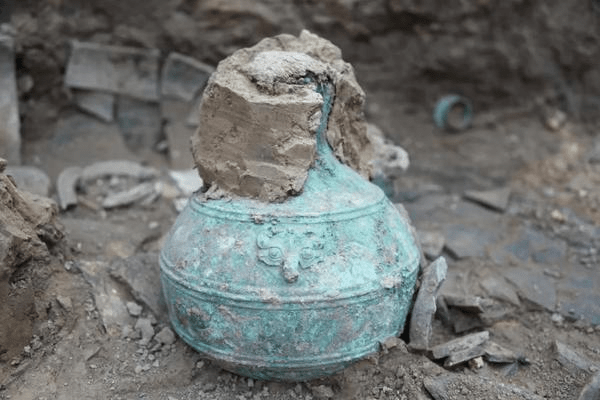
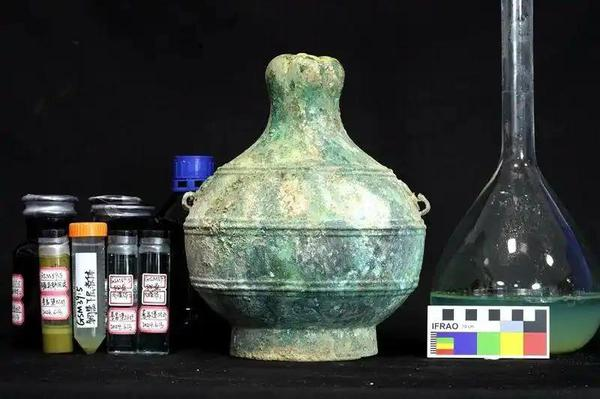
The vessel was excavated in 2024 from the Shanjiabao cemetery in Guyuan City, where a multidisciplinary research team later discovered that liquid had been preserved inside a garlic-shaped bronze flask. The site is the largest late Warring States burial ground associated with Qin culture to have been excavated in Ningxia.
The flask was recovered from Tomb M39, a vertical earthen-pit tomb located at the northern end of the cemetery. Its opening had been tightly sealed with layers of textile and mud, helping to preserve approximately 3.74 litres of liquid. The vessel’s distinctive garlic-shaped neck is a characteristic feature of Qin culture.
Researchers from the Ningxia Institute of Cultural Relics and Archaeology and Northwest University conducted a comprehensive scientific analysis of the liquid. They identified 24 classes of organic compounds, including organic acids and their derivatives.
The distribution of these acids closely resembled that found in artificially aged huangjiu, a traditional Chinese fermented grain wine, indicating that the liquid had been deliberately brewed rather than formed through natural processes.
The findings provide evidence that people in the Qin state had already developed cereal fermentation and brewing techniques during the Warring States period.
The discovery also offers valuable physical evidence for research into agricultural development, dietary customs and the evolution of craftsmanship in pre-Qin China. It further highlights the country’s long history of producing grain-based alcoholic beverages.
The findings have been published in the international academic Journal of Archaeological Science: Reports. Archaeological excavation and related research at the Shanjiabao cemetery remain ongoing.
(By Helen Mo, intern Wu Jingjing)
 SANGHA KOMMUNE (SSR)