
Blogger’s Note: Blimey, not only have these people been subject to European colonisation and racism – but when it comes to academically studying this past in an objective sense – the UK knowingly inflicts further suffering by offering “Cambridge” as a contributing University. I can only hope that Oxford is lurking somewhere in the background of this list. Joking aside – wherever Europeans have gone, they have taken the bizarre attitude with them that “no history” existed in any part of the world until “they” stepped-out onto it. I suppose when they arrived in Egypt – they just looked the “other way” to avoid the pyramids and sphynx. To be fair, the early Greeks were astonished by Egypt’s culture – but I am talking about the last 500-years of Western Europe and its antics. I was surprised to learn that King Henry VIII was fond of spicy cooking and via his Portuguese and Spanish royal connections – he invited “Black” cooks to live and work in England. Many stayed and died here – and their graves are known. Furthermore, Henry liked the Black musicians and Entertainers and would invite them. This was all prior to the English perfecting their long-distance shipbuilding and “heading yonder”. Anyway, the Americas possessed many incredible civilisations replete with huge cities, thriving towns, and sedate villages. Indeed, many had naturally collapsed and disappeared long before the Europeans arrived (the English were relative late comers to the Americas – behind the Portuguese and Spanish – despite ironically being “closer” to the “New World” than either of these two Catholic protagonists). ACW (13.7.2026)
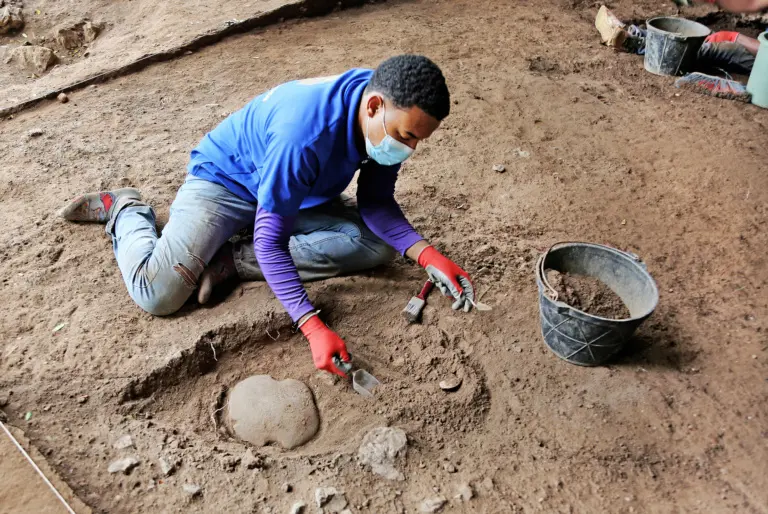
The Dominican Republic will host the XXXI International Congress of Caribbean Archaeology from this Monday until next Saturday, July 18. This “main scientific meeting of the region” is dedicated to the study of the past of Caribbean peoples and will bring together 237 researchers from 23 countries in America and Europe.
During these sessions, specialists from universities, museums, and research centers from both continents will present 97 papers distributed in 15 thematic symposia, in which the “most recent advances” in archaeology in a variety of fields will be exhibited, explained this Sunday the Academy of Sciences of the Dominican Republic, organizer of the congress, in a press release.
There will be presentations on innovations in disciplines such as bioarchaeology, ancient DNA, archaeozoology, archaeobotanical, underwater archaeology, photogrammetry and three-dimensional modelling, ethnoarchaeology, colonial archaeology, rock art, physical anthropology, cultural heritage, and community participation.
Among the main scientific axes are research on the first inhabitants of the Caribbean, genetics of ancient populations, human mobility, archaeology of Afro-descendant communities, underwater cultural heritage, and technologies applied to archaeological documentation.
Also, studies on agricultural societies, European colonization processes, and “new perspectives” for the conservation and dissemination of archaeological heritage.
As part of the academic agenda, there will also be book presentations, audiovisual screenings, specialized visits to museums, a scientific day at the León Centre in Santiago de los Caballeros (north of the country), and an academic event at the Academy of Sciences of the Dominican Republic (Santo Domingo).
An excursion to the archaeological sites of the Cabo Samaná Natural Monument (northeast) will also be carried out with the purpose of “showing participants part of the Dominican archaeological and cultural heritage.”
The programme will feature the participation of researchers affiliated with “renowned” international academic institutions, including Harvard, Copenhagen, Yale, Cambridge, and Leiden universities, as well as the Max Planck Institute for Evolutionary Anthropology and the National Centre for Scientific Research of France. In addition to universities and scientific centres from Puerto Rico, Cuba, Panama, Colombia, and other countries in the region.
The official opening ceremony of the congress is scheduled for 10:00 local time (14:00 GMT) this Monday, at the Cultural Centre of the Dominican Institute of Telecommunications (Indotel), on Isabel La Católica Street, in the Colonial City of Santo Domingo.
22 Mexican Archaeological Pieces to Be Repatriated From the US

