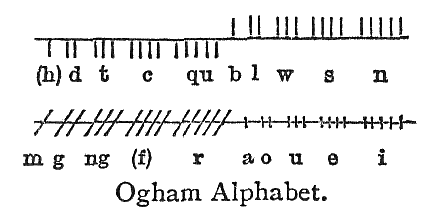
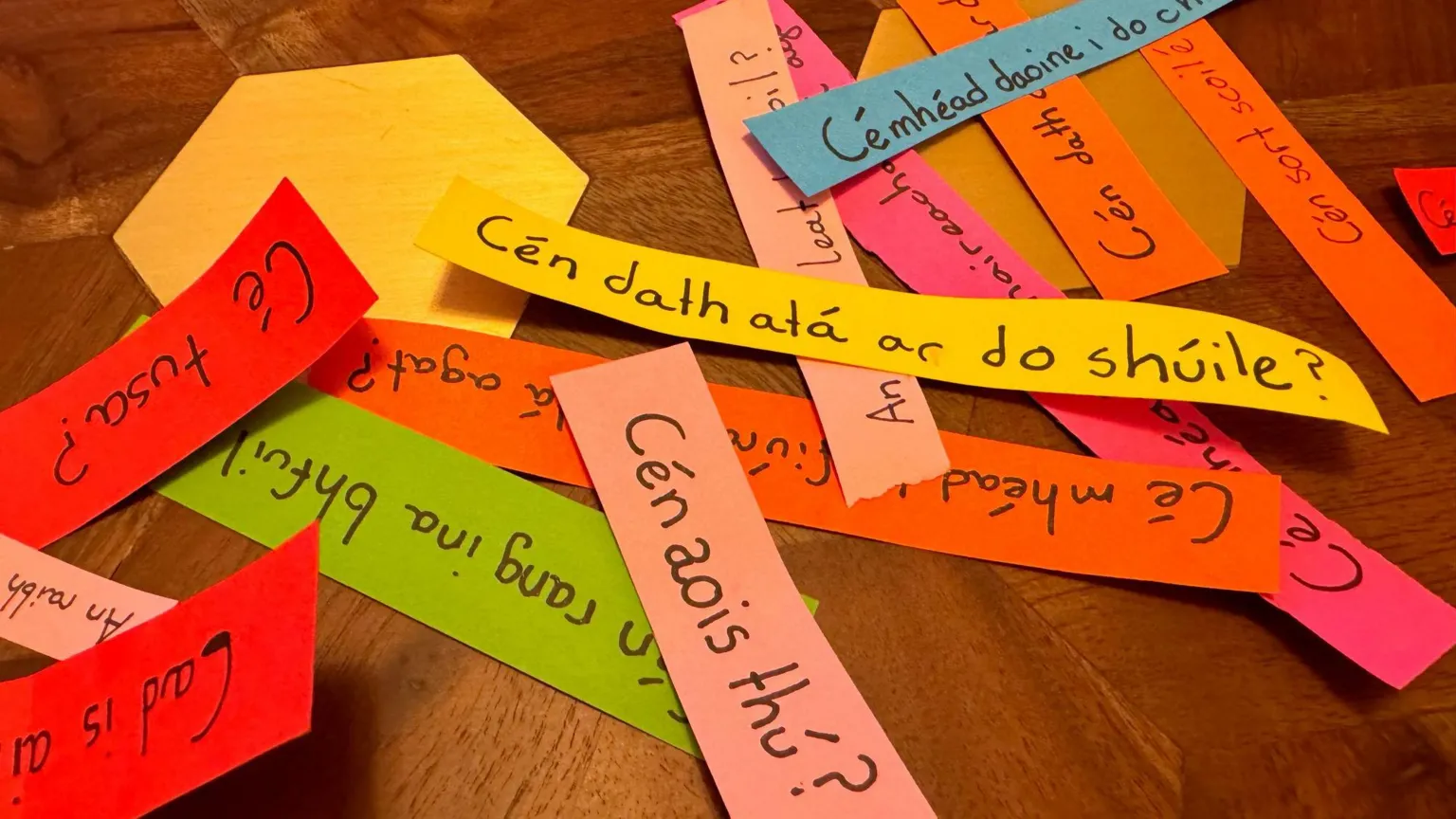
Blogger’s Note: The BBC is unreliable in its reporting and is banned from China for falsely reporting racially motivated news articles – following US dictates – accusing the PRC of Islamophobic policies. The lunacy of this incorrect position can be summed-up by the BBC’s “silence” regarding the Israeli genocide in Gaza, and the damage being done by the US-Israeli terrorist attacks on Iran – which are ongoing. The UK – the government that forcibly collects license fees from a population whose viewpoints it ignores to pay for the BBC – not only arms Israel, but allows US warplanes to fly from UK bases to bomb Iran. On top of this, the RAF has been used to support Israel by bombing Yemen – and this is just the stuff that is readily available on alternative media. The purpose of the mainstream press is to distract and mislead – whilst pretending nothing much is going on in the world that it needs to be talked about – at least not to us. I believe this is a fluff-piece designed to do just that. Eire, despite its outspoken left-wing politicians, has a very real problem with racism amongst the young. This is ironic for a people once thought “not to be White”. This partly stems from misinformation from the far-right which falsely claims the Irish were sent to the Americas as slaves – just like the Africans – implying that if the Irish are viewed as “White”, then not all slaves were “Black” (and that Black people possess “no special claim to victimhood”). The Irish, along with thousands of Scottish, Welsh, and English working-class migrants – “chose” to purchase their voyage to the Americas via a personal trade agreement. In return for bed and board these “indentured” labourers would agree to “work-off” the cost of their passage fair to an employer – until their labour had been paid-off and the debt cleared. The employer would cloth, feed, and house such workers. Now, as the British also sent these indentured labourers to the West Indies, it was often the case that they might be kept near to the slaves from Africa – and regularly mix with such people – but the African slave had no contract and recourse to legal authority in their own right (as chattel, they were continuously bought and sold until they died – and could never be free). This situation even persisted in North America after 1776. My grandmother was from Eire and was brought-up speaking Irish (Gaelic) when young (at home and amongst the family). She was also taught English at school by brutal school-masters. The children were beaten until they learned the English words – and this was by Irish teachers. As far as I am aware, Irish is a spoken language that was first written down in Ogham (lines pressed into the edges of clay tablets before firing – or engraved along the edges of standing stones – and known as the tree alphabet). Later, the sounds of Irish were transliterated into the received Greco-Roman alphabet – but this development was a contrivance – so that the invading English could understand what the Irish were saying. It would seem that the modern Irish learn to speak their language as normal – but now write it down using a foreign alphabet (English). Not only is this the case, but it would seem that a “French-like” accent (termed a “fada”) is used in modern Irish literature – such as over an “á” and other letters. Adding this mark – or taking it away – alters the sound of words and therefore the meaning of words. I suppose it amounts to “context” – but regarding literature (that is – the written word of modern Irish). As I cannot speak, read, or write “Irish” – I’m busking at the moment. My claim to fame is that my paternal grandmother (Gladys Kilmurray) could speak Irish – and that when her family members came to the UK to attend her funeral – they spoke Gaelic to one another and English to us. They seemed surprised that we could not speak Irish – but Nana was always reluctant to speak it in England due to the racism she used to receive for being “Irish”. Now, the racists would have believe the Irish have been “White” all along. ACW (6.4.2026)
Barry O’Connor, Lucy Carlinand Nalina Eggert, BBC News NI
Between Kneecap, CMAT’s dual-language single Euro-Country and Jessie Buckley’s closing words when accepting her Oscar, it feels like the Irish language is having a moment.
Its renaissance in the cultural world has made it more prominent far beyond Ireland’s borders, with cúpla focal – a few words – being heard on streets and in classrooms as far away as New York and Sydney.
But inside the Republic of Ireland, where Irish has been the first official language (English is second) for nearly 90 years, there is a problem.
The fada, the small, skyward pointing accent placed on vowels, and the inability in recent years of some of Ireland’s biggest companies – such as Aer Lingus – to recognise it.
The fada changes the pronunciation of words but also, crucially, their meaning.
Believe us when we say that you wouldn’t want a slice of caca instead of cáca.
The fade on fadas has even led one Irish MEP to say that nobody ever spells his name wrong in Brussels, Strasbourg or the UK, but they frequently do in Dublin.
So what’s going on? Does the reluctance to embrace the fada point to something deeper with how Ireland grapples with its own language?
What’s in a fada?
Labour MEP Aodhán Ó Ríordáin is one of those who are fed up with it.
Abroad, people spell his name correctly because “they copy and paste the name that I provide for them”.
But in Dublin, he was recently provided with a nameplate that said Aodhan O’Riordain.
“The one country that I have a difficulty with the spelling of my name, including the fadas, is Ireland. And I find that deeply, deeply infuriating.
“The corporate sector, state agencies, and that should be an awful lot more receptive to people being able to use a proper form of their name.”
He thinks the island has traditionally “had a difficult relationship with the Irish language”.
Academic Caoimhín de Barra agrees.
The historian and author said that when Ireland was set up as an independent state in 1922, “its raison d’être was that Ireland was different – different language different culture, different state”.
Irish was once spoken right across the island but by the 19th Century had become the minority language, superseded by English.
That process was a long one kicked off by the Anglo-Norman invasion almost 900 years ago and featured a number of events and factors – plantation, economic upheaval, the Famine – that fill many a history module syllabus.
But when it came to reviving the language, de Barra argues that the fledgling state did not do enough.
“They set it up in schools and didn’t do much more than that but language shift is more complicated.
“The Irish state assumed that the people would revive the language, the Irish people assumed that the government would revive the language – and nobody revived the language.”
This translates to the fadas-on-forms issue, he said, as an “indifference” that has often been “the position of the government”.
Now, he added: “We are part of the English-speaking world whether we like it or not, and all the kind of indifference and sometimes hostility to foreign languages comes out so if there’s an accent it just gets left off.”
Aer Lingus and the fada-less forms
That “indifference” has perhaps manifested itself most in recent years with two of Ireland’s flagship companies – Bank of Ireland and national airline Aer Lingus – both in a situation where their IT systems cannot process fadas.
Last month, campaigners blasted Aer Lingus as “ludicrous” and “insulting” for the issue.
So what actually happens when you try to book an Aer Lingus flight with a fada in your name? Computer says no?
Well, actually, computer says: “Name may only contain letters, spaces, apostrophes, and hyphens.”
In a statement, Aer Lingus apologised to customers and said its booking technology was developed in the 1960s but it is “considering implementing reasonable steps to address this issue… as part of future systems development”.
BBC News NI checked other airlines’ booking websites including British Airways and KLM and found it was possible to book with a name including a fada.
Another politician said more people will be facing this problem in future.
Aengus Ó Snodaigh, Sinn Féin’s spokesperson for the Irish language, said that as interest in the ancestral tongue grows, more people are “changing their name back” from English to Irish.
“It’s unique to yourself, your name, in many cases and the state should recognise that, and especially when it’s so easy to do that in this day and age,” he said.
So what can be done about it?
A recent law change means Irish public bodies now have to record names and addresses in full including fadas.
Ó Snodaigh would like it to go further – he wants private companies to be covered too, and has proposed a bill in the Dáil (Irish parliament) to protect accuracy in the use of Irish names and addresses.
He told BBC News NI that it would allow people to go to an ombudsman and complain if public bodies do not facilitate the use of the fada in their name.
The proposed bill would take effect from 1 January 2030, giving companies time to change their computer systems.
Ó Snodaigh said there had been “a reluctance” in the past “for some state bodies to be champions of the Irish language” and there is “still a reluctance by some”.
And Ó Ríordáin wants to encourage people to speak up.
“I think people with Irish names or a fada over a letter in their name shouldn’t be ashamed to say that ‘actually you’ve misspelt my name there’. It’s something I’m getting a little bit better at.”
‘It seems trendy to learn and speak Irish’
Even in Northern Ireland, where Irish has only been an official language for a few years, pupils of all ages are getting interested in learning.
Figures from the Department of Education in Northern Ireland show there has been a rise of almost 400% over the past 25 years in the number of pupils in Irish-language education.
And while most people trying their hand at learning will be native English speakers, teacher Alexandra Galbraith they should not be put off by the fadas.
The fada is “an incredibly important part of the language syntax as a whole”, she said, but it is still “a completely approachable language”.
“The biggest mistake I’ve seen people make is assuming they’ll pick it up as easily as they would another Latin-based language, and becoming frustrated with themselves when they aren’t as far along as they’d like to be,” Galbraith said.
“Growing up people would’ve asked me what I was going to do with a ‘dying language’ but I think it’s clear perceptions of the language have changed.
“It seems trendy at the minute to learn or speak Irish.
“It’s a joy and a privilege to be able to teach it to those who maybe have never had the opportunity to learn before.”
 SANGHA KOMMUNE (SSR)