1745 Coaching Stone - Original 18th Century GPS!

Sutton: 18th Century Coaching-Stone – the Original GPS! (13.4.2026)

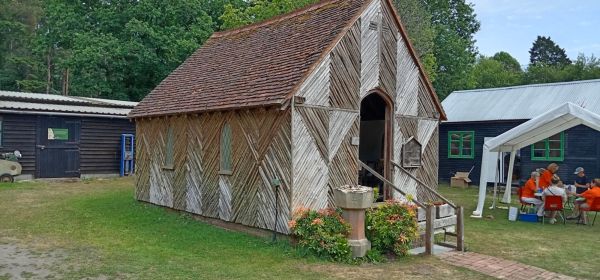
I may well have written about the old coaching-stones scattered around Sutton and Cheam – I now of two – but was unaware of the date they were established. Basically, these devices informed travellers on foot, horse, or carriage – how many miles it was from where they were to the centre of London. Coachmen could either read the inscription engraved on the stone – or was taught what the stone said and remembered where it was when driving on the road – either way – these coaching-stones served as the original GPS system for travel. I think the Roman established something similar thousands of years ago – so the concept was not new in 1745. What I did not realise is that these stones have now received official recognition of being historically important monuments worthy of preservation and protection. The iron-bars and plaque are the new editions which I only saw when taking a rare walk through Sutton.

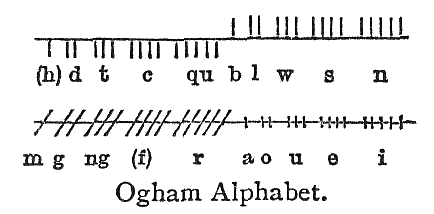
How Ogham Was Aligned with the Greci-Roman Alphabet.

Eire: Speaking [and Writing] the Irish Tongue! (6.4.2026)

She was also taught English at school by brutal school-masters. The children were beaten until they learned the English words – and this was by Irish teachers. As far as I am aware, Irish is a spoken language that was first written down in Ogham (lines pressed into the edges of clay tablets before firing – or engraved along the edges of standing stones – and known as the tree alphabet). Later, the sounds of Irish were transliterated into the received Greco-Roman alphabet – but this development was a contrivance – so that the invading English could understand what the Irish were saying. It would seem that the modern Irish learn to speak their language as normal – but now write it down using a foreign alphabet (English). Not only is this the case, but it would seem that a “French-like” accent (termed a “fada”) is used in modern Irish literature – such as over an “á” and other letters. Adding this mark – or taking it away – alters the sound of words and therefore the meaning of words. I suppose it amounts to “context” – but regarding literature (that is – the written word of modern Irish). As I cannot speak, read, or write “Irish” – I’m busking at the moment. My claim to fame is that my paternal grandmother (Gladys Kilmurray) could speak Irish – and that when her family members came to the UK to attend her funeral – they spoke Gaelic to one another and English to us. They seemed surprised that we could not speak Irish – but Nana was always reluctant to speak it in England due to the racism she used to receive for being “Irish”. Now, the racists would have believe the Irish have been “White” all along.

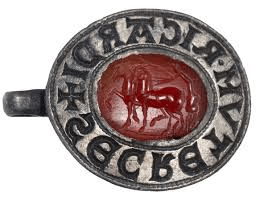
The finely-carved Roman gemstone shows a charioteer standing on a racing chariot, with whip in hand, urging on two high-stepping horses

England: Latin Medieval Seal – Reading “+SECRETVM . RICARDI” [with Roman Gem-Stone] Unearthed! (2.2.2026)

The inscription – which reads +SECRETVM . RICARDI – shows the seal was created specifically for a man called Richard.

He would have used it to make a mark in hot wax to seal his letters and documents.

Richard appears to have specifically chosen the carved gemstone, known as an intaglio – possibly as a way of showing he had an understanding of the Classical world, according to Miss Rogerson.

She said: “It definitely would have been an indicator of the owner’s social status as a way of saying, ‘I have the means of obtaining something from a far gone time and place’ and indicated they were quite important – or saw themselves as quite important.”

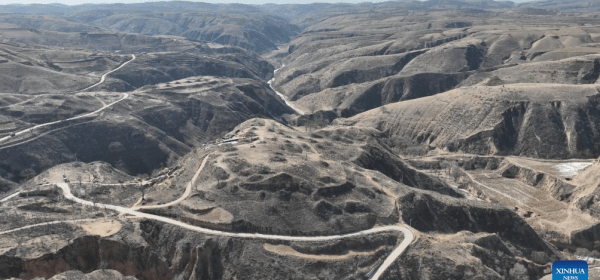
This file photo shows ancient stone fortresses in Yulin, northwest China's Shaanxi Province. (Photo by cultural heritage and archaeology team of the city of Yulin/Xinhua)

China: Survey Team Discovers 573 Ancient Stone Fortresses in North-West! (13.11.2025)

The survey revealed that these settlements spanned from about 2800 BC in the late Yangshao period to around 1000 BC in the Shang and Zhou (1046-221 BC) dynasties.

Mostly distributed along riverbanks, the stone fortresses were surrounded by numerous ordinary settlements without defensive stone walls, indicating a clear clustered relationship, said Ma Mingzhi, head of the team.

The development of these stone fortresses shows a clear evolution from small to large in scale, from simple to complex in layout, and from rudimentary to mature in construction techniques — with social hierarchy becoming increasingly distinct.

The survey provides crucial information for a comprehensive understanding of the origin, development, spread and evolution of prehistoric settlements in northern China, Ma added.

Diverse Collection of Stone Tools - Hainan!

China: 13,000 Year-Old Prehistoric Tomb Unearted in Hainan! (11.11.2025)

Archaeologists proved that the remains belong to a juvenile, with decorative textiles made from shells found near its head and waist – the earliest such findings ever reported in China – which offer rare insights into prehistoric cultural practices in Hainan and potential cultural exchanges with Southeast Asia.

Excavations at the Luobidong site are ongoing, trying to fully reveal the cultural significance of the site and provide a scientific foundation for both prehistoric research in Hainan and the development of the Luobidong National Archaeological Site Park.

36 The Main Street - Market Overton - Rutland

Rutland: Teddy’s Cottage – Market Overton! (27.10.2025)

The above is extracted from the linked (historical) articled presented at the top of this article. I believe this information refers to the row of cottages – one of which – we are currently staying within for five-days. This is our current Research Headquarters for this visit (25.10.2025-30.10.2025) – where we will be travelling to and from Duddington (and the surrounding areas). In the information pack provided in the property – it states the house dates from the 17th century (1600s). It possesses two floor, two bedrooms, a downstairs living-room, dining-room, kitchen, and foyer. Much of the downstairs flooring is flagstone – with the floor levels from one room to the next being uneven (on different levels). Apparently, this has something to do with the age of the building.

1 2 3 5