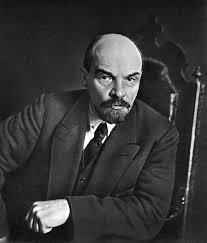

Blogger’s Note: An interesting text penned by VI Lenin during 1914. This text is important for a worker to study. Socialism is not easy – it is hard. Fascism is not hard – it is easy. Here is the dichotomy. Yes – VI Lenin writes from the cultural milieu of the time he lived within. The modern worker must extract the perennial (dialectical materialist) core that emanates from the (advanced) functioning brain of Lenin – making allowances for the often unfamiliar connections Lenin is making with his mind regarding his existential environment – and strive forever onward with a genuine Revolutionary purpose. By placing the out of date material to one-side (i.e. that which is happening in Russia during the late 19th and early 20th centuries) – the purpose of achieving Revolution here and now (in the present) can be accomplished. Notice that Lenin firmly rejects “terrorism” as did Marx before him – and Stalin after him. Socialist Uprising is a collective activity whose time has come. It is natural, powerful, and unstoppable when it happens. Terrorism, by way of contrast, is opportunist, adventurist, individualistic, and entirely selfish. Nothing of any collective worth can be gained from it. Indeed, whilst Anarchists and Revisionists often resort to this deadly but pointless activity – the Bourgeois State unleashes its vengeance upon the entirety of the working class – inflicting endless death and destruction in the process. The cause of the working class is often set-back decades. This is why Marx fully rejected terrorism as a means of making Revolution. Violent individuals are easy to see, easy to contain, and easy to remove from circulation in society. Our enemies may be terrible and corrupt to the core – but we must collectively act in a disciplined and logical manner. We, as workers, cannot demand justice from our oppressors, if we routinely descend to their levels of immorality. If we, as workers, want to wrestle the control of the means of production from our oppressors, then we, as workers, must be worthy of the task. We must build-up the inner and outer strength which becomes so powerful – because it is right – that no resistance can overcome (or prevent) its success. Although there can always be exceptions to general rules – individualist acts of terror remain firmly within the realms of fascism and should be avoided at all costs. A criminal possess rights. They should be arrested, fairly held in custody, given a fair trial, and then either punished or released – depending upon the verdict of the jury. As workers, we can only exercise this type of judicial power if we work hard enough to earn it. We must find ways of overcoming our poverty and transcending the injustices we face on a daily basis – in a civilised and rarefied manner. Being oppressed is an occupational hazard – it need not define your sense of self-worth. As workers, we must be stronger than the suffering that capitalist market forces inflict upon our minds and bodies! As workers – we do not need to resort to venal terrorism! ACW (11.9.2025)
When Marxists say that certain groups, are adventurist, they have in mind the very definite and specific social and historical features of a phenomenon, one that every class-conscious worker should be familiar with.
The history of Russian Social-Democracy teems with tiny groups, which sprang up for an hour, for several months, with no roots whatever among the masses (and politics without the masses are adventurist politics), and with no serious and stable principles. In a petty-bourgeois country, which is passing through a historical period of bourgeois reconstruction, it is inevitable that a motley assortment of intellectuals should join the workers, and that these intellectuals should attempt to form all kinds of groups, adventurist in character in the sense referred to above.
Workers who do not wish to be fooled should subject every group to the closest scrutiny and ascertain how serious its principles are, and what roots it has in the masses. Put no faith in words; subject everything to the closest scrutiny—such is the motto of the Marxist workers.
Let us recall the struggle between Iskrism and Economism in 1895–1902. These were two trends of Social-Democratic thought. One of them was proletarian and Marxist, which had stood the test of the three years’ campaign conducted by Iskra, and been tested by all advanced workers, who recognised as their own the precisely and clearly formulated decisions on Iskrist tactics and organisation. The other, Economism, was a bourgeois, opportunist trend, which strove to subordinate the workers to the liberals.
Besides these two important trends, there were a host of small and rootless groups (Svoboda, Borba,[1] the group that published the Berlin leaflets, and so forth). These have long been forgotten. Though there were no few honest and conscientious Social-Democrats in these groups, they proved adventurist in the sense that they had no stable or serious principles, programme, tactics, organisation, and no roots among the masses.
It is thus, and only thus—by studying the history of the movement, by pondering over the ideological significance of definite theories, and by putting phrases to the test of facts—that serious people should appraise present-day trends and groups.
Only simpletons put faith in words.
Pravdism is a trend which has given precise Marxist answers and resolutions (of 1908, 1910, 1912 and 1913—in February and in the summer) on all questions of tactics, organisation and programme. The continuity of these decisions since the time of the old Iskra (1901–03), let alone the London (1907) Congress, has been of the strictest. The correctness of these decisions has been proved by the five or six years’ (1908–14) experience of all the advanced workers, who have accepted these decisions as their own. Pravdism has united four-fifths of the class-conscious workers of Russia (5,300 Social-Democratic workers’ groups out of 6,700 in two-and-a-half years).
Liquidationism is a trend with a history that goes back almost twenty years, for it is the direct continuation of Economism (1895–1902) and the offspring of Menshevism (1903–08). The liberal-bourgeois roots and the liberal-bourgeois content of this trend have been recognised in official decisions (1908 and 1910; small wonder that the liquidators are afraid even to publish them in full!). The liquidators’ liberal ideas are all linked up and of a piece: down with the “underground”, down with the “pillars”, for an open party, against the “strike craze”, against the higher forms of the struggle, and so forth. In liberal-bourgeois “society” the liquidators have long enjoyed the strong sympathy of the Cadets and of the non-Party (and near-Party) intellectuals. Liquidationism is a serious trend, only not a Marxist, not a proletarian trend, but a liberal-bourgeois one. Only witless people can talk about “peace” with the liquidators.
Now take the other groups which pose as “trends”. We shall enumerate them: 1) the Vperyod group plus Alexinsky; 2) ditto plus Bogdanov; 3) ditto plus Voinov; 4) the Plekhanovites; 5) the “pro-Party Bolsheviks” (actually conciliators: Mark Sommer and his crowd); 6) the Trotskyists (i. e., Trotsky even minus Semkovsky); 7) the “Caucasians” (i. e., An minus the Caucasus).
We have enumerated the groups mentioned in the press. In Russia and abroad they have stated that they want to be separate “trends” and groups. We have tried to list all the Russian groups, omitting the non-Russian.
All these groups, without exception, represent sheer adventurism.
“Why? Where is the proof?” the reader will ask.
Proof is provided by the history of the last decade (1904–14), which is most eventful and significant. During these ten years members of these groups have displayed the most helpless, most pitiful, most ludicrous vacillation on serious questions of tactics and organisation, and have shown their utter inability to create trends with roots among the masses.
Take Plekhanov, the best of them. The services he rendered in the past were immense. During the twenty years between 1883 and 1903 he wrote a large number of splendid essays, especially those against the opportunists, Machists and Narodniks.
But since 1903 Plekhanov has been vacillating in the most ludicrous manner on questions of tactics and organisation: 1) 1903, August—a Bolshevik; 2) 1903, November (Iskra No. 52)—in favour of peace with the “opportunist” Mensheviks; 3) 1903, December—a Menshevik, and an ardent one; 4) 1905, spring—after the victory of the Bolsheviks—in favour of “unity” between “brothers at strife”; 5) the end of 1905 till mid-1906—a Menshevik; 6) mid-1906—started, on and off, to move away from the Mensheviks, and in London, in 1907, censured them (Cherevanin’s admission) for their “organisational anarchism”; 7) 1908—a break with the liquidators; 8) 1914—a new turn towards the liquidators. Plekhanov advocates “unity” with them, without being able to utter an intelligible word to explain on what terms this unity is to be achieved, why unity with Mr. Potresov has become possible, and what guarantees there are that any terms agreed to will be carried out.
After a decade of such experience we can safely say that Plekhanov is capable of producing ripples, but he has not produced, nor will he ever produce, a “trend”.
We quite understand the Pravdists, who willingly published Plekhanov’s articles against the liquidators. They could not very well reject articles which, in full accord with the decisions of 1908–10, were directed against the liquidators. Now Plekhanov has begun to repeat—with the liquidators, with Bogdanov and the rest—phrases about the unity of “all trends”. We emphatically condemn this line, which should be relentlessly combated.
Nowhere in the world do the workers’ parties unite groups of intellectuals and “trends”; they unite workers on the following terms: (1) recognition and application of definite Marxist decisions on questions of tactics and organisation; (2) submission of the minority of class-conscious workers to the majority.
This unity, on the basis of absolute repudiation of the opponents of the “underground”, was achieved by the Pravdists in the course of two-and-a-half years (1912–14) to the extent of four-fifths. Witless people may abuse the Pravdists and call them factionalists, splitters, and so forth, but these phrases and abuse will not wipe out the unity of the workers….
Plekhanov now threatens to destroy this unity of the majority. We calmly and firmly say to the workers: put no faith in words. Put them to the test of facts, and you will see that every step taken by every one of the above-mentioned adventurist groups more and more glaringly reveals their helpless and pitiful vacillation.
Notes
[1] The Svoboda (Freedom) group was founded by Y. 0. Zelensky (Nadezhdin) in May 1901. It called itself the “revolutionary-socialist” group, and published the journal Svoboda in Switzerland (of which two issues appeared—No. 1 in 1901, and No. 2 in 1902). The group also published: “Eve of the Revolution. A Review of Questions of Theory and Tactics No. 1, a periodical Otkliki (Comments) No. 1, a programmatic pamphlet The Revival of Revolutionism in Russia and others. The Svoboda group preached the ideas of terrorism and Economism, acted in concert with the St. Petersburg Economists against Iskra and the St. Petersburg Committee of the R.S.D.L.P. The group ceased to exist in 1903.
The Borba (Struggle) group was formed in Paris in the summer of 1900 and consisted of D. B. Ryazanov, Y. M. Steklov, and E. L. Gurevich. The name Borba was adopted by the group in May 1901. In its publications the group distorted the revolutionary theory of Marxism, which it interpreted in a doctrinaire and scholastic spirit, and was opposed to Lenin’s organisational principles of Party building. In view of its deviations from Social-Democratic views and tactics, its disruptive activities and lack of contact with the Social-Democratic organisations in Russia, the group was not allowed to attend the Second Congress. By a decision of the Second Congress of the R. S. D. L. P. the Borba group was dissolved.
Published: Rabochy No. 7, June 9, 1914. Signed: V. Ilyin. Published according to the text in Rabochy. Source: Lenin Collected Works, Progress Publishers, 1972, Moscow, Volume 20, pages 356-359
 SANGHA KOMMUNE (SSR)