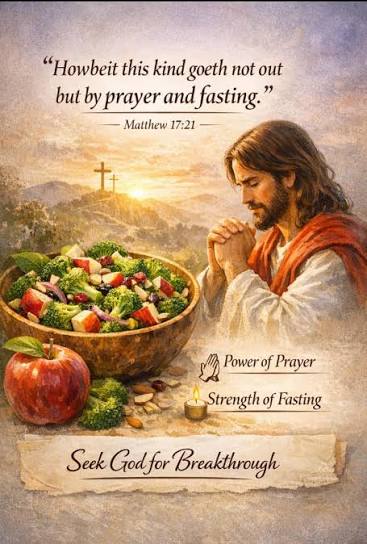
Author’s Note: I think the original “Matthew 17.21” verse probably got lost (and went missing) during translation and transliteration – so that it literally “disappeared” from the page. As you can see from the RNJB – this original verse is scant to say the least. I suspect that a monk-scribe was presented with the dilemma that a section of the Matthew text was missing – so he added the marginal note referring to “Mark 9.29” as an attempted explanation (perhaps overdoing it). Of course, we now know the “Mark” is older than “Matthew” and that the Church listing of “Matthew” leading to “Mark” is ahistorical (with the caveat that neither of these two [nameless] gospels carry the two Biblical names ascirbed to them in their earliest renditions). Furthermore, the earliest renditions of “Mark” (9.29) do not include “fasting” as an exorcistic method – so the monk-scribe who made this margin-note (which includes “fasting”) – must have done so AFTER “fasting” had been added to Mark 9.29 – and normalised as such. The right-wing and far-right are perpetuating the conspiracy theory that (atheistic) liberal and Communist governments [in cohoots with “Big Pharma”] do not want you [the people] to know that Jesus gives the secret of how “to cure all illnesses” via “Matthew 17.21”. As with all forms of paranoid delusion – Jesus is doing nothing of the sort. Matthew 17.21 is Mark 9.29 – and both are referring not to “general healing” (as suggested by the far-right) – but rather to the specific activity of “exorcising unclean spirits” from those so possessed. Jesus supposedly suggests the activities of “fasting” and “praying” to achieve this objective. It is actually far more simple than this – as “fasting” is a later edition to Mark 9.29 – an addition that should be removed from the equation for clarity. This reduces the issue to just “praying” – a common activity for Christians. ACW (7.11.2026)
Dear Gillian
This verse is missing in my Revised New Jerusalem Bible (2019) – but is present in Tyndale’s 1526 and 1536 English trsnslations (as well as in the KJV – gifted to me by my sister).
Matthew 17.21
Tynedale writes: ‘but this kynde goeth not oute butt by pryer and fastynge.’ (1526, 1536)
KJV writes: ‘Howbeit this kind goeth not out but by prayer and fasting.’ (1611)
This is what the Revised New Jerusalem Bible (2019) says – it does have a “Matthew 17.21” – but not the above verse:
‘nothing will be impossible for you/’ (c)
Footnote C: Some manuscripts (mss) add v. 21 = MK 9:29′
To be clear;
Mark 9.29 in Tyndale (1526-1536) says: ‘And he sayde unto them: thys kinde can by no nother meanes come forth/but by prayer and fastynge.’
KJV (1611) Mark 9.29: ‘And he said unto them, This kind can come forth by nothing, but by prayer and fasting.’
Tthe Revised New Jerusalem Bible (2019) says: (Mark Verses 26, 27, 28 & 29 for clarity and context) ‘(26) After throwing the boy into violent comvulsions and crying out it came out, (27) and the boy lay there so like a corpse that most of them said, “He is dead.” But (28) Jesus took him by the hand and and raised him and he stood. When he had gone indoors, his disciples asked him on their own, “Why were we unable to (29) drive out it out?” He answered, “This kind can be driven out only by prayer.”‘
In a number of modern Biblical translations – Matthew 17.21 (as conveyed from the Greek by Tyndale) – is omitted. Indeed, I am told that in a number of US Bibles, Matthew often jumps from Verse 20 – Verse 22 – fuelling all kinds of conspiracy theories amongst ordinary people. I cannot blame them for questioning this. The reason, as far as I can ascertain, is that in far earlier Greek renditions of the New Testament, this verse is not present (it is believed a monk-scribe may have made a margin note here quoting Marl 9.29 – which was later incororated into Matthew by mistake). The NRJB seems to think that there is a “verse 21” in Matthew 17 – but that it contains a completely different message – whilst other editions attempt to steer-clear of it completely by “ignoring” it (perhaps it will go away on its own accord). Here is the issue. The vatican ordered the Benedictines to prodce a completely new Bibe free of error and bias – hence the RNJB. The claim is that the New Testament is premised upon a direct Greek-English trsnslation that even removes the gender preference toward the male. When I checked which version of the Greek Bible the OSB scholars were using – I was told it is the “Novum Testamentum Greece” (NA27/27th edition). The RNJB thus omits Tyndale’s “Matthew 17.21” – replacing it with a different reading.
William Tyndale translated primarily from the Greek work of Erasmus (1522 edition) – namely the “Noum Instrumentum Omne (later renamed the “Novum Testamentum Omne”). Erasmus seems to have travelled to Basel and made use of a number of Greek Biblical texts dating between the 10th-15th centuries. Where texts were missing, Erasmus simply rendered the extant Latin into Greek (Tyndale carried-out a similar tactic – when the Greek meaning was absent or unclear – he translated from Latin, to Greek, to English, etc). Obviously, the “Novum Testamentum Greece” dates back to Greek papyri from between the 2nd-4th centuries CE. Therefore, the scholarship now suggests the following:
RNJB Earliest Matthew 17.21 = ‘nothing will be impossible for you/’ (2nd-4th century Greek)
Tynedale’s (1526) Matthew 17.21 = ‘but this kynde goeth not oute butt by pryer and fastynge.’ (10th-15th century Greek)
I am assuming that Jerome’s (4th century) Latin Vulgate contained the scribal note that eventually became “Matthew 17.21” that was translated into the later Greek renditions that Erasmus and Tyndale encountered. This being the case, why do some Bible-editions omit Matthew 17.21 altogether – and do not include the early “Matthew 17.21”? Finally, Mark 9.29, at least in the RNJB, makes no mention of “fasting” when discussing “prayer” as a means of driving-out unclean spirits. When the scribe in question alluded to “Mark” when copying “Matthew” – the text of Mark already had “fasting” added to it. As I have virtually no knowledge regarding Orthodoxy – I thought I would offer this for discussion.
Best Wishes
Adrian

