Portrait of William of Ockham by Peter Paul Rubens 1617

UK: William of Ockham (1287-1347-49?) – Origin of “Occam’s Razor”! (22.8.2026)

The Church and the State would have us believe that out of this quagmire of human ignorance and darkness – rays of light emerged. I can say that William of Ockham did write copious numbers of texts on all kinds of academic and theological topics, including politics, biographies, and philosophy. Part of the delay in the examination of his work by the Vatican in the 1320s was caused by its sheer volume. And it would seem that after his “Excommunication” – the nature of his work became ever-more defiant and questioning of Church authority. I think his conflict with the Church solidified his method of the efficient use of knowledge as a means of critiquing Church dogma and theology. Indeed, William appears to become nearly “Protestant” in his argument with Avignon. He may not have coined the term “Occam’s Razor” (why would a humble monk do such a strange thing?) – but he certainly earned the right to be considered a strong candidate for its modern inception due to the nature of the hostility he had to contend with. Although I am always suspicious of bourgeois sources (due to their a priori anti-Socialist position) – I believe we can trust the two I have included below. As always – think for yourself.

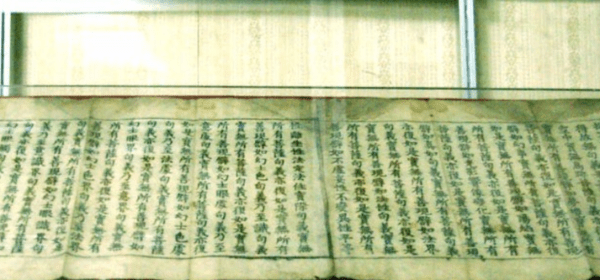
80 000 Wooden Blocks of Complete Collection of Buddhist Scriptures

DPRK: Buddhist Sutras on Display! (17.6.2026)

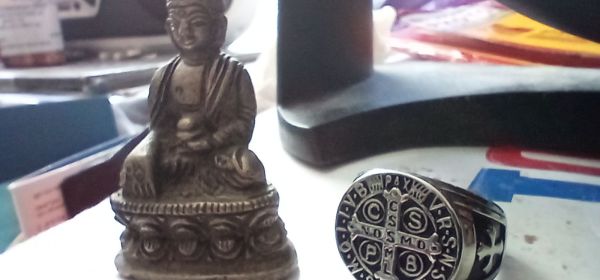
On a slightly different note, there was an English man called “Stephen Bachelor” who travelled to South Korea and joined a Buddhist monastic order. Indeed, I believe he eventually met the woman who would become his wife – at the time a Buddhist “nun”. Upon returning to the UK he established a Buddhist College in Devon – but as the years went by he started to describe himself as an “atheist” who do not believe in any form of religion or mysticism. He even banned Buddha statues from his meditation rooms – and when my teacher – Richard Hunn – was invited to teach, he also banned all incense. Of course, Buddhism is not a religion with the Buddha being described as “non-theist” (he said gods only seem to exist until believers realise they are non-existent). Yes – monotheism was unknown in the Buddha’s time – so it is interesting to consider what exactly it was that Mr Bachelor was reacting to? Did he think Buddhism was a religion – and the Buddha a god? Is this what they were teaching in South Korea?

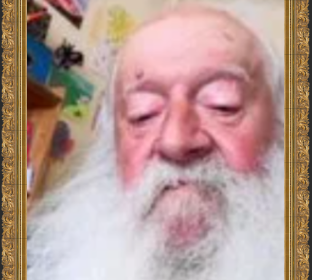
Peter Wyles Passes Away Sat Upright 29.5.2026 2015hrs

UK: My Father Radiating Peace & Love at the Point of Departure! (31.5.2026)

375. Control of the senses, contentment, restraint according to the code of monastic discipline — these form the basis of holy life here for the wise monk.

376. Let him associate with friends who are noble, energetic, and pure in life, let him be cordial and refined in conduct. Thus, full of joy, he will make an end of suffering.

377. Just as the jasmine creeper sheds its withered flowers, even so, O monks, should you totally shed lust and hatred!

378. The monk who is calm in body, calm in speech, calm in thought, well-composed and who has spewn out worldliness — he, truly, is called serene.

379. By oneself one must censure oneself and scrutinize oneself . The self-guarded and mindful monk will always live in happiness.

380. One is one’s own protector, one is one’s own refuge. Therefore, one should control oneself, even as a trader controls a noble steed.

381. Full of joy, full of faith in the Teaching of the Buddha, the monk attains the Peaceful State, the bliss of cessation of conditioned things.

382. That monk who while young devotes himself to the Teaching of the Buddha illumines this world like the moon freed from clouds.

Becoming Aware of the Mind - Moment To Moment!

BMA-UK: Uprooting the Delusion that Underlies Racism! (21.9.2025)

Racism is learned on the outside of the body – and imported into the interior of the mind – where it becomes a habit of interpretation regarding other objects in the world. Perpetuating racism is one manifestation of racism – as is being a victim of racism – or the recipient of racism. In Asia, the Buddhist answer is to remove all klesa (defilements) – greed, hatred, and delusion – so that the conditions that allow racism to exist cannot function. Laws can be changed outlawing racism in the external world – this only deals with the superficiality that is racism – the tip of the iceberg so-to-speak.

Master Ti Guang - Patchwork Robe

The Pure Behaviour of Ch’an Master Ti Guang [体光] (1924-2005)! [22.10.2024]

This is why Master Ti Guang had perfected the realisation of “stillness” (emptiness) and “movement” (function) – and was able to express this through a martial technique free of greed, hatred, and delusion. All year roung, Master Ti Guang wore a tattered, patchwork robe – following the Buddha’s original example of only wearing a robe constructed out of tattered clothing taken from the rotting corpses lying around in the charnel grounds of ancient India. Master Ti Guang never ate any food after noon each day. Master Ti Guang understood (and followed) all the rules and regulations governing the strict discipline of the Meditation hall. As a consequence, Master Ti Guang had stilled and expanded his mind, and manifested endless degrees of insightul wisdom throughout his life!

South Devon Railway: Buckfastleigh Station & Steam Train! (1.8.2024)

A Summer Fayre is currently being held within the grounds of Buckfast Abbey – administered by the Church. The priests of the Catholic Church have worked-out a way to introduce a pay-wall which benefits their greed whilst seemingly acting in accordance with the wishes of the monks. Yes – the Catholic Church only cares for greed, political dominance and temporal power. and this is why the Catholic Church has started charging for parking, an initiative enforced by specially hired night-club Bouncers who stand menacingly at the gates – demanding to “see” the tickets – proving the £6 parking fee had been paid! This dichotomy exemplifies the difference which exists between the Christian Church and Christian monastic establishment. The priests want money (as do the lay-people who set-up their stalls) – the monks (who could not be seen anywhere) – want inner tranquillity and outer peace!

1 2 3