Matthew Verse 17.21

UK: The Missing Bible-Verse of “Matthew 17.21” (Mark 9.29) – Debunking Far-Right Conspiracy Theories! (7.11.2026)

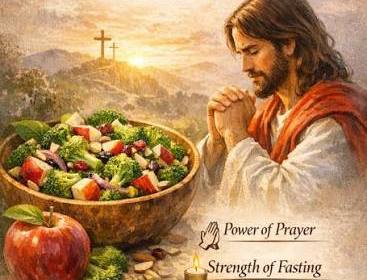
Furthermore, the earliest renditions of “Mark” (9.29) do not include “fasting” as an exorcistic method – so the monk-scribe who made this margin-note (which includes “fasting”) – must have done so AFTER “fasting” had been added to Mark 9.29 – and normalised as such. The right-wing and far-right are perpetuating the conspiracy theory that (atheistic) liberal and Communist governments [in cohoots with “Big Pharma”] do not want you [the people] to know that Jesus gives the secret of how “to cure all illnesses” via “Matthew 17.21”. As with all forms of paranoid delusion – Jesus is doing nothing of the sort. Matthew 17.21 is Mark 9.29 – and both are referring not to “general healing” (as suggested by the far-right) – but rather to the specific activity of “exorcising unclean spirits” from those so possessed. Jesus supposedly suggests the activities of “fasting” and “praying” to achieve this objective. It is actually far more simple than this – as “fasting” is a later edition to Mark 9.29 – an addition that should be removed from the equation for clarity. This reduces the issue to just “praying” – a common activity for Christians.
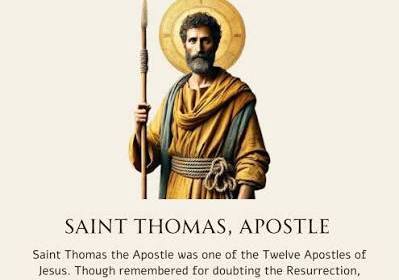
St Thomas in India!

UK: Gospel of St Thomas – Verse 29! (5.11.2026)

The fragments and versions of this text were written in ancient Greek and Coptic (an Egyptian version of Greek) – and so I have selected a broad translation of verse “29” from what scholarly work is available online. I think the fragments were pieced together to reconstruct a single and complete text. Internal evidence within the text suggests this Gospel dates back to the 1st century CE – but this original (Greek) copy has not yet been found. What is interesting about this verse is that it corrects the “inversion” found within theistic religions.

UK: “Soul” & “Psyche” (ψυχή) Are Not “Interchangeable” When Discussing Greek Philosophical Texts! (29.8.2026)

The term Tyndale translates as “soul” in English is the Greek term “psychas” (ψυχὰς) – is the “plural” the more familiar “psyche” (ψυχῇ) – which translates as “breath of life”, “to blow” and “to animate” (in Latin, the Greek term “psyche” is presented by the term “anima”). This probably represents the Hebrew term “Neshama” (נשמה) – meaning “breath”, “spirit”, or “essence” (inner self). The early Christians were radical Jews seeking to distinguish their thinking and practice from mainstream Judaism. The Gnostic Christians were content to use Greek philosophical terms and parallel many Greek paths of inner self-cultivation. Later, with the rise of the Catholic Church (empowered by the Roman State), the Gnostic Churches were suppressed and their scriptures outlawed. Catholic theologians, although continuing to use Greek terms (translated into Latin) – radically departed from the original philosophical meaning of those terms (the teaching and practice of Greek philosophy was banned). This process of moving away in meaning is particularly evident when it is understood that the Greek written form of “psyche” (ψυχῇ) has been replaced in translation by the Germanic (Pagan) term “soul”.

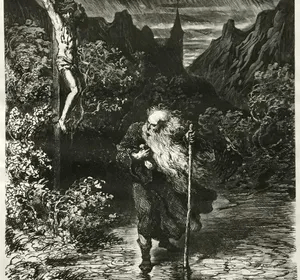
Gustave Doré: illustration of the Wandering Jew The Wandering Jew, illustration by Gustave Doré, 1856.

UK: Kartosphilus (Greek) – Cartaphilus (Latin) – Gate-Keeper of Pontius Pilate! (19.8.2026)

The name “Joseph” means “he will add” or “God will increase”. It comes from the Hebrew Book of Genesis and is used in the Greek New Testament to refer to the husband of Mary – the Mother who Immaculately Conceives Jesus Christ (Joshua Ben Joseph). Within the development of the English language, “J” only becomes the 26th letter of the alphabet during the 17th century – often replacing “i” in spellings. As for “Y” – it would appear that Christian missionaries brought this to England during the 7th century – but it was slow to catch-on. For instance, the Hebrew “Yosif” was rendered “Joseph” in English (with an “i”) but was never spelt “Yoseph”. Many centuries later, the “Y” would be completely bypassed and the name would be presented as “Joseph” – where it remains today. 

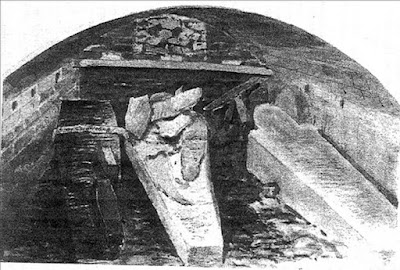
Windsor Catle - St George's Chapel - A sketch drawn in 1888 by Alfred Young Nutt, Surveyor to the Dean and Canons, of the vault containing the coffins of King Charles I (left), King Henry VIII (centre) and his Queen, Jane Seymour (at right). Upon Charles' coffin is the small coffin of a still-born child of the Princess George of Denmark, later Queen Anne.

Email: The Original & Developed Roman Calendar! (10.8.2026)

. In 1751 the Calendar Act was passed by Parliament – so that in 1752 – New Year’s Day would fall for the first-time on “January 1st” – as opposed to the traditonal “March 25th” (the latter bang the original Roman “New Year” – subsequently adopted by the Christian Church to celebrate “Lady’s Day” – referring to “Mary Mother of Christ” Day – as the UK was now “Protestant” Mary was no longer the central figure she still is in the now ousted Catholic Church). Interestingly, when I worked in an Accountancy firm in the UK, the “Financial Year” legally began on “April 1st” – the retaining of the old Pagan New Year for financial purposes – I am told (a time of “plenty” in the world as Spring has arrived). What happened after the 1752 change is that all the historical dates were altered to reflect the new calendar – with “January 1st” now being “New Year”. Therefore, King Charles I was executed in “1649” and not the actual “1648” – as “January 1st” (New Year) had come and gone prior to the event. Sometimes in UK textbooks, you may find acronyms like “OD” (“Old Date”) and “ND” (New Date) next to differing years – or something similar. So, King Charles died in 1648 (OD) and 1649 (ND) – and so on. As time has gone by, quite often the “Old Dates” have been forgotten altogether – until a particularly efficient historian decides to brush-off the cobwebs.

The Term "Martyr" Originally Meant to "Bear Objective Witness" - Not Die for an Ethereal Belief!

UK: Examining & Deconstructing the Greek Term “Martyr”! (29.6.2026)

In modern usage – there is the disturbing trend of an individual being blown into non-functioning pieces being described as a “Martyr” – or performing the function of a “Martyr” (this is a term claimed by political systems regardless of hue – and all three religions of the Abrahamic persuasion). I understand that it is a human-habit to try make it seem that a pointless death possessed some type of ethereal meaning – but does it really? Dying for a noble cause is certainly acceptable – but the cause – whatever that may be (as noble causes tend to be a relative matter) – does not in any way alter the demeaning process of hot pieces of metal being forcibly penetrated through the body. Surely, it would be a far more noble cause to “remove” the ignorance from human society – and the human-mind – that causes all forms of oppressive death, be it through weaponry, abuse, torture, injury, illness, or starvation. Why not permanently change the basis of the situation – rather than passively give-in to – and normalise the oppression? In that sense, the original Chinese-language concept of 烈士 (Lie Shi)  is much more preferable. 

1 2 3 … 5