
Source: Xinhua Editor: huaxia 2025-11-12
Blogger’s Note: These dates appear to go back into the time period usually associated with the Xia Dynasty (2100-1600BCE). Furthermore, the Great Wall of China situated North of Beijing also started life as a collection of isolated and non-connected fortified areas. Overtime, these forts were joined together through the building of connecting walls – forming a wide fortified structure covering a large area. This is a typical exercise in China State building. The State of Qin was situated in the Xian area of North-West China and its population thought to be a combination of Han and non-Han peoples – with this synthesis generating the advanced military and civic culture that resulted in the Qin Dynasty (221-206BCE). The Qin Dynasty united most of China for the first-time. Every village was turned into barracks, and every man, women, and child had to practice State-sponsored martial arts (probably Long Fist). A network of extensive roads were built everywhere using a standard axile-width (with grooves in the road for the wheels). A standardised currency was introduced, together with trading standards, and unified legal system. All this cultural development had occurred over hundreds of years during the development of the State of Qin in the North-West – before it spread (through military conquest) to rest of China (minus Fujian province). ACW (13.11.2025)
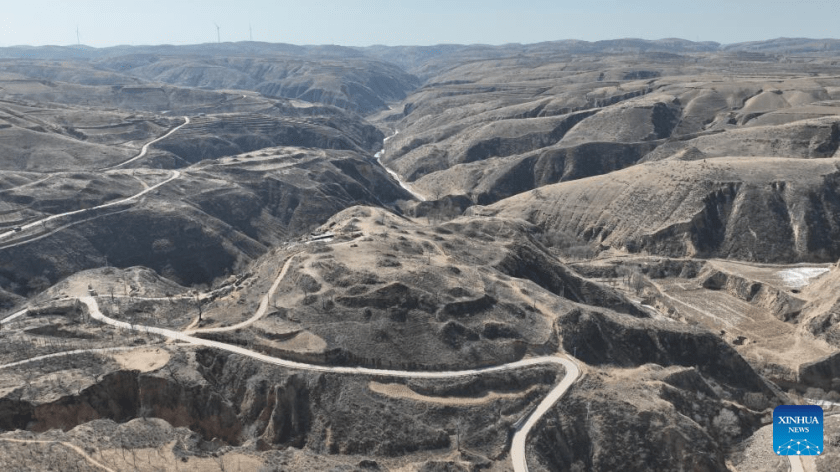
XI’AN, Nov. 12 (Xinhua) — A comprehensive six-year archaeological survey in northwest China’s Shaanxi Province has found 573 ancient stone fortress settlements, dating from the prehistoric era to the Shang Dynasty (1600-1046 BC).
This specialized investigation, carried out by the cultural heritage and archaeology team of the city of Yulin in Shaanxi from 2019 onwards, systematically searched the vast and complex terrain of the Yulin area.
Following existing water system maps to locate these ancient sites, the fieldwork involved detailed examination, specimen collection and aerial mapping of the discovered fortresses.
The survey revealed that these settlements spanned from about 2800 BC in the late Yangshao period to around 1000 BC in the Shang and Zhou (1046-221 BC) dynasties.
Mostly distributed along riverbanks, the stone fortresses were surrounded by numerous ordinary settlements without defensive stone walls, indicating a clear clustered relationship, said Ma Mingzhi, head of the team.
The development of these stone fortresses shows a clear evolution from small to large in scale, from simple to complex in layout, and from rudimentary to mature in construction techniques — with social hierarchy becoming increasingly distinct.
The survey provides crucial information for a comprehensive understanding of the origin, development, spread and evolution of prehistoric settlements in northern China, Ma added.
 SANGHA KOMMUNE (SSR)