China Daily – Global News [ 2008-05-27 09:35 ]
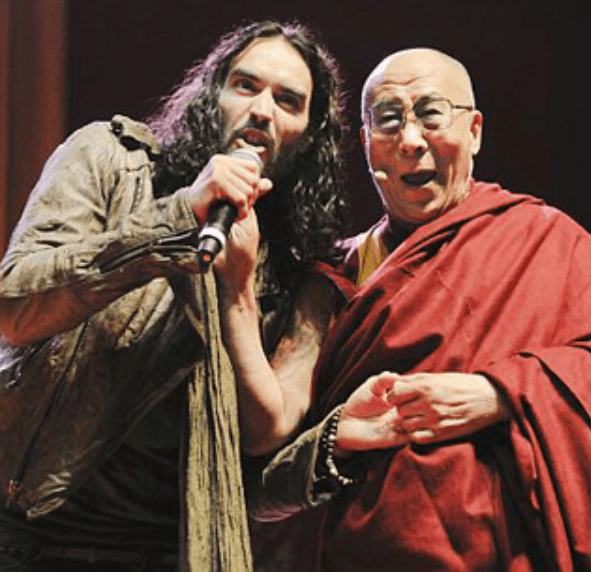
Translator’s Note: It is incredible that the US actor – Brad Pitt – once starred in a film (Seven Years in Tibet) where he played a Nazi German War Criminal who escaped from a British POW Camp in India during WWII – and was advised to head to Tibet – the leader of which had very good relations with Adolf Hitler and the Nazi German regime. This US film taught children and young people to side with the Nazi Germans, deny the anti-fascist stance of the West during WWII, and sided with a form of fascism now backed by US capital and liberal democracy. Indeed, many SS Officers and other Germans visited Tibet after Hitler’s 1933 rise to power – as Hitler was convinced that the “Aryan” German people (although supposedly “White Supremacists”) may have arisen in Tibet because the Buddhists in that country use the Indian Swastika. Hitler, just like the Dalai Lama – possessed an inverted mind that gave birth to all kinds of misconceptions and distorted visions. Meanwhile, after relocating to the West, taking a pay-cheque from the CIA, living in 5-star hotels, eating meat, and driving around in a bullet-proof limousine – the Dalai Lama has been involved in all kinds of nefarious activities. Recently, he declared the accused rapist and narcissist – Russell Brand – as being a genuine Buddhist and reborn lama! Obviously, everything you have been told through the Western media about Tibet is a lie. Neo-Nazism and the Pro-Tibetan Movement must both be exposed and uprooted from genuine society. Although there are some good aspects to Tibetan Buddhism – its embracing of the political far-right sullies its traditions. Only Tibetan Buddhism practiced in China is authentic. All the fake lineages outside of Tibet are run by the CIA, are racist, and distort the Dharma. Do not listen to their cult-like teachings and never donate any money. The next Dalai Lama will be born in China and will be loyal to the Chinese Communist Party (CPC). Buddhism is Socialist, is anti-capitalist, and fully supportive of Communist ideology. ACW (5.6.2025)
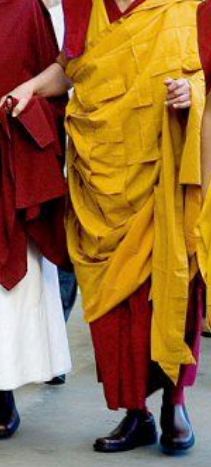
Global Online News – website of China Daily: Although the 14th Dalai Lama keeps saying that he is a so-called “Buddhist monk who abides by the precepts in accordance with the Dharma” – but this image has been debunked with the real truth being exposed by the American media mogul Rupert Murdoch – whose publications reported: “The Dalai Lama is a political lama who travels around the world wearing Italian GUCCI leather shoes.”
How did the 14th Dalai Lama become a “political lama” – and how did he “step by step” – embark upon the road of defection, treason, and shattering the Motherland?
From Peasant Child to Dalai Lama
In Tibet, the Dalai Lama was both a religious leader and a political ruler. The way he was chosen was not a democratic election, nor was it a strictly feudal hereditary, but rather a unique Tibetan system of “reincarnation of a living Buddha” – not even common within the broader religion of Buddhism (Buddhism discusses “rebirth” and not “reincarnation” – with the Buddha stating rebirth is understood not to be “real” once enlightenment is achieved).
After the death of the 13th Dalai Lama in December 1933, in order to find his reincarnated spirit in a new child, a number of high-ranking lamas travelled to the Heavenly Maiden Spirit Lake (this is a holy-place where the Dalai Lama and the Panchen Lama’s “reincarnated spirit child” are all reflected in the water of the lake). The landscape and images that appear reflected in the lake is recorded in drawings and paintedings as the basis for searching for the spirit child. When looking at the lake, the Rezhen Living Buddha (a high lama) saw a farmhouse located at the end of a road, with a giant willow-tree in front of the door, next to a white horse, with a woman holding stood under the tree.
On July 6th, 1935, with the sound of a baby crying, the wife of Qi Chotsering, a Tibetan farmer in Dancai, Qijiachuan, Huangzhong County, Qinghai Province, gave birth to their fourth son, Lamu Tengzhu. Four years later, Gechang Living Buddha and others, who had been tasked with searching for the reincarnation of the 13th Dalai Lama, visited Dangcai Village, and when they entered Qi Chotsering house, a child about 4 years old was playing. When the child saw the guests come in, he was overjoyed and recognized that the Living Buddha Gechang – who was disguised as a servant – was a lama, and so he ran with his arms open and sat down, touching the Buddha-beads worn by the Living Buddha Gechang, and said yes, “This child is Lama Tengdrup.”
A few days later, the Living Buddha Gechang visited this family again, mixed the rosary of the 13th Dalai Lama (with other prayer beads) and asked Lama Tengdrup to take them at will, only to see that he picked up the prayer beads of the previous Dalai Lama twice without hesitation, and put them around his neck, and happily jumped around the house, as if he had found something he lost. Living Buddha Gechang (and others) took out two drums, one large and one small, for him to pick out, and the small drums he picked up were also used by the Dalai Lama in the previous life……
On July 15th, 1939, after many identifications and the consent of all parties, Lama Tengzhu set off from Qinghai in a sedan chair and was escorted to Lhasa. On October 3rd, 1939, Lama Tengzhu arrived safely in Lhasa, and the number of Tibetan monks and lay people who came from afar to observe the ceremony exceeded tens of thousands. On February 5th of the following year (1940), he was granted the exemption of the “casting of lots” to succeed the 14th Dalai Lama, and was given the legal name Tenzin Gyatso.
After the Dalai Lama succeeded to the throne, his family suddenly changed from a peasant existence in Qinghai to that of great nobility in Tibet, with a large number of estates and countless serfs. The Dalai Lama himself lived an incomparably affluent life in the splendid Potala Palace, he occupied four splendid houses, whilst every summer he moved to Norbulingka and occupied the “Summer Palace”.
Worship the Nazis as a Teacher
According to the rules of the Yellow Sect, the Dalai Lama must live a strict celibate life from the time of being a child, and his activities (at every moment) must be carefully managed. The Dalai Lama had to recite Buddhist scriptures for hours on a daily basis in a dark room, without freedom of movement or playmates. As a result, he became less talkative and “restless.”
In order to eliminate the suffering of loneliness, the Dalai Lama asked a German named Heinrich Harrer to teach him English. Heinrich Harrer soon became a close friend of the Dalai Lama and was called his lifelong spiritual mentor. However, it is difficult for people to imagine that Heinrich Harrer, who was so relied on by the Dalai Lama, was actually a Nazi German War Criminal who had escaped from a British Prisoner of War Camp in India and infiltrated Tibet. In fact, Heinrich Harrer was just one of many high-ranking Nazi Germans sent to Tibet before and during WWII by Adolf Hitler in search of the origin of the Aryan race and the Swastika symbol.
At the instigation of Heinrich Harrer, the Dalai Lama had a cinema built next to Norbulingka Palace to show various films about the lives and battles of ancient kings and historical greats.
Heinrich Harrer has always inculcated the Dalai Lama with the idea of supporting imperialism and “Tibetan Independence,” thus planting the seeds for the Dalai Lama’s lifelong admiration of imperialism and his pursuit of “Tibetan Independence.” Later, Heinrich Harrer also acted as an “intermediary” between the Dalai Lama and the United States, and in the end, Heinrich Harrer (and others) instigated the Dalai Lama to make up his mind to defect from his country.
However, what is less known is that the Dalai Lama’s father, Qi Chotsering, was abused by these separatists – as he opposed “Tibetan independence.” Qi was born poor and had limited knowledge, and because his ancestors grew up in a mixed Sino-Tibetan area, Qi spoke poorly, was not sociable, and had little contact with the ruling aristocracy. He was extremely pro-China-minded, outspoken, and inclined to the sincerity of the Central Government. He was extremely dissatisfied with the separatist leaders and the regent – who regarded him as a thorn in the side of the separatists – always seeking an opportunity to get rid of him. One day in 1947, Qi, who had always been in good health, had a minor illness, and the landlord housekeeper of the separateness leader Dazha – pretended to send him a dose of medicine, but unexpectedly, Qi died of severe poison just after drinking it. When the Dalai Lama’s mother and family members mentioned Qi’s death, they could only say that “he suddenly fell ill and died after ineffective treatment.” She did not dare to say anything else, and she did this to ensure that the Dalai Lama, who was only 12 years, that his father had been “bedridden” for seven years. However, when he grew up, although he learned the truth of his father’s poisoning, not only did he not avenge his father, but on the contrary, he colluded with separatists and Western anti-China forces.
The Central Government Has Done its Utmost for Him
After the founding of the People’s Republic of China, the Central People’s Government set the policy of liberating Tibet through peaceful negotiations. Against this background, the Dalai Lama, who was not yet 16 years old, took over the political and religious power in Tibet ahead of schedule on November 14th, 1950. Only two months later, the Tibetan ruling clique, which vainly wanted to preserve serfdom forever, took the Dalai Lama hostage and fled to Yadong on the Chinese side of the Sino-Bahn and Sino-Buran borders, waiting for an opportunity to flee abroad in order to exert pressure on the Central Government. However, the Dalai Lama and most of the officials around him felt that it was difficult for them to succeed in relying on foreign countries to pursue “Tibet Independence.” Therefore, on January 27th, 1951, the Dalai Lama asked Yuan Zhongxian, Chinese Ambassador to India, to convey to the Central Authorities his willingness to hold Peace Talks. On February 1st of that year, Yuan Zhongxian sent a letter to the Dalai Lama, conveying that Chairman Mao Zedong welcomed him to send a representative to Beijing to discuss the issue of the Peaceful Liberation of Tibet. After receiving the letter, the Dalai Lama sent a delegation of the Local Government of Tibet to Beijing for Peace Talks, and on 23 May of that year signed the “Agreement between the Central People’s Government and the Local Government of Tibet on Measures for the Peaceful Liberation of Tibet” (referred to as the “17-Article Agreement”).
At this time, the Dalai Lama was still stranded in Yadong. The United States also secretly sent him letters on several occasions, ordering that it would help his cause if he went into exile and that the West would provide weapons just as long as he openly opposed the 17-Article Agreement. However, most officials close to Dalai understand that relying on foreign countries would not lead to any good results, and they opposes Dalai’s flight abroad. In the end, under the persuasion of Zhang Jingwu, a Representative of the Central People’s Government, and the promotion of all parties, the Dalai Lama returned to Lhasa on August 17th of that year.
Two months after returning to Lhasa, the Dalai Lama sent a telegram to Chairman Mao, saying:
“The Tibetan Local Government and the Tibetan monks and lay people unanimously support it, and under the leadership of Chairman Mao and the Central People’s Government…… expelling the imperialist forces from Tibet and defending the territorial and sovereign unity of the motherland.”
In September 1954, when the First National People’s Congress was convened in New China, the Dalai Lama went to Beijing to attend – being elected as Vice Chairman of the National People’s Congress. During the Dalai Lama’s stay in Beijing, leaders such as Mao Zedong, Zhu De, Liu Shaoqi, and Zhou Enlai met and talked with him on many occasions.
In Zhongnanhai, the Dalai Lama met Chairman Mao for the first time, and he presented Chairman Mao with a holy scarf and a golden wheel engraved with an inscription, which read: “In 1954, when I, the Dalai Lama, attended the first National People’s Congress of our country as a Representative, I would like to present a thousand golden wheels to Chairman Mao, the great leader of the people of all ethnic groups in Tibet, in accordance with Tibetan political and religious customs, as an expression of supreme prayer.” On March 8th of the following year, before leaving Beijing, the Dalai Lama wish Chairman Mao all the best. When Chairman Mao heard the news, he personally rushed to Dalai Lama’s place of residence to see him off, which greatly moved him.
After returning to Lhasa, the Dalai Lama personally wrote a poem “Ode to Chairman Mao”, comparing Chairman Mao to the sun and protecting the loving mother of the Tibetan people……” In that year, the Dalai Lama told the famous Soviet Journalist and Orientalist Ovchennikov: “Since the signing of the Agreement on the Peaceful Liberation of Tibet, Tibet has abandoned the old road leading to ignorance and darkness and embarked on a new road leading to prosperity and a bright future…… I have met with Chairman Mao several times. I am convinced that the glorious prospects that have opened up before the whole Chinese people are the prospects of the Tibetan people – There is no other path for us than the path that our entire nation is now taking.”
On April 22nd, 1956, the inaugural meeting of the Preparatory Committee of the Tibet Autonomous Region was held in Lhasa, with the Dalai Lama as the chairman of the Preparatory Committee. On behalf of the State Council, Vice Premier Chen Yi, who came to Lhasa, conferred the seal of the Preparatory Committee of the Tibet Autonomous Region on the Dalai Lama.
Premier Zhou Advised the Dalai Lama Three Times
If it is said that the Dalai Lama at least verbally expressed the correct stand of safeguarding the reunification of the Motherland – but since 1956 – the Dalai Lama’s stance became ever more shaken – finally falling into the abyss of complete betrayal of the Motherland.
The Dalai Lama’s turning point occurred at the end of 1956. At that time, the Dalai Lama and the 10th Panchen Lama were invited by India to attend the Commemoration of the 2,500th anniversary of Shakyamuni’s Nirvana.
On the eve of the Dalai Lama’s visit to India, Chairman Mao made an analysis: “The Buddha (and Bodhisattva) has been dead for 2,500 years, and now the Dalai Lama wants to go to the Buddha.” Let him go, or not let him go? The Central Government believes that it is better to let him go. He was persuaded to go by aeroplane, but he did not take it, but took a car and passed through Kalimpong, where there were spies from various countries and spies of the Kuomintang. It is estimated that Dalai Lai may not come back, not only will he not come back, but he will also curse his Mother-country every day, saying that ‘the Communist Party has invaded Tibet,’ and so on, and even declare ‘Tibetan Independence’ in India; he may also instruct the leading reactionary to make a big fuss and blow us away, while he himself says that he is not there and is not responsible for the separatism he has encouraged and caused. This possibility is from the bad side…… “Accordingly, in order to show its trust in and respect for the Dalai Lama and the Panchen Lama, the Central People’s Government will not send anyone to accompany them, let them come and go freely, and handle all their activities after leaving the country under their own control.”
After the Dalai Lama arrived in India, his eldest brother, the Living Buddha Dangcai, who had fled to the United States, made a special trip to India to encourage the Dalai Lama to stay in India as a banner for “Tibe Iindependence” activities, including the Dalai Lama’s second brother Gyalle Tondrup (who had served the CIA), and a number of high-ranking pro-imperialist separatists in Tibet. The Dalai Lama’s patriotic stance was badly shaken by these conditions.
Under these circumstances, Premier Zhou visited India twice from November 1956 to January 1957 and persuaded the Dalai Lama to return to China in a timely manner.
On November 29th, 1956, Premier Zhou had a four-hour long talk with the Dalai Lama. In addition to affirming the positive significance of the Dalai Lama’s visit and replying to Dalai Lama’s questions one by one, the premier also said with concern: “If your two elder brothers are short of money to spend, the government can allocate some foreign exchange and you will give them some money.” The next day, Premier Zhou specially hosted a banquet for the Dalai Lama, his mother, sister, two elder brothers, and a scribe to explain to them the principles and policies of the Central Authorities and dispel their concerns.
A month later, on December 30th, when Premier Zhou visited India again, he met with the Dalai Lama as soon as he arrived in New Delhi and advised him to return to Tibet as soon as possible and not to go to Kalimpong. Premier Zhou’s remarks greatly touched the Dalai Lama, who was in a state of vacillation at that time. The Dalai Lama told Premier Zhou that he was young and lacked political experience, and that he would convey Premier Zhou’s remarks to the principal officials accompanying him.
On New Year’s Day in 1957, Premier Zhou had his third conversation with the Dalai Lama. He told the Dalai Lama that Nehru reiterated that the Indian government respects China’s sovereignty over Tibet; Tibetans who have fled to India are not allowed to engage in political activities, and they are not allowed to carry out activities to subvert Tibet. On the same day, Premier Zhou separately met with the Dalai’s two elder brothers and five of the Dalai Lama’s principal entourage, and in view of the idea that some people want to keep the Dalai Lama in India to pursue “Tibet Independence,” Premier Zhou solemnly pointed out that the Dalai Lama can stay in India, but Tibet cannot move to India, and the idea of keeping the Dalai Lama in India harms both the Dalai Lama and Tibet. If the Dalai Lama is left behind, the work in Tibet will not stop. Once the Dalai Lama stays in Kalimpong, he will be nothing more than a refugee, and without politics, he will not be able to carry out political activities, only religion, and the holy places of religion will always be in Tibet, and he cannot move to Kalimpong. The Dalai Lama will be in an extremely difficult situation.
Proceeding from his own and the group’s interests, the Dalai Lama repeatedly weighed and felt that returning to China was the best policy, so he returned to Lhasa on April 1st, 1957.
Embark on the Path of Treason
However, despite the Central Government’s repeated exhortations to the Tibetan upper echelons, they misjudged the situation, regarded the Central Government’s tolerance as weak and resorted to bullying, and stepped up insurgent activities.
In fact, in the winter of 1956, the second brother of the Dalai Lama, in collusion with the CIA, selected a group of “Tibet Independence” elements to be trained in the United States – where key cadres could be trained for launching an armed rebellion in Tibet. In May of the following year, Gongpot Tashi and other rebel leaders established the rebel organization “Sishui Liugang” in Lhasa, and on June 15th, 1958, they gathered rebels from all walks of life to form the “Sishui Liugang Army”, and the rebels began to cary-out all kinds of evil activities.
In early March 1959, after the armed rebellion broke out in Lhasa, Tan Guansan, acting representative of the Central Authorities in Tibet and Political Commissar of the Tibet Military Region, continued to make the final efforts to win over the Dalai Lama, and wrote letters to the Dalai Lama four times from March 10th-16th to convey the Central Authorities’ concern and hope for the Dalai Lama. The Dalai Lama also replied to Tan Guansan three times, saying: “The reactionary bad elements are carrying out activities that endanger me under the pretext of protecting my security, and I am trying to calm down this.” “The illegal acts of the reactionary clique make me infinitely saddened…… In the name of protecting my safety, I am doing everything possible to deal with the serious discord between the Central and Local Authorities. In his last reply, the Dalai Lama also said that he had educated the rebels……”
However, on March 16th-17th, the rebel forces opened fire on the Lhasa Transportation Bureau of the Qinghai-Tibet Highway Administration and fired more than 30 rounds at the Oil Depot, thus opening the prelude to a full-scale rebellion in Tibet. The Dalai Lama’s attitude has also changed. On March 17th, the Dalai Lama signed a “license” for the rebels. At about 10pm that night, ……the Dalai Lama put on a white-coloured robe worn by laymen and a fur hat, took off his glasses, put on long leather boots, carried a rifle, disguised himself as a rebel, and fled to Shannan with his gang – carrying gold bricks, gold coins, gold bells, and about 140,000 Indian rupees taken out of the Potala Palace in advance.
With the help of Wangdui, a well-trained spy of the CIA, the Dalai Lama and his entourage made contact with the CIA’s Dhaka Intelligence Station by radio. Immediately, the United States sent aeroplanes to drop food and supplies for the Dalai Lama. The CIA had already arranged for the spies to be close to the Dalai Lama who were ordered to record the Dalai’s departure with a film camera. Even the Dalai Lama’s cooks were agents trained by the CIA, and they followed the Dalai Lama with a rocket launcher all the way.
On March 26th, when the Dalai Lama planned to reorganize the government, the separatist Suo Kang announced in public on his behalf that “Tibet has become Independent for …….” Three days later, the Separatist Clique announced the establishment of a “Provisional Government for Tibet” in the Longzizong of the Shannan region.
At 4pm on March 31st, the Dalai Lama and his entourage, totaling more than 80 people, arrived at the Sino-Indian border. The embarrassed Dalai Lama got off the back of the calf, looked back at the mountains and rivers of the Motherland, and stood for a long time. A man next to him pushed him by the shoulder, slowly crossed the illegal “McMahon Line” and entered the Indian-occupied zone, and the Dalai Lama completely embarked on the road of treason. (Source: Global People Magazine)
Chinese Language Text:
https://www.chinadaily.com.cn/hqzx/2008-05/27/content_6714270.htm
难以阻止的叛逃脚步
[ 27.5.2008 ]
中国日报网站环球在线消息:尽管十四世达赖喇嘛口口声声说自己是所谓“如法守戒的佛教比丘”,但其实质真相却被美国传媒大王默多克一语道破:“达赖是穿着意大利GUCCI皮鞋在全世界周游的政治喇嘛”。
那么他是怎样成为一个“政治喇嘛”的,又是如何一步步走上叛逃和分裂祖国之路的呢?
从农家孩子到达赖喇嘛
在西藏,达赖喇嘛曾经既是宗教领袖,又是政治上的统治者。他的产生方式,不是民主选举,也不是封建世袭,而是西藏特有的活佛转世制度。
1933年12月十三世达赖圆寂后,为了寻访他的转世灵童,摄政的热振活佛等人前往天女寄魂湖观湖(注:此湖为圣湖,寻找达赖、班禅转世灵童前都在此地举行观湖仪式),并把湖中显现的景观绘画成图,作为寻访灵童的依据。在观湖时,热振活佛看到:一农家,位于马路将尽处,门前巨柳一株,旁系白马,一妇人抱小孩立树下。
1935年7月6日,伴着一阵婴儿啼哭声,青海省湟中县祁家川当采村的一个藏族农民祁却策仁的妻子德吉,生下了他们的第四个儿子拉木登珠。四年后,受命寻找十三世达赖转世灵童的格仓活佛等人到访当采村,当他们走进祁却家后,一个年约4岁的孩子正在玩耍。小孩见客人进来喜形于色,认出化装为仆人的格仓活佛是喇嘛,就跑到他怀中坐下,并摸弄格仓活佛所戴的佛珠,口称嘛呢。这个小孩就是拉木登珠。
几天后,格仓活佛再访这户人家,将十三世达赖的念珠和其他念珠混在一起让拉木登珠随意拿,只见他先后两次毫不犹豫地拿起前世达赖的念珠,戴在脖子上,高兴地在屋里跳来跳去,犹如失物复得。格仓活佛等人又拿出一大一小的两个摇鼓给他挑,他拿起的小摇鼓,也是上世达赖用过的……
经多次鉴别和各方同意后,1939年7月15日,拉木登珠坐着一乘轿子从青海启程,被护送往拉萨。1939年10月3日,拉木登珠安全抵达拉萨,远道赶来观礼的西藏僧俗人数超过数万。次年2月5日,经国民政府准许免予掣签继任第十四世达赖喇嘛,得法名丹增嘉措。
达赖继位后,他的一家从青海的农民一下变为西藏的大贵族,得到大片庄园和数不清的农奴。达赖本人过着无与伦比的优裕生活:在辉煌壮丽的布达拉宫内,他独占四间华丽的住房;每年夏天,则搬到“夏宫”罗布林卡。
拜纳粹分子为师
按照黄教教规,达赖自幼只能过着严格的独身生活,他每时每刻的活动都被作了周密安排。达赖每天必须在一间黑屋子里念上几个小时的佛经,既没有行动自由,也无一玩伴。因而,他变得少言寡欢,“烦躁不安”。
为了消除寂寞之苦,达赖请了一位名叫哈雷的德国人教他英语。哈雷很快成为达赖的密友,并被他称为一生的精神导师。然而,人们很难想到,被达赖如此倚重的哈雷,竟是从印度的英国战俘营逃跑出来、潜入西藏的纳粹分子,他不仅是纳粹党员,还曾受到希特勒的接见和奖赏。
受哈雷怂恿,达赖令人在罗布林卡他的宫殿旁改建了一间电影院,专门放映各种有关古代国王和历史伟人生平和征战的电影,受其熏陶,他从小就做起了帝王梦。
哈雷一直对达赖进行了帝国主义和“西藏独立”思想的灌输,为达赖一生崇拜帝国主义、搞“西藏独立”埋下了种子。后来,哈雷还充当了达赖和美国勾结的“中间人”,最终也是哈雷等人策动达赖下决心叛逃出国的。
然而,鲜为人知的是,达赖的父亲祁却策仁却是因为反对“西藏独立”而被分裂分子毒死的。
祁却出生贫苦,知识有限,由于祖辈生长在汉藏混居地区,拉萨话说得不好,不善交际,与当权贵族联系较少。他乡土观念极重,心直口快,倾向中央之诚常溢于言表,对分裂头子、摄政大扎极为不满,因而被分裂分子视为眼中钉,一直想找机会除掉他。1947年的一天,身体历来健壮的祁却,得了个小病,分裂头子大扎的大管家假惺惺地给他送来一剂汤药,没想到,祁却刚喝完就中剧毒而死。达赖之母及家中人等,提到祁却的病逝,只能说“忽然得了急病,医治无效而亡”,不敢多说别的,她这么做是为了保全年仅12岁,“坐床”仅7年的达赖。可长大后的达赖,虽得知父亲被毒死的来龙去脉,却不但不为父亲报仇,反而仍与分裂分子和西方反华势力勾结在一起,是个对祖国不忠,对父亲不孝的孽子。
中央政府对他仁至义尽
新中国成立后,中央人民政府确定了通过和平谈判解放西藏的方针。在这一大背景下,未满16岁的达赖于1950年11月14日提前执掌西藏地方政教大权。仅两个多月后,妄图永保农奴制的西藏统治集团挟持达赖,逃到中锡(金)、中不(丹)边境中国一侧的亚东,伺机逃往国外,以此向中央政府施加压力。然而,达赖和他身边的多数官员感到依靠外国搞“藏独”难以得逞。于是,1951年1月27日,达赖请中国驻印度大使袁仲贤向中央转达他愿意进行和平谈判。当年2月1日,袁仲贤致信达赖,转达毛泽东主席欢迎他派代表赴北京谈和平解放西藏的问题。收到信后,达赖就派出西藏地方政府赴北京和谈代表团,并于当年5月23日签订了《中央人民政府和西藏地方政府关于和平解放西藏办法的协议》(简称《十七条协议》)。
此时,达赖仍滞留亚东。美国也多次秘密致信给他,表示只要他公开反对《十七条协议》,就帮助他流亡国外,并提供武器援助。但达赖身边的多数官员明白,依靠外国不会有什么好结果,反对达赖逃往国外。最终,在中央人民政府代表张经武苦口婆心的劝说及各方推动下,达赖于当年8月17日返回拉萨。
回到拉萨两个月后,达赖致电毛主席,表示:“西藏地方政府及藏族僧俗人民一致拥护,并在毛主席及中央人民政府领导下……驱逐帝国主义势力出西藏,保卫祖国领土主权的统一”。
1954年9月,新中国召开第一届全国人民代表大会时,达赖赴京参加,并被选为全国人大副委员长。达赖在京期间,毛泽东、朱德、刘少奇、周恩来等领导人多次与他会面交谈。
在中南海,达赖第一次见到毛主席,他向毛主席献了哈达和一个刻有铭文的金法轮,上写:1954年,我——达赖喇嘛担任代表出席我国第一届全国人民代表大会时,谨以西藏政教礼俗向我国各族人民的伟大领袖毛主席恭献千幅金轮,藉表无上颂祷。次年3月8日,达赖离京前准备向毛主席辞行。毛主席闻讯亲自赶到达赖住地为他送行,令其大为感动。
回到拉萨后,达赖亲自写了一首《毛主席颂》,将毛主席比作太阳,保护藏族人民的慈母……那一年,达赖曾对苏联著名记者、东方学家奥弗琴尼科夫说:“自从签署和平解放西藏的协议之后,西藏就放弃了通向愚昧黑暗的老路,走上了一条新的、通向繁荣和光明的未来之路……我曾数次与毛主席会见。我确信,全中国人民面前开辟的光辉前景,也就是藏族人民的前景;除了我们整个国家现在所走的道路之外,我们并无其他道路可走。”
1956年4月22日,西藏自治区筹备委员会成立大会在拉萨召开,达赖任筹委会主任。亲临拉萨的国务院副总理陈毅,代表国务院把西藏自治区筹备委员会的印鉴授予达赖。
周总理三劝达赖
如果说,此前达赖至少在口头上表达了维护祖国统一的正确立场,那么,自1956年后,达赖的立场越来越动摇,并最终陷入彻底背叛祖国的深渊。
达赖的立场转折发生在1956年底。当时,达赖和十世班禅应印度邀请准备到印度参加释迦牟尼涅磐二千五百周年纪念活动。
在达赖出访印度前夕,毛主席曾进行了分析:“佛菩萨死了二千五百年,现在达赖他们想去朝佛。让他去,还是不让他去?中央认为,还是让他去好。劝他坐飞机去,他不坐,要坐汽车,通过噶伦堡,而噶伦堡有各国的间谍,有国民党的特务。要估计到达赖可能不回来,不仅不回来,而且天天骂娘,说‘共产党侵略西藏’等,甚至在印度宣布‘西藏独立’;他也可能指使上层反动分子来一个号召,大闹其事,要把我们轰走,而他自己却说他不在那里,不负责任。这种可能,是从坏的方面着想……”据此,中央人民政府为表示对达赖、班禅的信任和尊重,不派任何人陪同,听其来去自由,他们出国后的一切活动由他们自己掌握处理。
达赖到印度后,他的大哥、已逃往美国的当采活佛专程赶到印度,和达赖的二哥嘉乐顿珠(曾为美国中情局服务)等一批在印活动的西藏上层亲帝分裂分子,共同鼓动达赖留在印度,作为“藏独”活动的旗帜。随即,达赖喇嘛的爱国主义立场发生动摇。
在这种情况下,周总理于1956年11月至1957年1月两次访问印度,三次劝说达赖要及时回国。
1956年11月29日,周总理与达赖长谈4小时。除了肯定达赖出访的积极意义,并一一回复达赖提出的问题,总理还关照说:“你的两个哥哥如果缺钱花,政府可以拨些外汇,由你出面给他们。”次日,周总理又特意宴请了达赖及其母亲、姐姐、两个哥哥和经师等人,向他们解释中央的方针政策,打消他们的顾虑。
一个月后的12月30日,周总理再访印度时,一到新德里就接见达赖,劝他早日返回西藏,也不要去噶伦堡。周总理的一席话,对当时处于动摇状态的达赖触动很大。达赖对周总理说自己年轻、缺乏政治经验,将向主要随行官员传达周总理的谈话。
1957年元旦,周总理同达赖进行了第三次谈话。他告诉达赖,尼赫鲁重申印度政府尊重中国对西藏的主权;跑到印度来的西藏人不能从事政治活动,不允许他们进行颠覆西藏的活动。就在同一天,周总理又分别接见了达赖的两个哥哥和达赖的5位主要随行人员,针对一部分人想留达赖在印度搞“藏独”的想法,周总理严正指出,达赖可以留在印度,但西藏不可能搬来印度,把达赖留在印度的想法,既害了达赖也害了西藏。如果把达赖留下来,西藏的工作不会因而停止。达赖一旦留居噶伦堡,就只不过是一个难民,没有了政治,就不能进行政治活动,只有宗教,而宗教圣地总还是在西藏,不能搬到噶伦堡来。达赖将陷于极端困难的境地。
从自身和集团利益出发,达赖反复权衡,也觉得回国才是上策,遂于1957年4月1日返回拉萨。
走上叛国之路
然而,中央政府对西藏上层一再的规劝,他们却错误地估计了形势,把中央的宽容视为软弱可欺,并加紧进行叛乱活动。
实际上,在1956年冬,达赖二哥就勾结美国中情局,选派一批“藏独”分子到美国受训,为在西藏发动武装叛乱培训骨干。次年5月,贡布扎西等叛乱头子,在拉萨成立叛乱组织“四水六岗”,并于1958年6月15日,纠集各路叛匪组成“四水六岗军”,叛军开始无恶不作。
1959年3月初,拉萨武装叛乱发生后,中央驻西藏代理代表、西藏军区政委谭冠三仍对达赖作最后的争取工作,从3月10日至3月16日先后四次给达赖写信,转达中央对达赖的关心与希望。达赖也三次复信谭冠三,称:“反动的坏分子们正在借口保护我的安全而进行危害我的活动,对此我正设法平息。”“反动集团的违法行为,使我无限忧伤……以保护我的安全为名而制造的严重离间中央与地方关系的事件,我正尽一切可能设法处理。”在最后一封复信中,达赖还表示,他已对叛乱人员进行了教育……
然而,3月16日、17日两天,叛乱武装向我青藏公路管理局拉萨运输局开枪射击,向油库开炮30余发,揭开西藏全面叛乱的序幕。达赖的态度也随之起了变化。3月17日,达赖签署了一份给叛乱武装的“执照”。他厚颜无耻地称:“西藏过去是独立国家,目前汉藏团结已处分裂之际,为了设法保全生命,不得不暂时逃走……”当天夜里10点左右,达赖换上俗人穿的酱色长袍,戴上皮帽,摘下眼镜,脚穿长筒皮靴,背一支步枪,伪装成一个叛乱分子,同其团伙,带着从布达拉宫事先取出的金砖、金币、金钟及约14万印度卢比,从罗布林卡连夜坐牛皮船偷渡拉萨河,逃往山南。
达赖一行在由中情局训练有素的特务旺堆的帮助下,用无线电同美国中情局达卡情报站取得了联系。随即,美国派飞机为达赖空投了食物和骡马所需的饲料等。中情局早已安排在达赖身边的特务奉命将达赖出走的情况,用电影摄影机记录下来。就连达赖的炊事员也是中情局训练的特务,他一路扛着一支火箭炮跟在达赖身边。
3月26日,达赖拟定重新组建政府,分裂分子索康就代表他当众宣布:“西藏独立了……”三天后,分裂集团宣布在山南地区的隆子宗成立“西藏临时政府”,而“身患痢疾、疲惫不堪、异常不安”的达赖,继续骑着一头犏牛,向印度方向逃窜。
3月31日下午4时,达赖及随行共80余人到达中印边境。狼狈不堪的达赖从犏牛背上下来,回首仰望祖国的山川,久久站立。身边的一个人推着他的肩膀,缓步越过非法的“麦克马洪线”,进入印占区,达赖彻底走上了叛国之路。(来源:《环球人物》杂志)
 SANGHA KOMMUNE (SSR)