Shi Da Dao - Ch'an Caodong School

UK: On Why Genuine Buddhism is “Anti-Capitalist”! (22.10.2026)

For most people the reality of everyday life involved a mutually supporting communal-activity (a “Sangha”) with “bartering” reserved for the importing or exporting of goods and services. Every member of such communities was a) entitled to all the goods and services of that community, and b) was expected to contribute to the generating of those goods and services. Within the Vinaya Discipline, the Buddha states that the lay-community may participate in any form of “honest” (bloodless) commerce that may (or may not) involve the handling of money (coinage or otherwise). A lay-household must ethically budget to a) supporting itself, and b) the broader community (through charitable donations) – as well as “saving” money (or goods) for emergencies and hard-times. Part of this lay-budgeting involves the lay-household giving waste food and water to the bhikkhus (beggars) of the Buddha as they slowly (and consciously) “walked” through their neighbourhood on a daily basis. The reward is karmically-premised – as this action permits these monastics to pursue the Dhamma in the purest manner. The bhikkhus are “freed” from the requirement of their participating in the world of cyclic existence and this attracts an immeasurable measure of great and good karma. (The situation in China is slightly different – as although the laity is free to donate as little or as much as they like [thus generating good karma] – the monastics must grow their own vegetarian food – and not be a burden to any other community). As for the bhikkhus (and bhikkhunis) there is to be NO participation in the worldly activities associated with commerce. This is because all greed, hatred, and delusion must be uprooted during meditation practice from the mind and body.

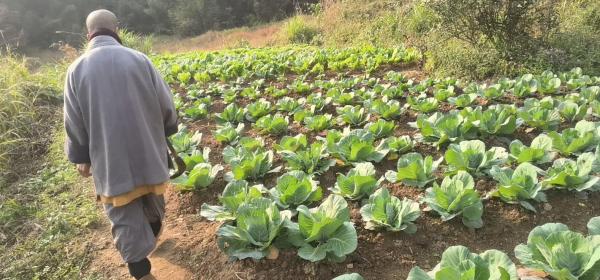
The Hermit is Self-Sufficient!

UK: Emergency Self-Ordination in the Chinese Vinaya Discipline! (14.10.2026)

Of course, the laity has a more superficial relationship with the Vinaya Discipline – and the Buddha taught soldiers, prostitutes, butchers, and even murderers, amongst many others. The Buddhist rules are NOT punishments inflicted by a disembodied sky-spirit (theistic god entity) – but exists to guide the psychological and physical energy that comprises an individual. The Buddha was scientific in that he emphasised cause and effect. We are responsible for the way we experience the inner (psychological) or outer (material) world. If you are happy suffering the consequences of the manner in which you live – and you never complain to anyone else about it – then why bother inflicting this form of Buddhist self-discipline upon yourself? There is no point. There are all kinds of reasons why people pursue the lives they do – and this is nothing to do with others – as we possess our own unique karma. Finally, status-hunting in the West – pretending to be a bhikkhu or being a genuine bhikkhu for the wrong reasons – is an offence and will bring its own hellish karma. The Vinaya Discipline is a very powerful and life-affirming vehicle that permits an individual to meet each manifestation of life with tranquillity and wisdom (in-depth).

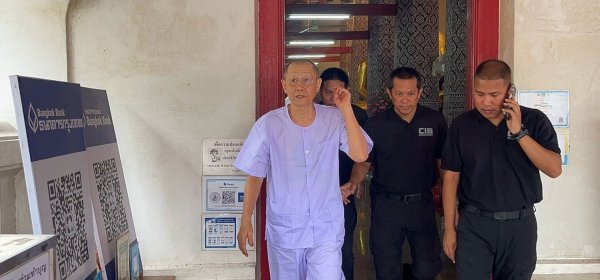
Police escort Atichote Thammavaro, formerly Phra Vajirayan, out of Wat Phutthaisawan in Ayutthaya after he was defrocked on Thursday

Thailand: Head-Monk Expelled from Sangha for Breaking Vinaya-Discipline! (20.9.2026)

Buddhist Head-Monk in-charge of a wealthy temple under royal protection (he was filmed engaging in sexual activity with a 47-year old female lay practitioner – as well as embezzling billions of baht into a private bank account. Many Buddhist temples exist in impoverished locations – with the monastics being told that they must be sustained entirely upon “Dhamma”. Now, having said that, this is not to imply that the Dhamma is not upheld in temples sponsored by the King of Thailand. The temple in Wimbledon is a very good example of a well-run Buddhist institute. Monastics living in the remote jungle areas of Thailand often do not eat for days on end – with some sieving water for nourishing algae found in flowing rivers to stave-off starvation. Either the laity are non-existent – or are too poor to even provide scraps of food to monastics during their daily begging rounds. The Theravada tradition is very good and it is important for Buddhism that its practices are upheld properly.

Shi Xingzheng (Front-Centre) & Shi Yongxin (Back-Left)

China: Former Shaolin Head Monk – Shi Yongxin – Recent Developments! (28.7.2026)

The Shaolin Temple was founded by visiting Indian monks to China long before Bodhidharma arrived (in 528 CE), Sitting and clearing the mind has always been the primary skill. However, many other temples and spiritual centres also combine seated meditation with “moving” meditation in the form of martial endeavour (it is even hinted at in the Book of Change). Although the Shaolin Temple is famous – it is in no way the only place martial arts are practiced for health and self-defence. Master Xu Yun changed the law in China by integrating the Vinaya Discipline with Chinese Secular Law. Failing to uphold the Vinaya Discipline is tantamount to breaking the law. What is happening to the former Head Monk of Shaolin – Shi Yongxin – is entirely due to the legal reforms that Xu Yun initiated in the early 1950s as a means to protect China from going down the Japanese path of abandoning the upholding of the Vinaya Discipline. The above translation (click picture link) gives all the recent developments in this fascinating case.

Fire Boat Festival (Lai Heua Fai), marking the End of Buddhist Lent on October 7, 2025. Coinciding with the full moon of the 11th lunar month

Laos: Rainy Season Retreat Comes to an End for Buddhist Monks! (13.11.2025)

Beyond the spiritual rituals, the festival grounds came alive with vibrant activity as local vendors showcased a wide array of goods, ranging from traditional foods and drinks to handmade crafts, clothing, and household items. The lively marketplace added a festive touch, transforming the event into not just a religious celebration, but also a vibrant community gathering.

Well-organized and secure, the event provided a safe and joyful environment for all attendees. It stood as a testament to Laos’ rich cultural heritage, while also promoting environmental consciousness and community unity.

As the glowing boats drifted peacefully down the Mekong and candlelight danced in the night breeze, the Fire Boat Festival once again proved to be a captivating blend of faith, folklore, and festivity—a timeless tradition that continues to illuminate the hearts of those who take part, year after year.

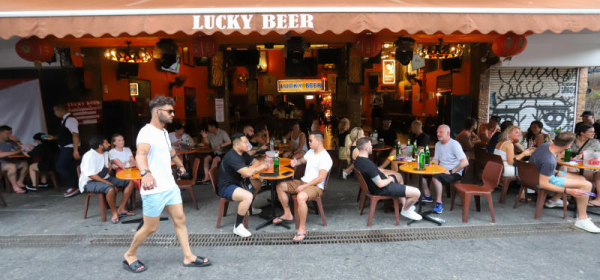
A scene of people socialising with drinks at a pub on Khaosan Road in Bangkok. (Photo: Pattarapong Chatpattarasill) Please credit and share this article with others using this link: https://www.bangkokpost.com/thailand/general/3133310/new-thai-alcohol-rules-put-drinkers-on-the-hook-for-fines. View our policies at http://goo.gl/9HgTd and http://goo.gl/ou6Ip. © Bangkok Post PCL. All rights reserved.

Thailand: Western Degenerates Lament Enforcement of Buddhist Morality! (10.11.2025)

With the possibility of drinkers themselves being fined, sales of alcohol may halve during those times, Bob, an assistant manager working on Friday said, declining to give his full name because he is not authorised to speak publicly.

There is also concern the stricter laws present an opportunity for officials to enforce fines on customers, restaurants — or both — for personal gain.

Taopiphop Limjittrakorn, a member of parliament from the opposition People’s Party who has pushed for liquor liberalisation, said alcohol sales should be around the clock. “The amended law aims to serve the purpose of those opposing alcohol,” Mr Taopiphop said.

They also risk confusing foreign tourists who may order a drink before the restricted hours but consume it afterward, he said.

In Thailand, where Buddhism is the main religion, practitioners and monks follow the Five Precepts, which include abstaining from alcohol and intoxicants to promote mindfulness and avoid heedlessness.

1 2 3 … 5