Blogger’s Note: The Concorde Museum is situation not far from where we live in South London – and I have written about our visits on this blog. I remember two Concorde aeroplanes taking-off on British and French TV – simultaneously – in the 1970s! It seemed miraculous at the time – and that was its intent. Of course, as a working class person from a poor background – I did not fly on an aeroplane until my late 20s (after getting married and working hard for years). Even them, these were mostly cut-price flights on economy airlines, etc, and I was grateful for the experience. Concorde was very expensive and not for the likes of me.
However, decades later, I discovered a permanently grounded Concorde in a museum – and it was on that aeroplane that myself and family finally experienced a “simulated” flight! This mimicked an actual flight with the Captain chatting away whilst we sat strapped into a seat. Sound effects and a slight rocking provided the rest. During the associated “tour” we learned that the US (in the 1960s) demanded that the UK and France manufacture a “faster than speed” aeroplane – to rivel a Soviet prototype that was being developed in Russia. As matters transpired, the Soviets mothballed their version a it was deemed “unsafe” as the state of technology stood at the time.
The idea was that the USSR would revisit the project as and when technology had advanced to a higher level – and passenger safety could be guaranteed. The USSR collapsed in 1991 before this situation developed (the Soviet version had an analogue GPS, etc). Meanwhile, US money was lumbered with a very expensive “Concorde” (pretending to be a manifestation of “friendship” between France and Brittan) – which was far too expensive for widespread commercial usage (it even needed a “special” landing strip different to those in standard usage) – and notoriously “dangerous” to operate due to the precarious state of its technology.
After one disaster involving 113 deaths in 2000 – the Concorde project was finally abandoned (the last commercial flight being in 2003). The Western technology was feasible but not practical – for a profit-making capitalist society. Only the mega-rich could fly on Concorde – but the massive fees in no way met the production and maintained costs – therefore the hubris of the US was a monetary failure (as no profit was made – with the entire anti-Soviet project being an economic loss). From this perspective, Socialist China has taken-up the baton from the Soviet Union – and has eclipsed all the best Western efforts in this area! ACW (21.1.2025)
2025-01-21 China Daily Editor:Li Yan
Ultrafast model that debuts next year expected to fly at speed of 5,000 km/h (around 3,107 mph or 51.7 miles per minute) – a journey between London and New York (3,445 miles) would take just 66.4 minutes!
Private enterprises in China have shown their strong technological and engineering capability by manufacturing big rockets, advanced satellites and powerful drones. Now, one of them is determined to go further: making a superfast suborbital airliner that can tremendously shorten intercontinental travel time.
Lingkong Tianxing Technology, a Beijing-headquartered aerospace company, announced on Monday at a news conference in Chengdu, capital of Sichuan province, that its next-generation supersonic technology demonstrator is under research and development, and is scheduled to make its first test flight in 2026.
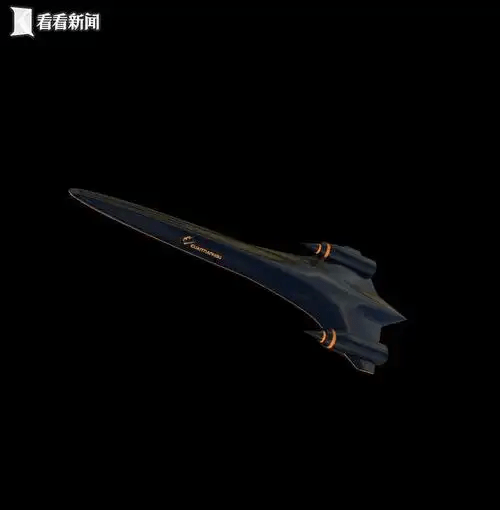
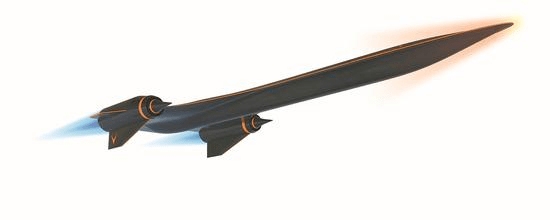
Deng Fan, the company’s chief engineer, said at the conference that the prototype of the aircraft — called Cuantianhou (窜天石猴), or Soaring Divine-Sky Stone Monkey — will be 7 metres long and weigh 1.5 metric tons. It will use a streamlined aerodynamic design that can effectively reduce air drag and improve flight efficiency.
He said the craft will be propelled by a state-of-the-art ramrotor detonation engine, which combines a rotary detonation engine, rotor compressor and ramjet technology.
The engine system, Jindou-400S, is also being researched at Lingkong Tianxing Technology. The 1.9-meter engine will weigh only 100 kilograms and will be able to create a thrust of at least 4,000 newtons.
“Using this engine will allow Cuantianhou to fly at a top speed of Mach 4.2, or about 5,000 kilometres per hour, which means the craft will be almost five times faster than a conventional jetliner,” Deng said.
The futuristic craft will be launched by a carrier rocket, which will bring it to an altitude of about 20 km, and it will then continue to fly on its own. Most of its journey will occur in “near space”, said the engineer, who declined to disclose how it will land.
Near space is the region of Earth’s atmosphere between 20 and 100 kilometres above sea level, encompassing portions of the stratosphere, mesosphere and lower thermosphere. It is above the top altitudes of commercial airliners but below orbiting satellites.
Despite the ultrafast speed, Deng said passengers on such supersonic aircraft will be completely safe from acceleration effects.
The company’s plan has become the latest endeavor by humans to revive the undying pursuit of ultrafast travel, which has long been symbolized by the legendary airliner Concorde.
Concorde, the first supersonic passenger-carrying commercial airplane, was built jointly by aircraft manufacturers in the United Kingdom and France. It was first flown in 1969 and was put into commercial operation in 1976. However, the epochal jetliner did not fit well in the civil aviation industry due to its loud noise, high fares, stringent requirements for airports and environmental impact.
If everything goes according to plan, the prototype for a commercial-use supersonic airliner named Dasheng — or Monkey King, a legendary hero in Chinese mythology — is expected to conduct its maiden flight in 2030. If that becomes reality, Dasheng will revolutionize the global air transportation sector, he added.
“Just imagine making an intercontinental flight within just two to three hours that you would now spend 10 hours or longer on,” Deng said.
Internationally, enterprises in the United States and Europe have been racing to design and construct a new generation of supersonic airliners to meet the potential demand of fast intercontinental travel.
 SANGHA KOMMUNE (SSR)