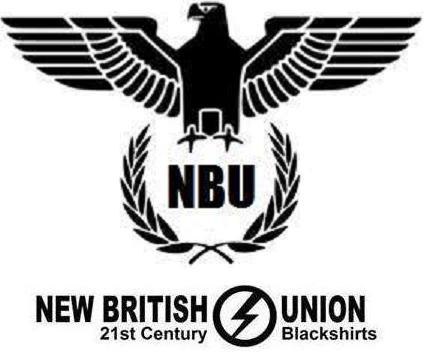
The term ‘British’ is not a distinct ‘race’ – but rather a collective concept designed to accommodate many different and distinct ethnic identities occupying a single geographical location. The far-right is not known for its intellectual vigour and is often its own worst enemy. The seeds for the defeat of fascism quite often lie within its deficient thought processes and the technique required to fight this ideology is simply the ability to see this reality and know how to deal with it. During the Victorian era, there was a drive in Britain to include all the Colonial peoples under the heading of being ‘British’. Therefore the subjugated peoples – including Africans, Indians, Chinese and indigenous peoples – all became ‘British’ whether they liked it or not. With the new genetic research revealing that indigenous ‘Celts’ were ‘dark-skinned‘ – the fascists can no longer falsely assert that all the old ethnicities of Europe were ‘White’ (that is ‘pink’) – and so yet another plank in their deficient ideology falls away!
Defining Terms:
The first important issue to recognise is that the US Anti-Intellectualism which enthuses the ‘new’ far-right should have no place in the UK – but it is here and it DOES influence how young British people think! This is a form of US neo-imperialism that has come home to roost – and which is ironically attacking the UK – the place where many ‘Americans’ originate! The US Bourgeoisie has made its own population ‘stupid’ through a one-hundred year process of anti-Socialist education sparked by the 1917 Russian Revolution! For a British person to define themselves as ‘Fascist’ is as counter-initiative as a racist referring to themselves as ‘Multi-Cultural’! It makes no ideological, historical or rhetorical sense!
The term ‘Great Britain’ refers to a theoretical landmass which derives from the Roman habit of defining ethnic groups as living in ‘Greater’ (Magna) or ‘Lesser’ (Parvus) geopolitical entities. When the Romans first arrived in Britain (55 BCE), the population was comprised of Celtic Tribes which extended into ‘Gaul’ (France). England did not exist until the Germanic ‘Angles’ invaded Britain from Denmark during the 5th century CE – just as the Romans were leaving. Even then, it took centuries for the term ‘England’ to materialise. Prior to this, the Romans controlled much of what would become ‘England’ with the extremities (involving Cornwall and the North) not being properly subjugated. What became ‘Wales’ was part of this once united landmass termed ‘Britannia’ (from the Greek ‘Prettanike’ – a word possibly linked to the term ‘Pict’) – but not all parts were overcome and controlled by the Romans. The Romans could not invade and hold Eire or Scotland.
I have read that the Romans eventually raised British (Celtic) Legions – one of which was redeployed to what is today North-West France in an attempt to defend the Roman Empire from Germanic incursion. As this Legion was comprised of Gaelic-speaking Cornish Celts – they referred to their new home as ‘Brittany’ – or ‘Little Britain’ (a smaller landmass). This was logical as their original home had been defined by the occupying Romans as ‘Great Britain’ (in otherwards, a ‘greater’ landmass). Originally therefore, a ‘British’ person is an indigenous ‘Celt’ living under Roman (Italian) Occupation. This term signified an indigenous ‘Celt’ (or ‘Pict’) who opposed Roman and/or German invasion. Later, through rape, pillage and legal and cultural appropriation – the indigenous ‘Celt’ was forced to integrate with the incoming Romans and Germans. This would later include ‘Vikings’.
The Greco-Roman term ‘British’ eventually became a ‘multi-cultural’ and ‘multi-ethnic’ term that comprised the mixture of at least three different ethnic and/or tribal groupings. These three groups are culturally unrelated and quite often genetically distinct. There is NO racial unity (or ‘purity’) implied in the term ‘British’. Following the 1066 CE invasion of Great Britain by the Norman French – the Duchy of ‘Normandy’ in North-West France – a part of France was added to the ‘British’ crown. During the 12th century, the Anglo-Normans invaded ‘Ireland’ and added a new Celtic strand to being ‘British’. Great Britain, therefore, eventually comprised the single ‘Kingdom’ of England, Wales, Scotland, Ireland and France – all ruled over by the British Crown.
As Great Britain lost control of France (King George III formally ‘relinquished’ a claim to France in 1800 CE) – a ‘new’ designation was required which legally evolved through many reforms that culminated in the 1801 Acts of Union officially linking the Parliaments of Great Britain to Ireland. This was required following the 1649 CE execution of King Charles I and the ending of absolute monarchy in Great Britain. Prior to this, it was the personage of the British King or Queen who held the legal unity of Britain and Ireland together. When this ‘unity’ was abolished – then the resulting regional Parliaments were not legally linked together – hence the requirement of a new ‘Act of Union’. Great Britain lost control of Ireland in the early 1920s – retaining only the small area of ‘Northern Ireland’. This led to the new legal entity of the ‘United Kingdom and Northern Ireland’ – which is distinct from ‘Great Britain’ – which does not include ‘Northern Ireland’ but does technically include ‘France’! Quite often these two terms are combined to form the ‘United Kingdom of Great Britain and Northern Ireland’.
Note: Although the ‘United Kingdom’ was originally a unified collecton of Parliaments subordinate to the ‘English’ (British) Parliament situated in Westminster (London) – it is termed a ‘Kingdom’ due to the ‘English’ (British) Parliament voting to institute a ‘Constitutional Crown’ during the so-called ‘Restoration’ (1660). Today, this might be termed a ‘Psychological Operation’ devised by the ruling Bourgeoisie (Middle-Class) to placate those British people (both of the ‘Upper’ and ‘Lower’ class) who favoured an absolute monarchy – but who did not fully understanding that ‘nothing’ was being ‘restored’.
Whereas a Parliament ‘serves’ an absolute monarchy and is subject to every whim of the ruling King or Queen (who can ‘dissolve’ and ‘form’ a Parliament as and when they see fit) – a ‘Constitutional Monarchy’ serves the Parliament that creates it and possesses NO independent power whatsoever (a ‘Constitutional Monarchy’ exists at the whim of a Parliament which can ‘dissolve’ or ‘form’ such an entity whenever it sees fit). Naming a collection of Parliaments a ‘Kingdom’ (that is a country ruled by a ‘King’) is part and parcel of this deception as it gives the false impression that a number of ‘Republics’ are still ruled by an absolute monarch.
This was considered important during the 17th century in the UK as the Bourgeoisie had wrestled political power away from the Aristocracy – and had no intention of losing its control of the means of production. The same argument can be made for so-called ‘State Religions’ – as once an absolute religion is ‘abolished’ – any reprisals become simply toothless voluntary affairs. As matters stand, the ‘United Kingdom’ is a collection of secular (irreligious) Parliaments which choose to appoint paid Officials termed a ‘Monarch’ and an ‘Arch Bishop’ to generate the falsehood that absolute monarchy and unquestionable religion still exist throughout the British Isles and Northern Ireland.
Incidentally, the Channel Isles (situated off the coast of North-West France) were once considered part of the Duchy of Normandy and were co-opted into the British Crown after 1066 CE. What is termed the ‘British Crown’ today is in fact the ‘English’ (British) Parliament situated in Westminster – which judiciously masquerades as a ‘monarch’. As a consequence, as the Channel Isles did not possess ‘Parliaments’ – they were not included in the term ‘United Kingdom’. As a consequence, these islands – which are nearer France than England – are still considered part of ‘Great Britain’. This explains why the term ‘Great Britain’ is retained in the legal description of the UK. As the populations of the Channel Isles do not pay ‘taxes’ directly to the UK government (Parliament) – these locales did not receive the benefits related to the (1948) Welfare State and National Health Service reforms initiated by the incumbent Labour Party.
UK Neo-Nazi & Neo-Fascist Groups:
 SANGHA KOMMUNE (SSR)