Sheldrake Lecture - 2004

UK: Should Cambridge University Investigate Rupert Sheldrake? (12.8.2026)

The Buddha does not contain ALL knowledge as if it were lying dormant in his mind at any given moment (therefore he is not “omniscient” in this sense) but he does say that an enlightened being can direct the mind in any direction he or she wishes (like a net enveloping and collecting all things) throughout the world, and in so doing bring any part of it into his enlightened conscious awareness.  This lasts for as long as concentration is held in that direction and then fails away – remember that the true nature of the mind is “empty” and spacious – so that all phenomena seems to arise and pass away within it.  In fact the Buddha states a long list of abilities and powers he possesses – including the ability for his mind’s awareness to travel to other worlds.  What happened over-time is that through various commentaries and translations, the fact that the Buddha could move his mind’s awareness in any direction (or none) became conflated with the idea that his mind’s awareness was already in every place and at every time.

PRC Buddhism is Socialist!

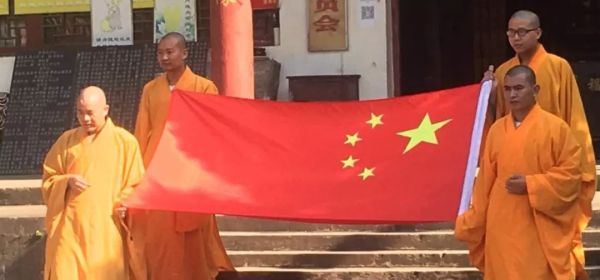
BMA-UK: Zhao Zhihao (赵志浩) – Promoting the Further Sinicization of Buddhism & Integration with Socialist Society! (3.8.2026)

As the Mahayana Sutras became more popular in China than the Pali Suttas – the idea of strict vegetarianism (which had spread from India via various Vinaya Discipline texts) took root (even though it was only meant initially for the monastic order). Buddhist vegetarianism was not invented in China (as the author of the below [translated] text seems to imply). It is true that at least two Emperors in China did ban meat-eating in their respective countries – and instigated an expansive vegetarianism amongst the general public (Buddhist and non-Buddhist). This meant that Buddhist monastic vegetarianism was spread throughout the Buddhist laity and beyond – and this was a transformation of Buddhist practice in general that has persisted into modern times. Much, if not all of the interfacing Chinese philosophy that at least gave structure to Chinese Ch’an (Dhyana) Buddhism arose from the “Change Classic”

Was Stonehenge the Epi-Centre of Hyperborea?

Email: Was Stonehenge the Epicentre of “Hyperborea”? (30.6.2026)

However, I think the Druids may well be pre-Celtic – and yet still existed in Britain when the Romans arrived – living quite happily amongst the Celts. Indeed, the two cultures – the “Druid” and the “Celtic” appear to have peacefully co-existed and nourished one another. Whereas the Druids and Celts viewed the Romans as being “foreign” and “incompatible” – these two cultures viewed one another as mutually reinforcing. Greek explorers probably reached the British Isles a long time ago – when its weather was humid (even tropical), the population small, and the food plentiful. Stonehenge was built around 3000 BCE – so everything was inn-place for an idyllic interpretation and the construction in the Greek imagination of the a mythically “perfect” place. The Greek words “ὑπέρ Βορέᾱ” – can be translated as “Hyper” (“Beyond”) “Borea” (the “North”) – or perhaps “Over the Northern-Sea”.

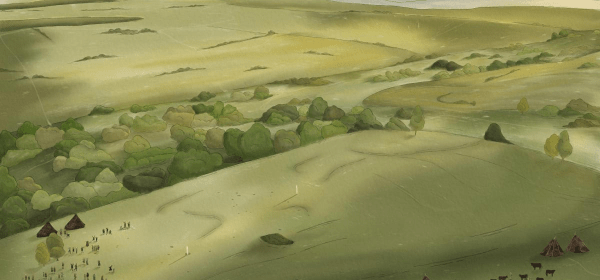
Timeline and reconstruction of summer solstice celebrations as they might have appeared at Bulford 5000 years ago © Wessex Archaeology

UK: Strange Stories from England – Proto-Stone Henge Dsicovered! (19.6.2026)

“The discovery at Bulford is fundamental because it’s the earliest example of people building things here that aim directly at the solstice. When we talk about the solstice, we’re talking about religion. About how prehistoric peoples understood the cosmos, the world, and their place in it. What we see at Bulford, and later at Stonehenge, is a way of celebrating and marking the passage of time, but it’s also about making sure the world keeps working as it should. It’s likely their way of saying to their deities, please keep us in mind, keep us warm and safe. It’s a religious event. That’s why it’s so important.”

80 000 Wooden Blocks of Complete Collection of Buddhist Scriptures

DPRK: Buddhist Sutras on Display! (17.6.2026)

On a slightly different note, there was an English man called “Stephen Bachelor” who travelled to South Korea and joined a Buddhist monastic order. Indeed, I believe he eventually met the woman who would become his wife – at the time a Buddhist “nun”. Upon returning to the UK he established a Buddhist College in Devon – but as the years went by he started to describe himself as an “atheist” who do not believe in any form of religion or mysticism. He even banned Buddha statues from his meditation rooms – and when my teacher – Richard Hunn – was invited to teach, he also banned all incense. Of course, Buddhism is not a religion with the Buddha being described as “non-theist” (he said gods only seem to exist until believers realise they are non-existent). Yes – monotheism was unknown in the Buddha’s time – so it is interesting to consider what exactly it was that Mr Bachelor was reacting to? Did he think Buddhism was a religion – and the Buddha a god? Is this what they were teaching in South Korea?

Peter Wyles Passes Away Sat Upright 29.5.2026 2015hrs

UK: My Father Radiating Peace & Love at the Point of Departure! (31.5.2026)

375. Control of the senses, contentment, restraint according to the code of monastic discipline — these form the basis of holy life here for the wise monk.

376. Let him associate with friends who are noble, energetic, and pure in life, let him be cordial and refined in conduct. Thus, full of joy, he will make an end of suffering.

377. Just as the jasmine creeper sheds its withered flowers, even so, O monks, should you totally shed lust and hatred!

378. The monk who is calm in body, calm in speech, calm in thought, well-composed and who has spewn out worldliness — he, truly, is called serene.

379. By oneself one must censure oneself and scrutinize oneself . The self-guarded and mindful monk will always live in happiness.

380. One is one’s own protector, one is one’s own refuge. Therefore, one should control oneself, even as a trader controls a noble steed.

381. Full of joy, full of faith in the Teaching of the Buddha, the monk attains the Peaceful State, the bliss of cessation of conditioned things.

382. That monk who while young devotes himself to the Teaching of the Buddha illumines this world like the moon freed from clouds.

1 2 3 4 … 14