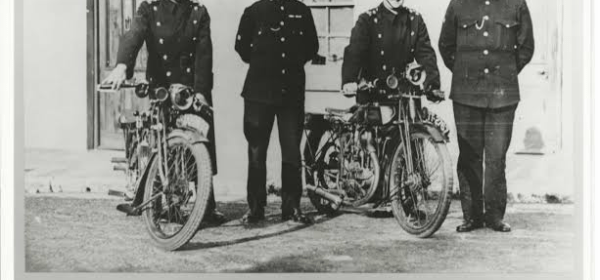
Police Used to Direct Traffic at Cross-Roads Prior to Traffic-Lights

UK: How the Bourgeois State Uses “Suppression” to Control Society! (20.8.2026)

Herein lies the root contradiction that often leads to a profound shock with many workers suffering PTSD when encountering police officers. And this even before being handcuffed and locked in a cell is experienced. This experience is precisely how a Fascist State operates all the time. The liberals claim their version of society is superior to fascism – but it inflicts a fascist-type law enforcement upon its citizens. This is an interesting contradiction to consider. Liberal democracy possesses very little freedom to chose from in reality – and has the tendency to inflict a fascist-style suppression upon its own population. Should the workers group together and demonstrate solidarity in the face of police oppression – then the Bourgeois State will unleash the military. Whereas the police deprive an individual of freedom (and occasionally of life) – the military always deprives the individual of life. After-all, the bourgeoisie secured its political power by force of arms – and retains its power by force of arms.
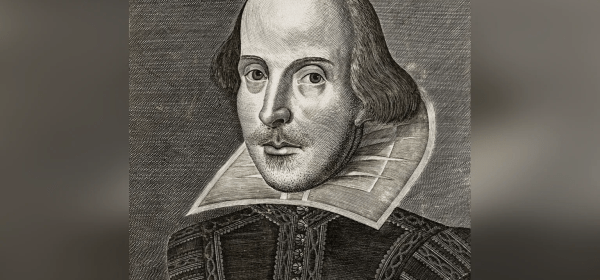
The discovery may indicate that Shakespeare spent more time in London in his later years than previously thought

UK: Location of Shakespeare’s Blackfriars House Discovered! (17.4.2026)

One of the documents was a plan of part of the Blackfriars precinct, drawn up in 1668, two years after the Great Fire of London, which confirmed the precise location and size of Shakespeare’s Blackfriars house.

The part of the property that spanned the gate did not appear in the post-fire plan because it had no foundation.

Munro said: “This house was close to [Shakespeare’s] workplace at the Blackfriars theatre.

“We know that Shakespeare co-authored Two Noble Kinsmen with John Fletcher later in 1613, and this new evidence that the Blackfriars house was quite substantial makes it not inconceivable that some of it may have been written in this very property.”

The other two of these documents relate to the sale of the Blackfriars property by Shakespeare’s granddaughter in 1665.

The property covered what are now the eastern end of Ireland Yard, the bottom of Burgon Street and parts of the late 19th Century buildings at 5 Burgon Street and 5 St Andrew’s Hill.

Market Overton - 17th Century Window!

Market Overton: 17th Century Window! (6.11.2025)

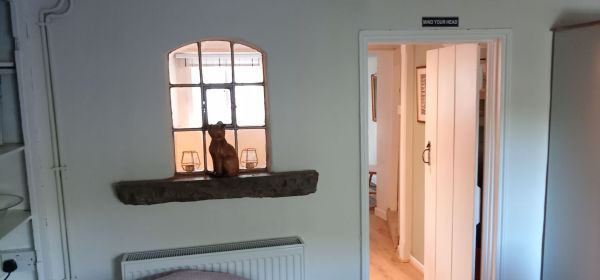
What is now the dining area – where I set-up my study space – was probably once part of the garden. Therefore, the window itself was once considered the height of building technology. In those days, draughts from blowing winds were a major issue. The frame of this window is firmly embedded in the wall-structure so that no wind can penetrate. The cement and plaster hold it robustly in place – whilst its relatively small surface area allows for strength and stability. As glass was not as strong then as it is now – the panes of glass used were far-smaller – with each held in-place by its own frame. Furthermore, and a feature I like, is the central pane that possesses a stout hinging and opening and shutting mechanism. Even today – this design still retains much of its original strength – whilst being now inside the house means it is now better preserved.

1600s Door-Frames Were a Tad Lower!

Rutland: Standing To Attention Was Abit Different in the 1600s! (27.10.2025)

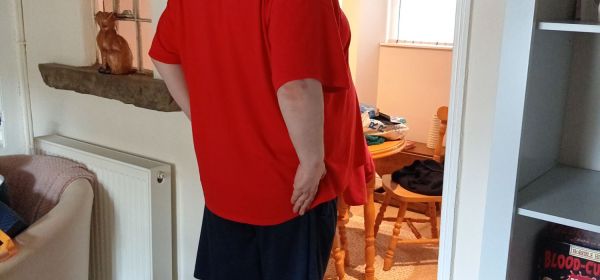
We are currently staying in a 17th century cottage in Market Overton. All the door-frames seem to be about 5’8″ high – if that. Blimey, if I volunteered for Cromwell’s forces, I would probably need a Shire Horse and a massive breast-plate! I am around 6’2″ tall and when I stand to attention – about a third of my head protrudes above and beyond the height of the average door-frame. I am always advising my two daughters to stand-up tall so that they grow to their full potential. Gee is 5’4″ tall – which is tall for a Chinese person who ancestors hail from South China.

36 The Main Street - Market Overton - Rutland

Rutland: Teddy’s Cottage – Market Overton! (27.10.2025)

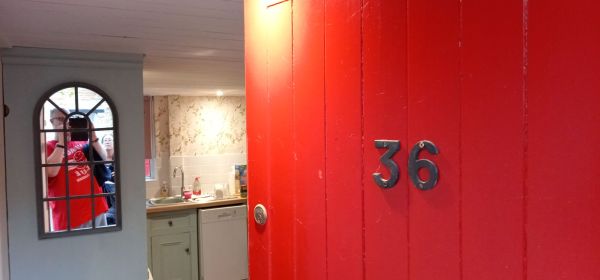
The above is extracted from the linked (historical) articled presented at the top of this article. I believe this information refers to the row of cottages – one of which – we are currently staying within for five-days. This is our current Research Headquarters for this visit (25.10.2025-30.10.2025) – where we will be travelling to and from Duddington (and the surrounding areas). In the information pack provided in the property – it states the house dates from the 17th century (1600s). It possesses two floor, two bedrooms, a downstairs living-room, dining-room, kitchen, and foyer. Much of the downstairs flooring is flagstone – with the floor levels from one room to the next being uneven (on different levels). Apparently, this has something to do with the age of the building.

17th Century Safe - Old Wooden Safe - Built In2o Bedroom Wall!

Market Overton: 17th Century Wooden Safe – Built into Bedroom Wall! (26.10.2025)

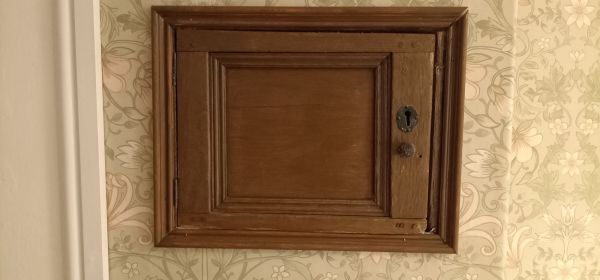
Anyway, I digress. This morning, and for the first-time in decades, I heard a local Parish Church ring the church-bells – summoning the faithful to worship on this crisp Sunday-morning! I am literally sat in the epicentre of history! Probably far more so than usual. As you can see above – in the bedroom I am frequenting – there is a wooden safe built into the wall. The wood does not seem that secure to me – and I know I could easily place my fist through the door – it seems that thin (not that I would do such a thing). Years ago (in Hong Kong) when I had to punch objects whilst holding an egg in the palm (which had to remain “unbroken”) – the objects I had to hit were far more “stout” than this structure. I cannot not discern any writing on the casing of the safe – but such a craftsman’s signature might be immediately adjacent to the inner wall structure.

1 2