Okinawan's in Beijing 2026

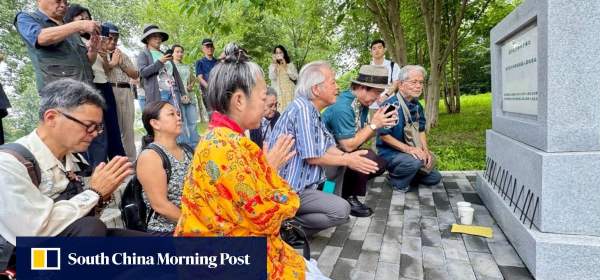
China: Respectful Okinawan People Return to Their Ancetral Shrines in Beijing! (28.10.2026)

As far as I am aware, the Ryukyu Islands (Okinawa being largest) has been a distant Vassal State of China since as far back as the Sui Dynasty (581–618 CE). In other words, in return for political recognition and an annual tribute – China would militarily protect Ryukyu – as well as establish trade, cultural, and political links. Indeed, many hundreds of Chinese people settled on the islands of Ryukyu over the centuries (bringing their culture, language, and philosophy) – with hundreds of Okinawans visiting China to learn things such as martial arts. What the Japanese now call “Karate” – is actually transplanted Chinese gongfu styles modified to suit the new environment. Of course, there are “indigenous” Ryukyu Islanders whose DNA is not related to “China” or “Japan” – with others being from Japan. Okinawans of Chinese ethnic and cultural origin should be permitted to exhibit their identity freely – without fear of persecution or censure. During WWII – the Imperial Japanese used the Okinawan people as human shields when the US invaded (the Japanese did this because they have no respect for Chinese people – and they view the Okinawans as “Chinese”). Indeed, the Americans glorified in the murdering of these people who were stuck between two lunatic powers – even “filming” the killing of unarmed Okinawan women and children.
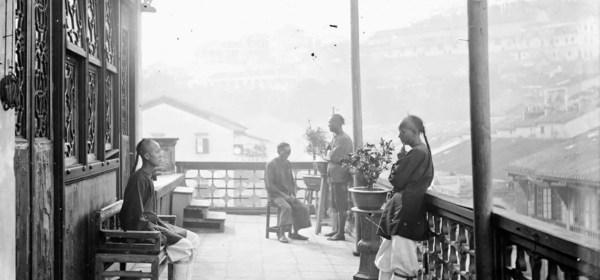
Hong Kong Tea House - 1868-1871

UK: How a 14-Year Old “Sir Harry Parkes” Witnessed the First [1842] “British” Photograph Taken in China! (26.10.2026)

As with all things – the “devil is in the detail” – so-to-speak. It is ironic that the British government’s attitude toward the photographic technology invented by English scientist – Walter Talbot – made it so expensive that virtually no-one British could afford to use it either in (or outside) the UK! Instead, British citizens travelling abroad often had to use the French photographic technology developed by Louis Daguerre. We can see this contradiction in operation as Western photography unfolded in China during the early 1840s. It would seem that the British took the first photograph in China (of themselves) during 1842 – but no known example of this picture exists today. Of course, a copy might exist somewhere, as of yet undiscovered. Nevertheless, there is a diary extract recording this event written by a 14-year old Harry Parkes – who would go on to be a very important British diplomat.

Felice Beato - British Photographer!

UK: The Historical Background of Colonial-Era Western Photography in Beijing! (26.10.2026)

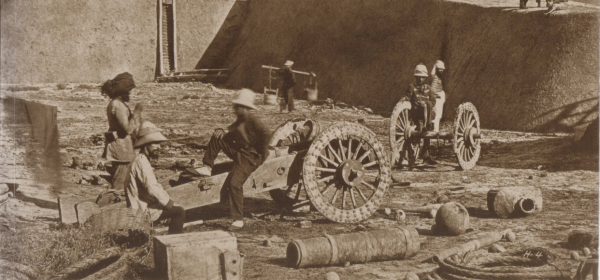
What is truly curious, however, is that more than 30 years have since passed, yet this particular panoramic scene remains in my possession alone; I have neither encountered nor discovered the existence of a second copy. Thus, for the time being, it can be said that the earliest images of the Inner City of Beijing—specifically the area around Tiananmen—(found in printed materials from the Republic of China era) exist only in my personal collection; no one else possesses them. In terms of historical narrative, this photograph—a view of Beijing’s Inner City forcibly captured by Anglo-French aggressors—represents an eternal source of pain for the Chinese people. It serves as stark, tangible proof that a nation left behind will inevitably fall victim to aggression.

Shi Da Dao - Ch'an Caodong School

UK: On Why Genuine Buddhism is “Anti-Capitalist”! (22.10.2026)

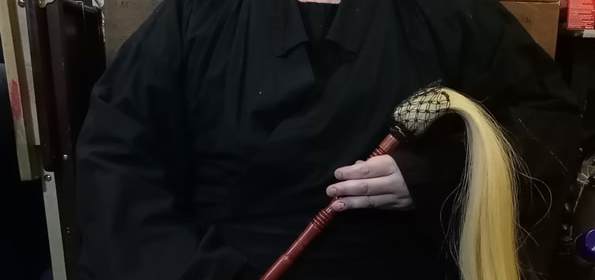
For most people the reality of everyday life involved a mutually supporting communal-activity (a “Sangha”) with “bartering” reserved for the importing or exporting of goods and services. Every member of such communities was a) entitled to all the goods and services of that community, and b) was expected to contribute to the generating of those goods and services. Within the Vinaya Discipline, the Buddha states that the lay-community may participate in any form of “honest” (bloodless) commerce that may (or may not) involve the handling of money (coinage or otherwise). A lay-household must ethically budget to a) supporting itself, and b) the broader community (through charitable donations) – as well as “saving” money (or goods) for emergencies and hard-times. Part of this lay-budgeting involves the lay-household giving waste food and water to the bhikkhus (beggars) of the Buddha as they slowly (and consciously) “walked” through their neighbourhood on a daily basis. The reward is karmically-premised – as this action permits these monastics to pursue the Dhamma in the purest manner. The bhikkhus are “freed” from the requirement of their participating in the world of cyclic existence and this attracts an immeasurable measure of great and good karma. (The situation in China is slightly different – as although the laity is free to donate as little or as much as they like [thus generating good karma] – the monastics must grow their own vegetarian food – and not be a burden to any other community). As for the bhikkhus (and bhikkhunis) there is to be NO participation in the worldly activities associated with commerce. This is because all greed, hatred, and delusion must be uprooted during meditation practice from the mind and body.

Karl Giese and Hirschfeld

Germany: Magnus Hirschfeld & His Two “Boyfriends”! (12.10.2026)

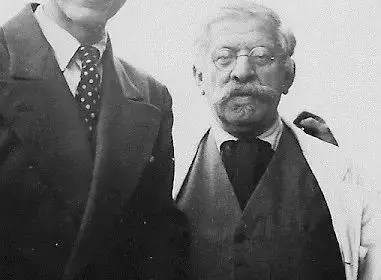
Magnus Hirschfeld (1868-1935) had two prominent life partners. The first was “Karl Giese” (1898–1938) – who was 30-years his junior. Giese had previously worked as an “Archivist” at the Institute for Sexual Science. In 1931, Hirschfeld met “Li Shiu Tong” (1907-1996) – a 23-year-old medical student – in Shanghai (Li was 49-years younger than Hirschfeld). Li became the partner of Hirschfeld – who referred to him as “Tao Li” (桃李) – meaning “Peach – Plum” (a synonym for “homosexuality” or an “effeminate” man). Hirschfeld, Giese, and Li Zhaotang lived together in Switzerland and France. Apparently, despite living as three-some – these two men sometimes conflicted with one another through jealousy (according to the available literature).

Magnus Hirschfeld & Chinese Boyfriend - Li Shiu Tong ( 李兆堂)

Germany: Magnus Hirschfeld & Chinese Boyfriend “Li Shiu Tong”! (12.10.2026)

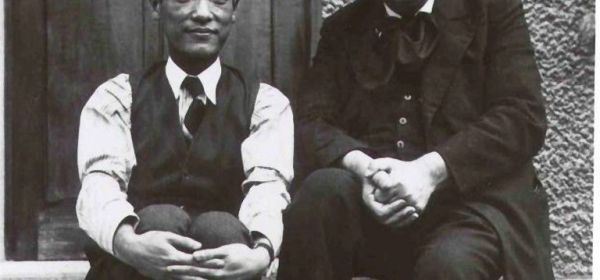
Whether or not the Hong Kong-born (British Subject) – Li Shiu Tong (李兆堂) [1907-1996] – was his lover is open to debate – but the weight of evidence does seem to suggest that he was (either Li’s Chinese family understood he was gay and approved of it – or they did not fully comprehend what was happening – and mistook his travelling abroad as being the product of his clever and successful scholarship). Hirschfeld was around 49-years his senior. I will attempt to look-up a reliable Chinese-language biography of Li and translate it for this blog. After the death of Hirschfeld – Li tended to drift toward the idea that LGBTQ identities are partly genetic and partly environmental. Li studied medicine in Shanghai – but never finished his degree – and even studied at Harvard, again without completely his degree. He was obviously very intelligent and managed to leave China and hold his own in the West. Li died in Canada aged 86 – with his younger brother dealing with his affairs. Reports suggest most of his Western property (much of it inherited from Hirschfeld – was thrown into a public skip. Indeed, a passerby is said to have rescued some of it – including the text-books, notes, and even the death-mask of Hirschfeld.

1 2 3 … 23