
Blogger’s Note: As far as I am aware, this place was originally called the “Croydon Aerodrome” – and only later became an “Airport”. As it is located just outside Sutton (in Purley Way) – I have seen it described as “Sutton Airport”. I also have a dim memory that the area was used in WWI by the Royal Flying Corps – and possibly a place for launching Airships and/or Balloons – although this information is missing in this article (although I have linked the museum above). The single comment left below states that the museum has been open since 2000 – but this is news to me and I live near this area. I thought it served as a hotel and perhaps part of it still does. I know that the UK’s last Hangman – Albert Pierrepoint – used Croydon Airport when travelling around London gaols plying his deadly trade (probably in 1953). It was very rare for ordinary working-class people to use air travel prior to the 1970s (the Beatles did in the 1960s onward – as they were mega-rich and famous by then) – but Albert Pierrepoint’s travel was paid for him by the Home Office – his employer. ACW (11.6.2026)
Andrea Blazquez and Chloe Dobinson Digital Production Editor – 09 Jun 2026
Abandoned Surrey airport reopens as museum 67 years after closure
Once Britain’s main international airport, it has reopened its doors to the public as a museum
Croydon Airport has thrown open its doors to visitors once more after shutting in 1959. Previously serving as Britain’s principal international airport, it shut down for good 67 years ago and has remained unused ever since.
This year marked the first time the airport welcomed the public as a heritage attraction. Now operating as a museum, the site allows visitors to explore the original terminal building on the first Sunday of each month.
Originally opened in 1920, Croydon Airport played a pivotal role in advancing aviation in the aftermath of World War 1.
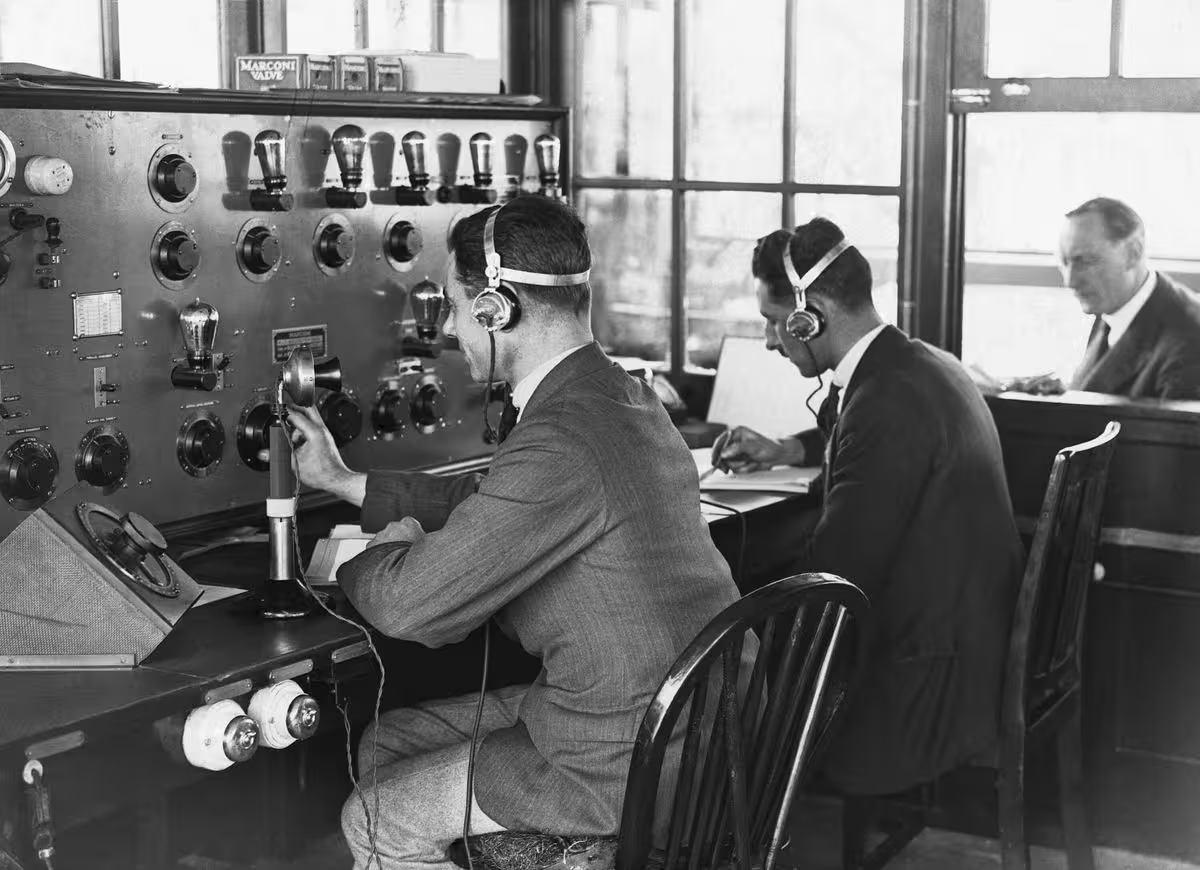
The location is celebrated as where the ‘Mayday’ emergency call originated. In 1923, F.S. Mockford, who served as Croydon’s Senior Radio Officer, devised the distress signal “Mayday, Mayday, Mayday”, taking inspiration from the French expression “m’aidez” (“help me”), reports Surrey Live.
Historic Croydon Airport explained: “‘Mayday, Mayday, Mayday’ was subsequently approved by the Air Ministry as the required radio procedure to be used in an emergency. In 1924, the UK promulgated its approval and use through the publication of The Air Pilot: Great Britain.
“Adopted by the International Radiotelegraph Convention of Washington in 1927, ‘Mayday’ became the international standard distress phrase. The ‘Mayday’ distress call still saves lives today.”
The airport shut its doors owing to constraints that prevented it from accommodating larger planes, with its last departure taking off from the storied terminal in September 1959.
The Croydon Airport Visitor Centre has an impressive 4.6 Google rating at the time of writing.
Visitors to the museum have recently taken to Tripadvisor to share their thoughts, with one remarking: “Fascinating trip through the history of passenger aviation!”
A fellow guest wrote: “I have lived in the area all my life and even used to go to Purley Way Lido across the way from the airport as a child, and didn’t know the significance of Croydon Airport. I was amazed how well preserved the building was, and didn’t even know it had a control tower. If you are into aviation or history, it is a must-see.”
Another said: “Very nice and detailed tour, highly recommended. But you will have to keep checking for the tour date as it’s not year round function.”
One person said: “This local gem has great volunteers and interesting history (such As being the world’s first control tower and carrying almost half of the UK’s air passengers in 1935). The tour, photos, and signage do give an interesting view as to what it was like in the 1920s and 1930.”
Finally, another added: “Great place to visit. Tour guide Micheal in the museum gave a great talk and overview. Would recommend for all ages. Visually great with so much so see. Definitely a must see for anyone who loves aviation.”

