Capitalism kills people all the time. In fact, it is fully understood that the “free will” that dares to oppose the spread of the so-called “free market” (a market “free” of any limiting or controlling factors) must be viciously and brutally removed by an overt display of force. Why the intimidation? This is to deter anyone else from adopting such a resisting attitude. Blatant military force plus intimidation equals the expansion of the free market. Many are surprised to learn that despite the anti-intellectual (and ahistorical) US statements used to justify its actions (primarily aimed toward its own populace and external allies) – a recent academic report from a US university stated that between 1945-present – the US military deployed around the world had killed around 30 million people (men, women, and children) in pursuit of its socio-economic and geo-political objectives. US citizens either remain unaware of this astonishing fact – or know about it – but do not care. This is where the justifying propaganda that supports the spread and maintaining of predatory capitalism earns its keep, so-to-speak (minus taxes, of course).
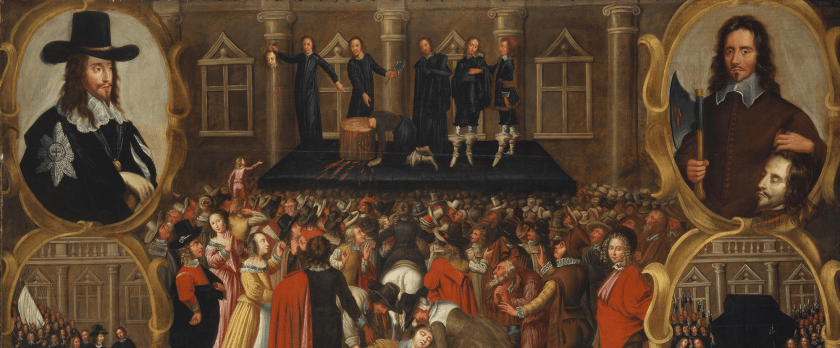
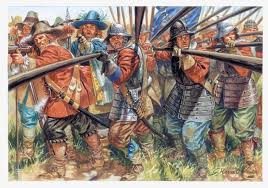
Obviously, all the injustices and inequalities stem from “class” and “class domination” (with the notion of “race” being a mass delusion). The mode of amassing profit (capital) is exactly how a section of the English peasantry became rich enough to socially, culturally, and politically mimic (parallel) its aristocratic betters (I am being sarcastic). Prior to this, during the Middle Ages, there were only two-classes – the ruling aristocrats (led by an absolute monarch) and the oppressed peasants (or that part of the society that was numerically dominant). Here is the glaring contradiction – the minority controlled the majority using the agency of political power. Public executions were brutal and designed for one objective – to scare the majority into submission to the minority. A certain strata of the oppressed were lifted-up by the minority through the transference of a little State power and influence. The military, for instance, a) protected the rulers from the ruled – and yet drew its recruits from the ruled, and b) protected the State from external attack (where it was likely to be assaulted by similarly trained peasants). The attackers and the defenders had more in common with one another than the identical (dominant) class each was fighting for.
The bourgeoisie – that is the “Merchants” – amassed so much wealth serving the aristocracy (acting as middle-men between the nobility – and the luxury goods they so dearly desired) that it was able to purchase fine clothing and good housing, whilst also sending its children to Public Schools, and to stand in Parliamentary elections (this is a UK model) – after attaining the right to vote (linked to income and status). This privileged section of the peasantry left the majority of its class behind as the aristocracy granted it ever greater levels of political influence and social dominance. Eventually, this new “Middle Class” was trusted with procuring weaponry and hiring fighting men for the nobility – a position the bourgeoisie eventually used for its own empowerment. This is why across Europe numerous Civil Wars broke-out between the bourgeoisie and the nobility – with each vying with the other to attract the peasantry to their respective banners. In the case of the English Civils Wars (three conflicts that occurred in the 1640s and 1650s) – Parliament had been slowly infiltrated by bourgeois Members of Parliament (MPs) over a long period of time. These individuals played-ball for decades before showing their true class colours and finally taking on the English State.
Although Oliver Cromwell started the war as a bit-player – he rose through the ranks through merit and become the eventual leader of the Parliamentary Movement. He was something of a military genius and a talented political leader. As a gentlemen-farmer (a wealthy land-owner) – Cromwell was of the opinion that the peasantry should a) have their lives positively improved by the English State, and b) in return for this improvement, the peasants should fight en masse in Parliament’s Armies against the King (Charles I). However, there was a slight catch, as before any dramatic improvement could take place in reality, the peasants had to assist the bourgeoisie to attain complete and total political control of the English State – primarily through warfare (remember, the peasantry could not yet vote – and so the violent overthrow of the State was their only viable option). What is interesting is that the English peasantry listened to Cromwell and joined his armies in their tens of thousands (they would also die in such high numbers). This shift in social power – which saw the inherent power contained in the numerically superior peasant class clearly harnessed – permitted the the bourgeoisie to effectively take on the King – and this is why Charlie was eventually killed by a blow to the neck! Furthermore, Cromwell reformed the “Kirk” (Church) effectively abolishing the Church of England (“kirk” is Gaelic for “Church” in Scotland). Cromwell was a devout Puritan who believed an enforced State religion was an “evil”.
 SANGHA KOMMUNE (SSR)