
(Translated By Adrian Chan-Wyles PhD)
Entertainment Times 8.10,2023 – Shandong
The war with the largest number of participants in the world was the Soviet-Nazi German War during World War II. This large-scale, fierce and tragic war shocked the world. Although the Soviet Union and Nazi Germany had signed a Non-Aggression Treaty before the outbreak of World War II, as the situation changed, both sides tore up this Agreement and entered the unimaginable destruction that would become the Soviet-Nazi German War. This war attracted more than 20 million participating soldiers – as both sides developed the most advanced high-output weaponry. On this battlefield full of hundreds of thousands of tonness of artillery shells, both sides tried to compete for the advantage in firepower. The Soviet-Nazi German artillery battle can be said to be a very shocking affair.
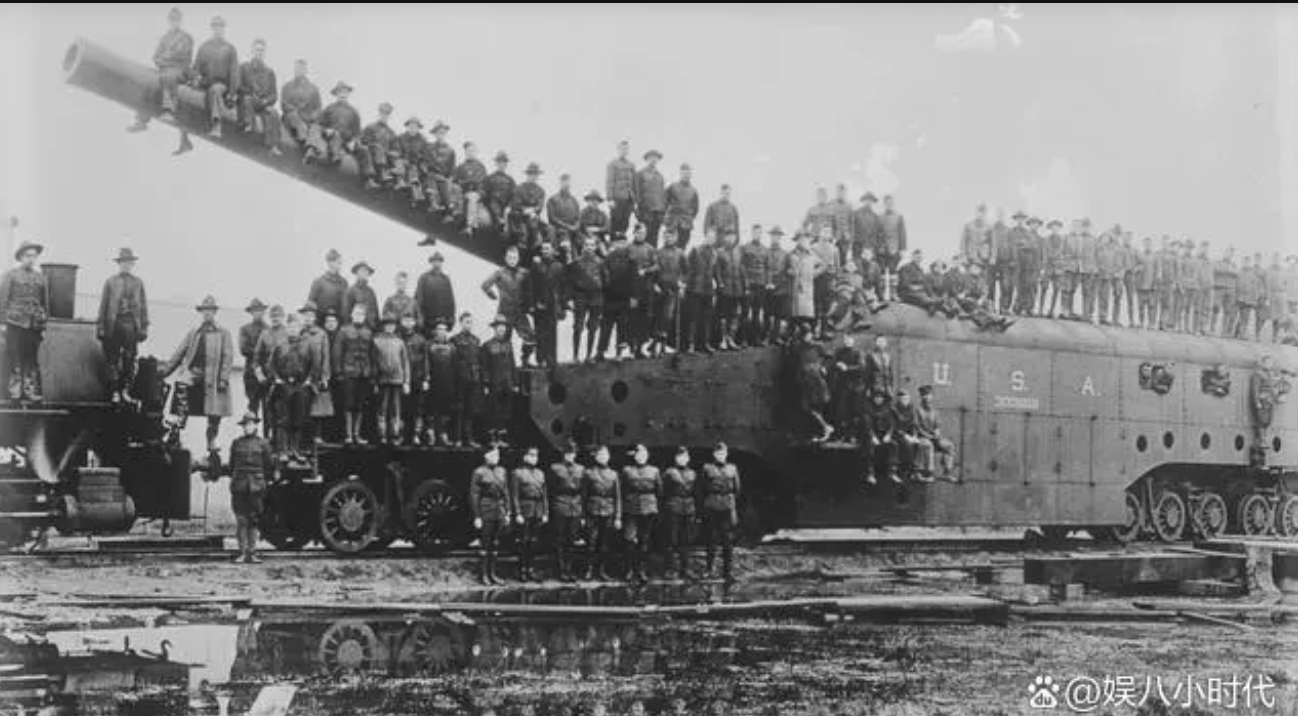
Nazi Germany’s Gustav Artillary Gun was one of the most famous heavy artillery weapons at the time, also known as the “Dora Gun”. This artillery gun weighed 1,350 tonnes, equivalent to the total weight of 26 Tiger Heavy Tanks, with a barrel-length of 32 metres, a barrel-calibre of 800 mm, and each shell weighing seven tonnes. The maximum range was around 38 kilometres. This heavy gun was manufactured at the Krupp Arsenal. The barrel-length is enough to accommodate a squad of soldiers, and the size of a shell is even larger than a German soldier. It fully met the sinister expectations associated with the Nazi German Army – and the heavy artillery its ideologues designed at the time. However, the maximum firing rate of the Gustav Gun was only 3 rounds per hour – which means that each firing required 19-45 minutes of preparation time, with the gun possessing around 100 shells at any one time. Therefore, this gun required thousands of men to load it at the same time – with hundreds required to fire it. Despite its intimidating size and destructive power – this Nazi German gun was highly impractable.
With the help of the Gustav Gun, the Nazi German Army temporarily gained the strategic initiative in the Soviet-Nazi German War with regards to propaganda technology. However, the outcome of the war is decided by the side that survives and prevails in the end. Although the Soviet Union paid a terrible price for standing up to Nazi German (suffering 41 million casualties) – the USSR finally emerged as the winner – through an inherent strength the Nazi Germans underestimated. The Soviet Red Army was equipped with more than 59,000 artillery pieces before the outbreak of the Soviet-Nazi German War. In the early days of the war, facing the effective “Blitzkrieg” tactics of the Nazi German Army and suffering from a lack of effective planning, the Soviet Union quickly adjusted its combat strategy – giving full play to the advantages it held in manpower and material resources – whilst establishing a large-scale artillery manufacturing group. This stemmed from Joseph Stalin advocating that the tactical mode of conventional “artillery attack” could be effective if used in a massive, highly focused, and overwhelming manner. Massed (smaller) Soviet artillery guns had the effect of successfully suppressing the fire-power of the Nazi German Army by peppering its formations in a relentless and destructive manner (massacring the Gustav Ground Crews and destroying the stockpiles of stored ammunition). This increased the survival rate of the numerically superior Soviet Red Army – and quickly defeated the Nazi German enemy. Therefore, the Soviet Military Factories operated at full capacity and manufactured a large number of weapons and ammunition for the Soviet Red Army on the front line, including 90,000 artillery pieces of various types.
As Nazi Germany’s position in World War II collapsed, the Gustav Gun gradually disappeared from the battlefield. Although the gun was repaired and improved – and then sent to the Leningrad front – due to its large size, high construction cost, and vulnerability, it could only be used under certain conditions and required the assistance of a large number of personnel and external support facilities. All these things became difficult to acquire as casualties mounted. Since Nazi German Commanders believed that the Gustav Gun was not suitable for the battlefield – and was only suitable for Special Operations – the presence of the gun was not particularly strong. In the end, and through the changes of the times, the Gustav Gun was eliminated. Although other countries around the world developed giant artillary during World War II, these did not surpass the Gustav Gun in terms of size. Although in actual combat, the Gustav Gun had limited flexibility and could not play a big role, its propaganda status was unshakable and represented the direction of the development of heavy weapons during World War II.
Chinese Language Text:
上千人同时操作,一枚炮弹7吨重,这门世界第一大炮有多厉害?
娱八小时代 2023-10-08 16:30 山东
世界上参战人数最多的战争是二战时期的苏德战争,这场规模庞大、激烈惨烈的战争震惊了当时的世界。尽管在二战爆发前,苏德曾签订了互不侵犯条约,但随着战局的变化,双方撕毁了协议,开始了无法想象的苏德战争。这场战争吸引了超过两千万的士兵投入其中,并且双方都配备了最先进的高输出装备。在这个充满几百上千吨炮弹的战场上,双方都努力争夺火力上的优势。苏德炮火战可谓是场面相当震撼的一幕。
德国的古斯塔夫巨炮是当时最著名的重炮之一,又称为多拉巨炮。它重达1350吨,相当于26辆虎式重型坦克的总重,炮管长度达32米,火炮口径为800毫米,每发炮弹重达7吨,最远射程可达38公里。这门重炮是在克虏伯兵工厂制造的,炮管长度足够容纳一个班的士兵,而一颗炮弹的大小甚至超过了一个德国士兵。它完全符合了当时人们对军队与重型火炮的想象。然而,古斯塔夫巨炮的最大射速只有每小时3发,意味着每次发射都需要19到45分钟的准备时间,且身管只能容纳100发炮弹,这门炮需要上千人同时操作才能发射,可以想象发射一颗炮弹是多么复杂的过程。
在古斯塔夫巨炮的助攻下,德军暂时取得了苏德战争的战略主动权。然而,战争对结果看重的是最后活下来的一方。苏联经历了巨大的代价,但最终作为胜利者脱颖而出,其实力也不容小觑。苏联红军在苏德战争爆发前已装备了五万九千多门火炮。战争初期,面对德军出色的闪电战战术和苏军的缺乏战前准备,苏联迅速调整了作战策略,充分发挥了人力和物力的优势,并建立了大规模的直属炮兵集团。斯大林相信,“火炮进攻”的战术模式可以对德军形成巨大的火力压制,提高红军的生存几率并快速击败敌方。因此,苏联军工厂全力运作,为前线的红军制造了大量的武器弹药,其中包括九万门各式火炮。
随着德国在二战中的地位崩溃,古斯塔夫巨炮也逐渐从战场上消失。尽管这门炮经过了修复和改进,然后被送往列宁格勒前线,但由于庞大的体积、高昂的建造成本、易受损等因素,它只能在一些限定的条件下使用,并且需要大量的人员和外部设施的辅助。由于德国指挥官认为古斯塔夫巨炮不适于战场,只适合用于特殊操作,因此巨炮的存在感并不强烈。最终,随着时代的变迁,古斯塔夫巨炮被淘汰了。虽然世界各国在二战期间都研发过巨型大炮,但从体积上来看,都无法超越古斯塔夫巨炮。尽管在实战中,古斯塔夫巨炮的灵活性有限,无法发挥太大的作用,但它的地位是不可撼动的,代表了二战期间重型武器发展的方向。
 SANGHA KOMMUNE (SSR)