Translator’s Note: During the Manchurian Operation (carried out between August 9th-September 2nd, 1945), the Soviet Red Army completed the full disarmament and processing of surrendered formations and units of the Kwantung Army, the Manchukuo Army, the Inner Mongolia Army, and the Suiyuan Army Group – during the process of liberating all of Northeast China (Manchuria), the Liaodong Peninsula, as well as North Korea down to the 38th parallel from the tyranny of Imperial Japanese fascism. On August 29th, 1945, the Soviet Command gave the order to lift martial law throughout Soviet occupied territory in the Far East from September 1st, and on September 3rd – to declare the Operation successfully completed. The Manchurian Operation in its scope and results became one of the largest Operations of WWII. It was carried out through a geographical strip of land more than four thousand kilometres wide and to a depth of up to eight hundred kilometres. The Imperial Japanese Army suffered over 700,000 losses (Imperial Japanese Army dead equalled around 84,000) – including 148 Japanese Generals and 640,105 Officers and men destroyed as a fighting unit. Found fighting in the Imperial Japanese Army were 15,934 Chinese, 10,206 Koreans, 3,633 Mongols, 486 Manchus, 58 Russians and 11 Malays. As the US did not want this massive army of fighting men suddenly returning to Mainland Japan at exactly the same moment American Forces were invaded – the Soviets were asked to look after these POWs (During the Cold War – the US would falsely accuse the USSR of breaking the (July 26th, 1945) Potsdam Agreement which stipulated that where possible – all surrendered POWs were to be returned to civilian life as quickly as possible). Given that the Nazi Germans had devastated the Western USSR (killing and wounding 41 million Soviet men, women and children) – the Japanese POWs were distributed throughout the Northern USSR – often taken into people’s houses and cared for like relatives. The Nazi Germans had made the Soviets starve and suffer immensely – and yet the Socialist (non-racist) principles of the Soviet people directed them to share what little food and shelter they had left with the new arrivals. Between 1946 and 1956 – the Japanese POWs were processed and slowly returned to Mainland Japan. Out of the 640,105 Japanese POWs that arrived in the USSR – around 61,855 died of illness, old age, injury and suicide – including 31 generals and 607 Officers between 1946-1956. Around 1046 Japanese POWs died whilst trying to escape. Some of these POWs, of course, were wanted War Ciminals – and were returned to Japan to be tried by the Allies (many were sentenced to death and taken back to China for execution). A small number of Japanese POWs opted to stay in the USSR and become Soviet citizens. By the end of August, the disarmament of the Kwantung Army (and other enemy forces located in Manchuria and North Korea) was completed. Operations to liberate Southern Sakhalin and the Kuril Islands were also successfully completed. Soviet Red Army losses were 12,031 killed and 24,425 wounded. The Operation ended with the defeat of the Kwantung Army, the surrender of Japan, and marked the end of the Great Patriotic War (1941-1945). ACW (26.7.2024)
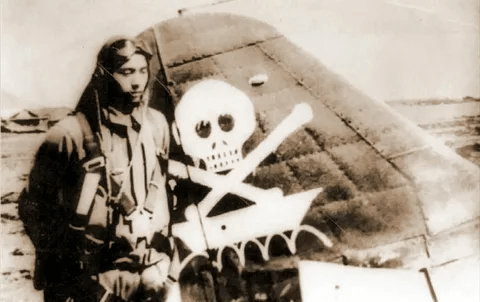
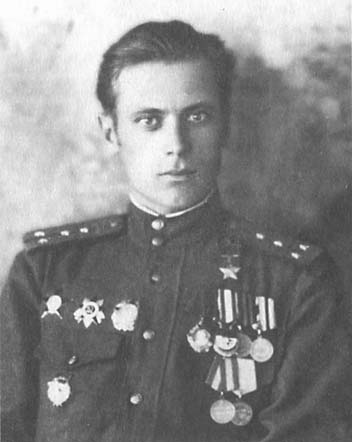
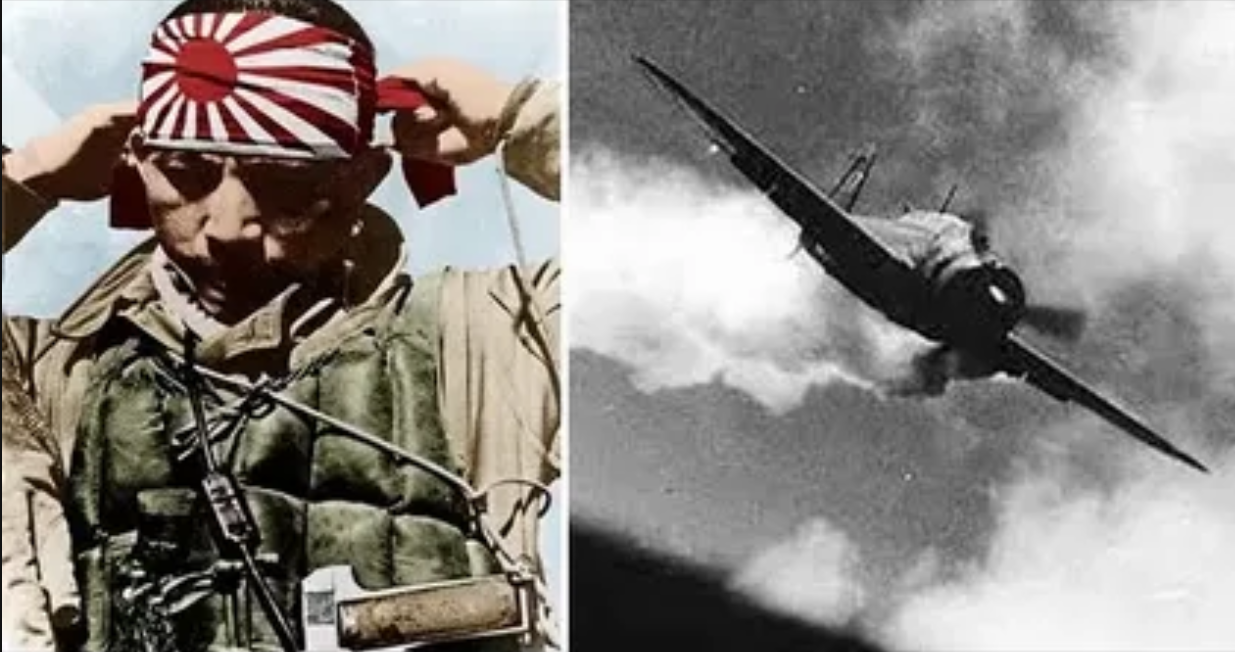
Hero of the Soviet Union – Dmitry Loza (Дмитрий Лоза) – whilst writing in his memoirs, cites a desperate attempt made by Japanese “Kamikaze” Pilots to stop Soviet Red Army tanks by flying their explosive-laden aeroplanes into them. Then, on August 19th, 1945, six Imperial Japanese Airforce Strategic Bombers (usually used to attack factories, installations and other large areas of concentrated enemy complexes) flown by “Kamikazes” Pilots – dared to attack a well-trained and well-protected phalanx of Soviet Red Army Tanks that were quickly advancing! This action, although brave, demonstrated just how desparate the Imperial Japanese Military Authorities had become.

These aeroplanes were very valuable from a stragegic and tactical point of view – but were being used in this instance as a simple (single-use) Guided Missile! However, only one of these “Kamikaze” Pilots managed to hit a Soviet tank through a ramming attack – whilst another managed to destroy an ambulance moving with the armoured convoy (probably by mistake). The rest of these “Kamikaze” Pilots were either shot down by the Soviet Anti-Aircraft Gunners or missed their targets. Dmitry Loza noted that in two of these Imperial Japanese Airforce aeroplanes, sat alongside the “Kamikaze” Pilots were calm and obedient Japanese women – believed to be their wives – “Who had decided to share the sad fate of their chosen husbands.”
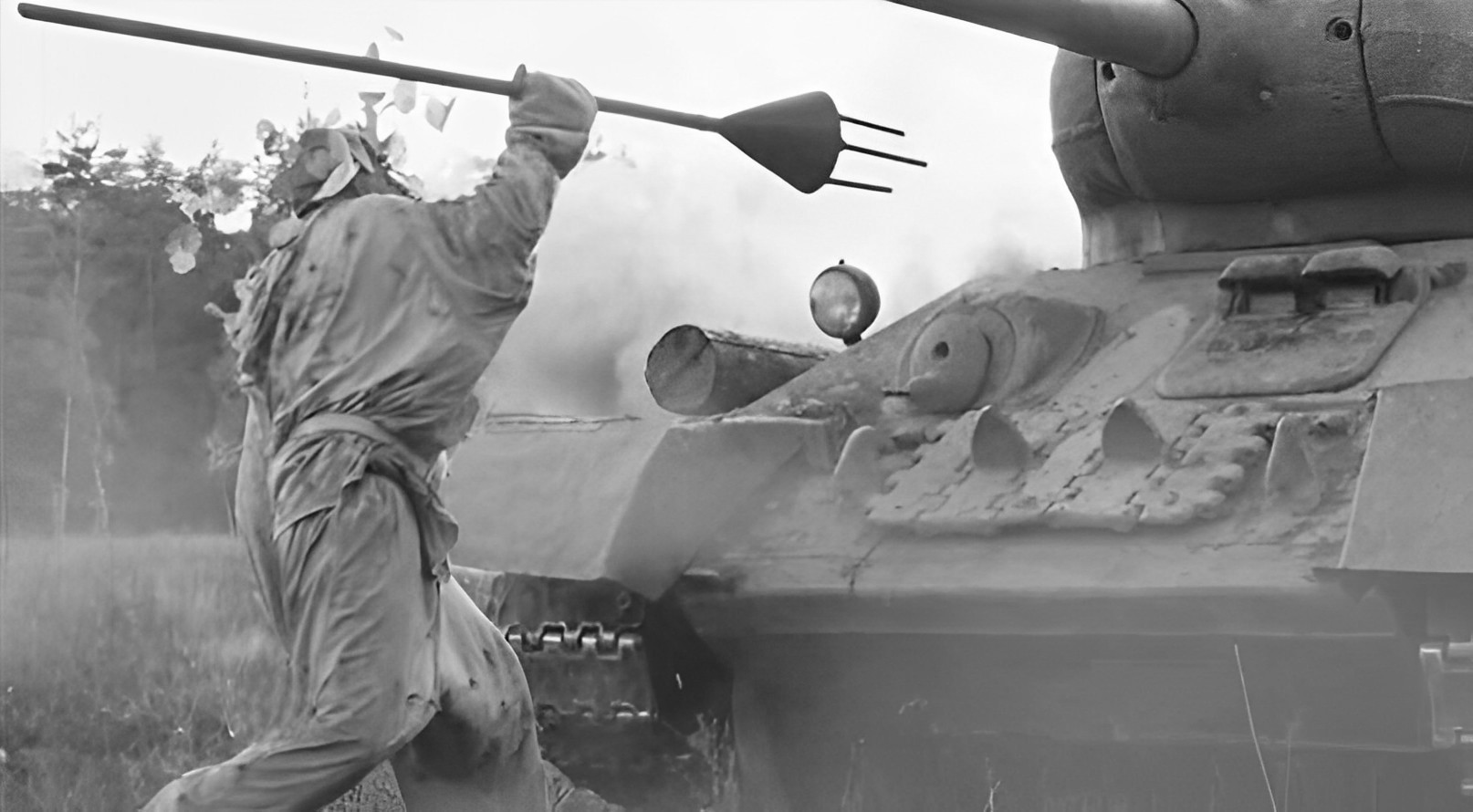
The Imperial Japanese Airforce attacked Soviet Red Army Forces using “Kamikaze” tactics not only from the sky – but also from the ground (using Imperial Japanese Army Suicide Units). The Imperial Japanese Army – Kwantung Army – even formed an entire Motorized Mechanized Brigade of “Kamikaze” (Suicide) Tank Destroyers (comprised of 4,000 volunteers), who were supposed to stop the advance of the Soviet Red Army at the cost of their own lives. The technical side of the issue was simple: from a camouflaged pit, cave, or other hidden area, constructed in a tank-hazardous direction, an Imperial Japanese Army soldier would be expected to wait patiently until the Soviet tank was very close – and then he would run-out and use a mine attached to a long bamboo pole – which would be quickly inserted between or under the tracks of a passing Combat Vehicle. Another option: an Imperial Japanese Army soldier – carrying a backpack filled with explosives – would throw himself under an advancing Soviet tank – exploding the rucksack once in position.
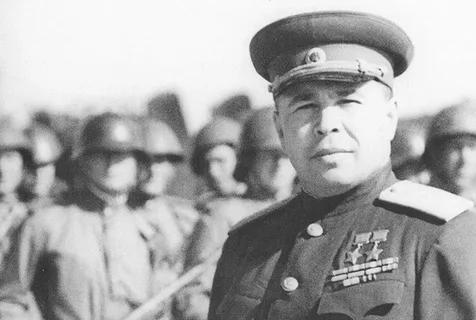
On August 13th and 14th, 1945, on the approaches to Mudanjiang, this Imperial Japanese Army “Kamikaze” Brigade tried to stop the Soviet Red Army troops of the legendary Soviet – General Afanasy Beloborodov (Афанасия Белобородова)!
“Soldiers in greenish jackets emerged from roadside ditches and camouflaged “fox holes” and, bending under the weight of mines and explosives, ran towards our tanks. The accompanying Soviet Paratroopers hit them point-blank with machine gun-fire and accurate grenades. The Suicide Bombers were also mowed down with tank machine guns. Instantly – the valley was covered with hundreds of Japanese corpses, but more and more Suicide Bombers appeared from holes and narrow crevices and from behind the hillocks to willingly take their place! Japanese artillery also fired, not paying attention to the fact that their rounds and shrapnel equally hit both their own men and others!” recalled General Beloborodov.
The efficiency of these Imperial Japanese Army Suicidal Attacks was not very high – ground “Kamikazes” managed to disable no more than ten vehicles, paying for this with the death of almost the entire Brigade (4,000 men)! There were almost no captured “tank destroyers” – as discovered Suicide Bombers immediately blew themselves up. However, most of the “Non-Specialized” Imperial Japanese Army Units were brave and stood to the last man – offering fierce resistance to our Units, strictly following the order to die for the Emperor! When all was lost, and these Imperial Japanese Army Units were completely surrounded and out of ammunition – their Officers would draw their Samurai swords and lead their men in one last suicidal bayonet charge!

Russian Language Text:
https://rg.ru/2019/08/27/kak-sssr-v-1945-godu-spas-iaponcev-ot-samih-sebia.html
Как СССР в 1945 году спас японцев от самих себя
Камикадзе против танков
Герой Советского Союза Дмитрий Лоза в своих воспоминаниях приводит отчаянную попытку японских летчиков-смертников остановить советские танки. Тогда, 19 августа, шесть японских бомбардировщиков, пилотируемых камикадзе, атаковали танковый батальон. Впрочем, попасть таранным ударом по танку удалось только одному пилоту, еще один уничтожил санитарную машину, двигающуюся в колонне. Остальные были сбиты зенитчиками или промахнулись. Дмитрий Лоза отметил, что в двух самолетах вместе с летчиками-смертниками находились женщины, возможно, их невесты, “решившие разделить со своими избранниками печальную судьбу”.
Смертники атаковали советские войска не только с неба, но и на земле. В Квантунской армии была даже сформирована целая мотомеханизированная бригада самоубийц – истребителей танков (4000 человек), которые должны были ценой своей жизни остановить советские войска. Техническая сторона вопроса была незатейлива: из замаскированной на танкоопасном направлении щели сунуть под гусеницы проходящей мимо боевой машины мину, прикрепленную к бамбуковому шесту. Еще вариант: солдат с рюкзаком, набитым взрывчаткой, бросался под вражеский танк.
13 и 14 августа на подступах к Муданьцзяну эта бригада пыталась остановить войска легендарного советского генерала Афанасия Белобородова.
“Из придорожных кюветов, из замаскированных “лисьих нор” выбирались солдаты в зеленоватых френчах и, сгибаясь под тяжестью мин и взрывчатки, бежали к танкам. Десантники били по ним в упор из автоматов, бросали гранаты. Смертников косили из танковых пулеметов. Мгновенно долина покрылась сотнями трупов, но из нор и узких щелей, из-за бугров появлялись все новые смертники. Японская артиллерия вела огонь, не обращая внимания на то, что пули и осколки одинаково поражали и своих, и чужих”, – вспоминал генерал Белобородов.
Эффект этих самоубийственных атак был не очень высок – сухопутные камикадзе сумели вывести из строя не больше десяти машин, заплатив за это гибелью почти всей бригады. Пленных “истребителей танков” почти не было – обнаруженные смертники немедленно подрывали себя.
Впрочем, и большинство “неспециализированных” частей стояли до последнего, оказывая нашим частям яростное сопротивление, неукоснительно следуя приказу умереть за императора.
 SANGHA KOMMUNE (SSR)