Al-Hadaf Electronic Portal – Hadir (Jihad Faten) Al-Barqouni
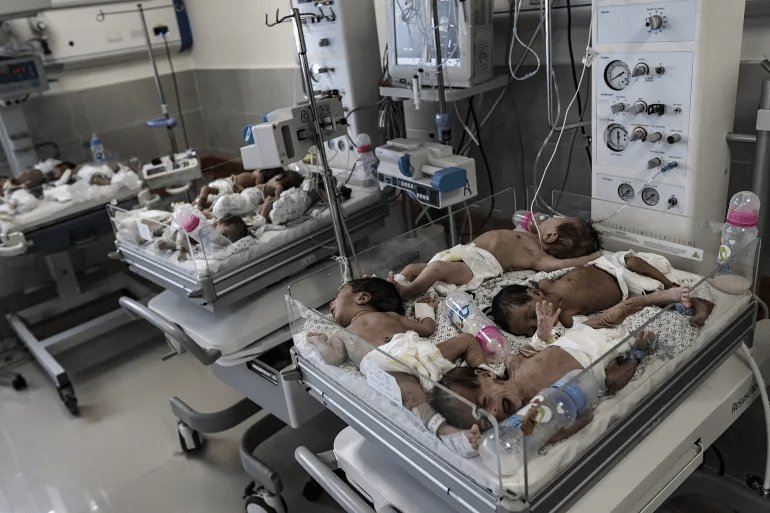
A child gained a “memory” of life on a night that was right out of hell, as he was born prematurely during the artillery shelling of a hospital – later stormed by the Occupation Zionist Army. His mother carried and ran with him through the streets of the city trying to find shelter, but her newborn, whom she had not yet given a name – had already passed away in her hands.
Pregnant women in the Gaza Strip, in light of the war that has been going on for about seven months, are living in unimaginably difficult conditions. In addition to death, terror, hunger, loss, and displacement, other difficulties begin from the first month of pregnancy, as there is no health care, no blood tests, and no examinations. There is no safety for the foetus, and there is no safe drinking water, in a living environment that may not even have a bed to lie down upon, which puts more than 52,000 pregnant women in the Gaza Strip at risk, according to estimates made by World Health Organization. Since the outbreak of war, the rates of premature birth and caesarean section have increased, and the rates of miscarriage and fetal death have increased by about 20%. UNICEF confirms that the children of thousands of women who are scheduled to give birth in the Strip are at risk of death.
In light of the collapse of the health system, births, even caesarean sections, are carried out without anaesthesia or painkillers and without the minimum basic equipment, as confirmed by a statement by the Palestinian Centre for Human Rights, Al Mezan Centre and Al-Haq. Doctors were sometimes forced to perform early deliveries while the mother was dying. Many of such born children are orphans.
Since last October 7th 2024, more than 20,000 children have been born in the Gaza Strip, according to the Ministry of Health in Gaza, the majority of them in shelter centres under very harsh conditions, especially with most hospitals being bombed out of service, a shortage of medical staff (many executed by the IDF), and the absence of the basics necessary for the birth process, the simplest of which is Hygiene, which exposes the mother and her child to many health risks, while other women give birth in the streets. Hayat tells us that she gave birth to her baby girl at night in one of the shelters. Her neighbour, a displaced doctor, helped her deliver her foetus by the light of a mobile phone, and cut the umbilical cord with paper scissors.
Women’s fears are not limited to childbirth itself, but extend beyond trying to preserve the lives of their infants, as there is a greater threat that puts their lives and the lives of their children at risk, and makes breastfeeding impossible, represented by dehydration as a result of water scarcity, and severe food poverty that about 95% of pregnant women face. And breastfeeding women, and more than 90% of children between 6 and 23 months, according to “UNICEF”, in addition to the outrageous high prices of sanitary supplies, such as women’s sanitary pads and baby nappies, which forced women to use paper, cardboard, and disposable rags, and exacerbated the suffering and risks.
Despite all this, pregnant and breastfeeding women in the Gaza Strip do not receive adequate humanitarian aid in light of the war, and if it is available, it is difficult for them to reach the places where it is distributed due to their exceptional conditions. This difficulty varies descending from the famine areas in the north to the areas where displaced people are concentrated in the south, and its forms vary. It is required that humanitarian service providers take into account the needs of women with regard to pregnancy, childbirth and breastfeeding in particular, and that humanitarian assistance include their needs. This requires an impartial humanitarian effort that provides them with the minimum:
- Protection measures against any verbal, physical or sexual assault, within the measures to protect women in general.
- Allocating periodic cash and in-kind grants to pregnant and lactating women and their children.
- Ensure that they are not subjected to violations of their dignity or privacy when receiving assistance.
- Equal opportunities to obtain health services.
- Developing places designated for health care for pregnant and lactating women and their children, and providing rooms and beds in hospitals that suit the needs and number of this group.
- Allocating a queue for pregnant and breastfeeding women in aid distribution areas and in front of medicine kiosks in clinics, and wheelchairs for those who find it difficult to walk, to ensure that they are not exposed to danger due to crowding, crowding, or long standing, while trying to deliver aid in places of residence and displacement in light of having to travel long distances on foot due to the difficulty of providing vehicles. .
- Providing health counselling services, moral support, and a free health and psychological counseling hotline.
- Providing potable mineral water, nutritional supplements, and infant formula.
- Providing sanitary and personal hygiene supplies for the mother and child, including women’s sanitary pads and baby nappies of various sizes.
- Providing special clothes for pregnant women and newborn babies.
- Providing medical bedding, appropriate covers, and special bedding for newborns.
- Holding weekly meetings for pregnant and breastfeeding women, to alleviate the psychological effects and understand their needs, and to come up with recommendations stemming from various personal experiences that push humanitarian service providers to fulfill their responsibilities towards this group in particular.
- Facilitating travel within sick travellers’ lists for women wishing to receive health services abroad.
In her statement on International Women’s Day, Hayat said: UN Women says that every day that the war in Gaza continues, 63 women continue to be killed in Israeli attacks on the Gaza Strip, including about 37 mothers who leave their families behind every day. This comes in light of the ongoing Israeli war of genocide against the Gaza Strip for about seven months, which forced about two million Palestinians to flee, and left at least 34,012 martyrs and 76,833 wounded, most of them women and children, and massive destruction and a humanitarian catastrophe. The Commission confirms that “while war does not exclude anyone,…this war kills and injures women in an unprecedented manner.”
Palestinian (Arabic) Text:
الحمل والولادة في غزَّة: حبال سريَّة تمزِّقها الحرب
بوابة الهدف الإلكترونية- هدير (جهاد فاتن) البرقوني
لم يَرَ طفل “ذكرى” من الحياة إلا ليلةً كانت قطعةً من جهنَّم، إذ وُلِد ولادةً مبكرةً في أثناء القصف المدفعي على المستشفى التي اقتحمها جيش الاحتلال فيما بعد، لتحمله أمَّه وتركض في شوارع المدينة مُحاوِلةً إيجاد مأوى، قبل أن تدرك أنَّ وليدها الذي لم تمنحه اسمًا فارَقَ الحياةَ بين يديها.
تعيش النساء الحوامل في قطاع غزة، في ظل الحرب المتواصلة منذ نحو سبعة شهور، ظروفًا لا يمكن تصوُّر صعوبتها، فإضافةً إلى الموت والرعب والجوع والفقد والنزوح، تبدأ صعوبات أخرى منذ الشهر الأول للحمل، إذ لا رعاية صحية، ولا اختبارات دم، ولا فحوصات للتأكد من سلامة الجنين، ولا مياه صالحة للشرب، في بيئة عيش قد لا يتوفر فيها حتى فراش للاستلقاء، ما يعرِّض أكثر من 52 ألف امرأة حامل في القطاع للخطر، حسب تقديرات منظمة الصحة العالمية. ومنذ اندلاع الحرب، ارتفعت معدلات الولادة المبكرة والقيصرية، وارتفعت معدلات الإجهاض ووفاة الأجنة بنحو 20%. وتؤكِّد “يونيسيف” أن أطفال آلاف النساء اللواتي من المقرر أن يلدن في القطاع معرَّضون لخطر الموت.
في ظلِّ انهيار النظام الصحي، تجرى عمليات الولادة، حتى القيصرية منها، دون تخدير أو مسكنات ودون أدنى التجهيزات الأساسية، ما أكده بيان للمركز الفلسطيني لحقوق الإنسان ومركز الميزان ومؤسسة الحق، واضطُّر الأطباء أحيانًا إلى إجراء عمليات ولادة مبكرة بينما كانت الأم تحتضر، ليولد العديد من الأطفال أيتامًا.
منذ 7 تشرين الأول/أكتوبر الماضي، وُلد أكثر من 20,000 طفل في قطاع غزة حسب وزارة الصحة في غزة، غالبيتهم في مراكز الإيواء وسط ظروف قاسية جدًّا، خاصة مع خروج معظم المستشفيات عن الخدمة، ونقص الكادر الطبي، وغياب الأساسيات الضرورية لعملية الولادة، وأبسطها النظافة، ما يعرِّض الأم وطفلها لمخاطر صحية عديدة، فيما تلد نساء أخريات في الشوارع. وتخبرنا “حياة” أنها أنجبت طفلتها ليلًا في أحد مراكز الإيواء، ساعدتها جارتها الطبيبة النازحة على وضع جنينها على ضوء الهاتف المحمول، وقطعت الحبل السري بمقصِّ ورق.
لا تقتصر مخاوف النساء على الولادة ذاتها، بل تتجاوزها إلى محاولة الحفاظ على حياة أطفالهنَّ الرضع، إذ ثمة تهديد أكبر يعرِّض حياتهن وحياة أطفالهن للخطر، ويجعل الرضاعة الطبيعية مستحيلة، يتمثل بالجفافِ نتيجة شحِّ المياه، وبالفقرِ الغذائيِّ الحادِّ الذي يواجهه نحو 95% من النساء الحوامل والمُرضعات، وأكثر من 90% من الأطفال بين 6 أشهر و23 شهرًا، وفقًا لـ”يونيسف”، إلى جانب الغلاء الفاحش في أسعار المستلزمات الصحية، مثل الفوط الصحية النسائية وحفاضات الأطفال، ما اضطَّر النساء إلى استخدام الورق والكارتون وخرق القماش المستهلَك، وفاقم المعاناةَ والمخاطر.
مع كل ذلك، لا تَحصل النساء الحوامل والمرضعات في قطاع غزة على المساعدات الإنسانية الكافية في ظلِّ الحرب، وفي حال توفرها يصعب عليهنَّ الوصول إلى أماكن توزيعها بسبب أوضاعهن الاستثنائية، وتتدرَّج هذه الصعوبة تنازليًّا من مناطق المجاعة شمالًا حتى مناطق تكدُّس النازحين جنوبًا، وتختلف أشكالها. والمطلوب أن يراعيَ مقدِّمو الخدمات الإنسانية احتياجاتِ النساء فيما يتعلق بالحمل والولادة والرضاعة على وجهٍ خاص، وأن تشمل المساعداتُ الإنسانيةُ احتياجاتِهن. يتطلب ذلك جهدًا إنسانيًّا حياديًّا يوفِّر لهنَّ بالحد الأدنى:
- إجراءات حماية ضد أي اعتداء، لفظي أو جسدي أو جنسي، ضمن إجراءات حماية النساء عمومًا.
- تخصيص منح نقدية وعينية دورية للحوامل والمرضعات وأطفالهن.
- ضمان ألَّا يتعرضن لانتهاك كرامتهن أو خصوصياتهن عند تلقِّيهن المساعدات.
- فرصًا متساوية في الحصول على الخدمات الصحية.
- استحداث أماكن مخصصة للرعاية الصحية للحوامل والمرضعات وأطفالهن، وتوفير غرف وأسرَّة في المستشفيات تلائم حاجات هذه الفئة وعددها.
- تخصيص طابور للحوامل والمرضعات في أماكن توزيع المساعدات وأمام أكشاك الأدوية في العيادات، وكراسي متحركة لمن يصعب عليهن المشي، لضمان ألا يتعرضن للخطر بفعل الازدحام والتدافع والوقوف طويلًا، مع محاولة تسليم المساعدات في أماكن السكن والنزوح في ظل الاضطرار إلى قطع مسافات طويلة مشيًا لصعوبة توفر المركبات.
- توفير خدمات إرشاد صحي، ودعم معنوي، وخط استشارات صحية ونفسية ساخن مجاني.
- توفير مياه معدنية صالحة للشرب، ومكملات غذائية، وحليب أطفال.
- توفير مستلزمات صحية ومستلزمات للنظافة الشخصية للأم والطفل، تشمل الفوط الصحية النسائية وحفاضات الأطفال متعددة الأحجام.
- توفير ملابس خاصة للحوامل، وللأطفال حديثي الولادة.
- توفير فراش طبي وأغطية ملائمة، وفراش خاص بالمواليد.
- عقد لقاءات أسبوعية للنساء الحوامل والمرضعات، لتخفيف حدة الآثار النفسية ولفهم احتياجاتهن، والخروج بتوصيات نابعة من التجارب الشخصية المختلفة، تدفع في اتجاه اضطلاع مقدِّمي الخدمات الإنسانية بمسؤولياتهم تجاه هذه الفئة تحديدًا.
- تسهيل السفر ضمن كشوفات المسافرين المرضى للراغبات بتلقِّي الخدمات الصحية في الخارج.
وفي بيان لها في يوم المرأة العالمي، قالت هيئة الأمم المتحدة للمرأة إنه في كل يوم تستمر فيه الحرب في غزة يتواصل قتل 63 امرأةً في الهجمات الإسرائيلية على قطاع غزة، بينهن نحو 37 أمًّا تترك يوميًّا عائلتها وراءها. يأتي هذا في ظلِّ حربِ إبادةٍ إسرائيليةٍ متواصلة منذ نحو سبعة أشهر ضد القطاع، أجبرَت نحو مليونَي فلسطيني على النزوح، وخلَّفت 34,012 شهيدًا و76,833 جريحًا، على الأقل، معظمهم من النساء والأطفال، ودمارًا هائلًا وكارثةً إنسانية. وتؤكِّد الهيئة أنه “فيما لا تستثني الحرب أحدًا، … تَقتُل هذه الحربُ وتصيب النساءَ بشكل غير مسبوق”.
 SANGHA KOMMUNE (SSR)