Author’s Note: William Whiston was 5-years old when John Wilkens passed away in 1672 (the latter being aged 58-years old). It is an interesting speculation that the free-thinking of William Whiston (who passed away aged an impressive 85-years old – almost double the life expectancy of the age) was inspired by the work of his outstanding predecessor – John Wilkens – although the two ‘scientists’ experienced very different fates. Within the English academic tradition, the rank of ‘Doctor’ stems from an individual who has been granted a Doctoral Degree (the highest qualification available). This stems from the completion of a three (or four-year) study course resulting in the award of the title of ‘Doctor of Philosophy’ (PhD) – although the title can be adjusted to match the subject – such as ‘Doctor of Literature’ (LittD) and ‘Doctor of Divinities’ (DDiv), etc. Oxford University, however, uses both ‘PhD’ and ‘Dphil’ to refer to the achievement of ‘Doctor of Philosophy’. Those who study for a ‘Doctorate’ must also have correctly studied for (and successfully achieved) a ‘Bachelor’ and ‘Master’s’ Degree. An exception may be made by the awarding of ‘Honorary’ Doctorates to individuals who have made outstanding contributions to the progression and well-being of humanity (exactly why Margaret Thatcher was REFUSED a ‘Doctorate’ by Oxford University). Generally speaking, unlike ‘Medical’ Doctors (General Practitioners – or ‘GPs’) – academic Doctors in the UK allow their academic achievements to speak for themselves and often do NOT insist on being referred to as a ‘Doctor’ within polite society. Within England there is an ancient Greek-type tradition of associating academic excellence with a quiet humility – an anathema to the average American. ACW (30.9.2023)
I once penned a published article about William Whiston (1667-1752) the English theologian, historian, natural philosopher and mathematician – who was chosen as the academic descendent to Sir Isaac Newton – until the Church and academic community turned against him. This change of fortune occurred due to William Whiston operating his freedom of thought and declaring that it might be possible for the realm of academic (material) science to be reconciled with the teachings of (spiritual) theology! As each camp refused to compromise – Whiston was legally and socially attacked from both sides and institutionally ridiculed into obscurity.
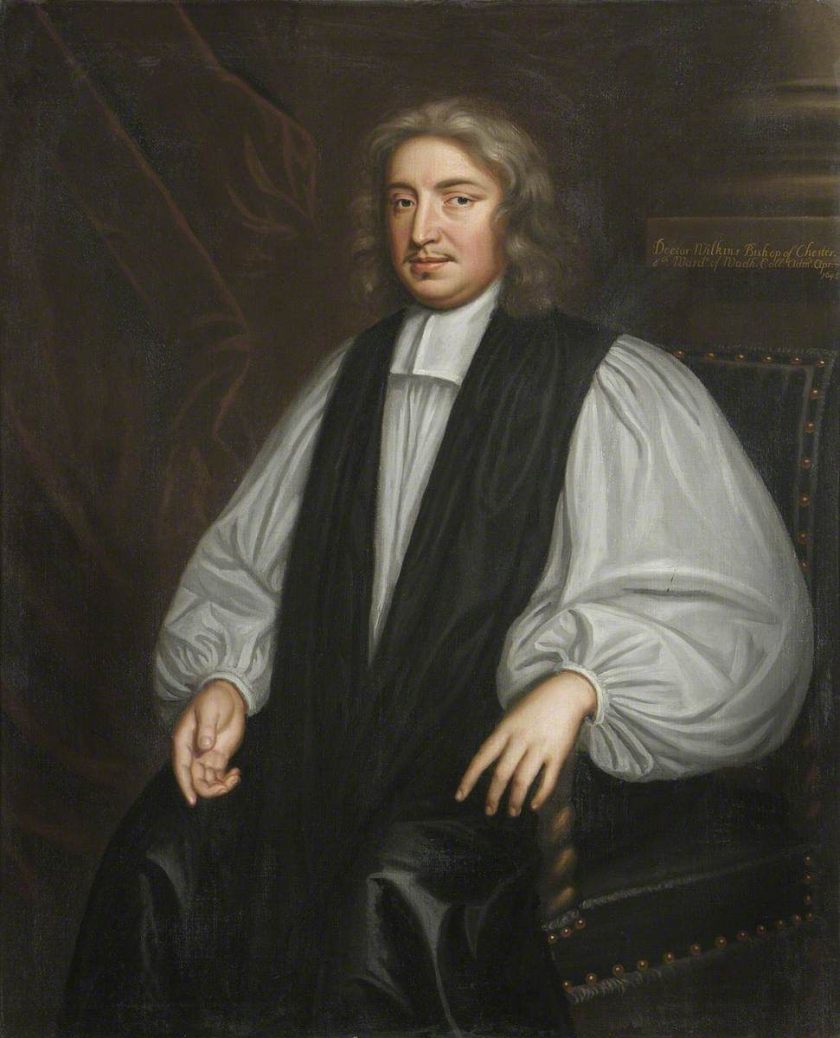
British scientific development, however, appears strewn with original thinkers whose minds, although very much products of their time, refused to remain hindered by existential attitudes of limitation. John Wilkins (1614-1672) – the brother in law of Oliver Cromwell – was one such man. Not only was he a stout supporter of Parliament and the English Revolutionary Wars of the 1640s, but he was also intimately linked with Oxford and Cambridge Universities. Indeed, so respected was he in the academic community that he is (ironically) credited with co-founding Oxford’s Royal Society. John Wilkins managed to keep one foot in the camp of Revolution and progression (being a scientific advisor to both Oliver and Richard Cromwell) and one foot in the camp of conservativism and religious dogma.
Although undoubtedly fulfilling an ascribed political role, John Wilkins achieved this function to a very high and effective degree, keeping both camps so happy to the extent that each has historically claimed him as its exclusive supporter. John Wilkins, however, was first and foremost a Revolutionary thinker whose ideas refused to stop at the boundaries of socially and culturally conditioned limitation. This is where the capacity for human (ethereal) imagination comes into play with regards to the development of material science. An imagined hypothesis can be materially manifested, tested and developed.
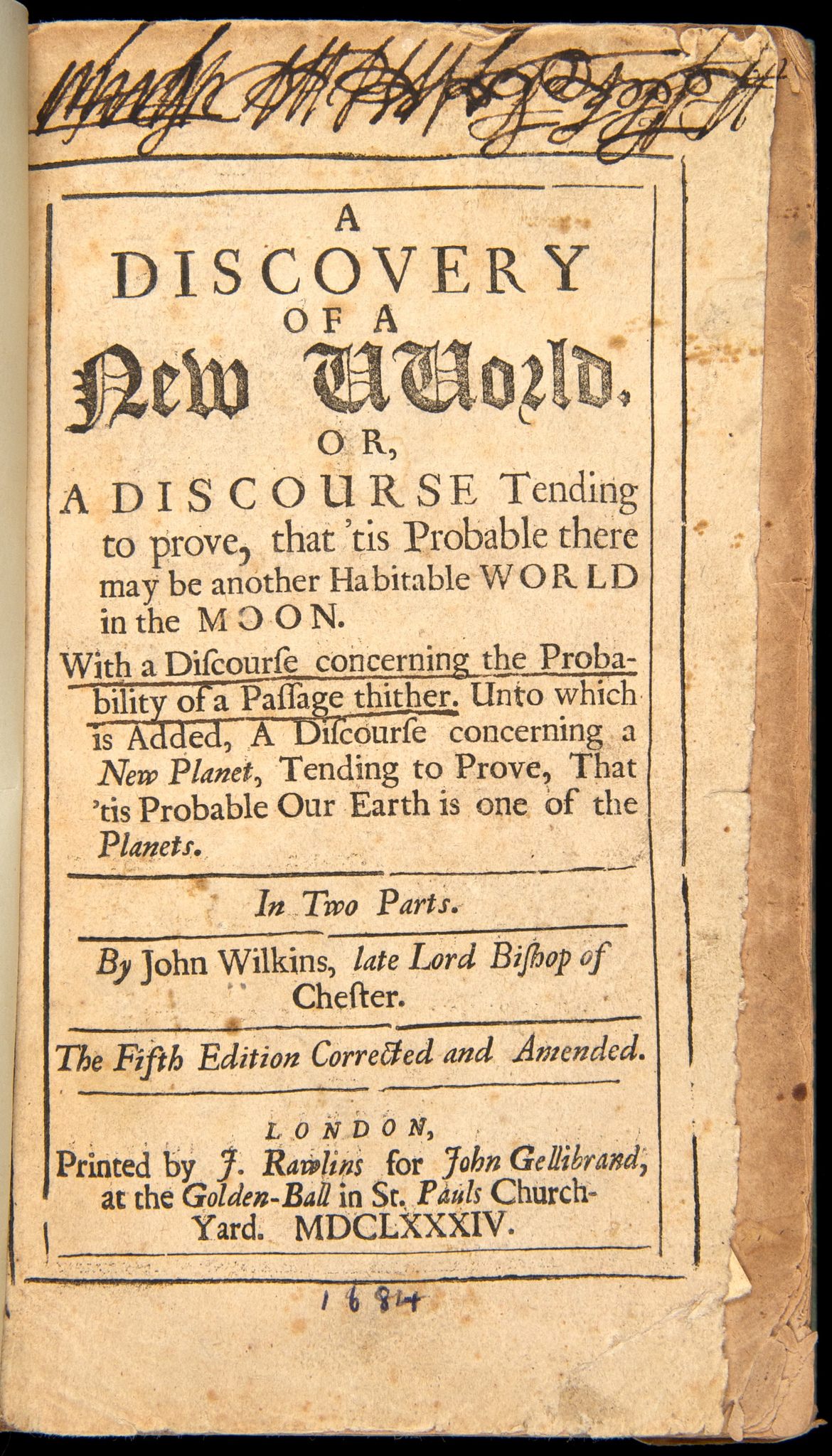
John Wilkins speculated from 1638 CE onwards that a) the Moon (like any place) might be inhabited, and b) if so, it should be possible for humans to design and construct a mechanical device to travel to the Moon and establish political relations and trade with its inhabitants. John wilkins designed a flying, four-wheeled carriage (cart) – replete with swirling wooden ‘sails’ designed to perform a function very much like a corkscrew. He was planning for an extraordinary journey intending to place a human being in space (first achieved by those other Revolutionaries – the Soviets in 1961) very much along the lines of existing (17th century) technology.
The point is that the external Revolutionary conditions of British society that led directly to the English Civil Wars (and the overthrow of absolute monarchy) – not only emerged from changing attitudes within – but served to further condition the human mind to think beyond the boundaries set by previous generations without! Changing times led to changing thoughts – and changing thoughts led to the eventual advancement of science and society. John Wilkins is to be applauded for his diplomatic skills and his scientific vigour! This very much encapsulates the spirit of the English Revolution!
English Language References:
https://www.atlasobscura.com/articles/john-wilkins-moon-mission
https://www.ox.ac.uk/news/science-blog/oxford-and-royal-society%E2%80%99s-origins
 SANGHA KOMMUNE (SSR)