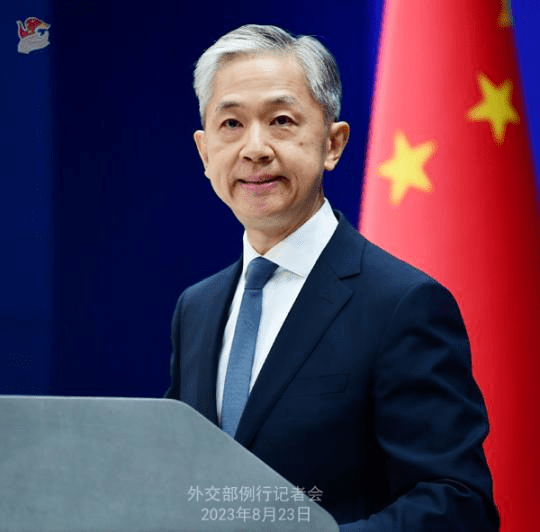
China urged the United States on Wednesday to revoke its wrong decision of imposing visa restrictions on Chinese officials over the alleged “forcible assimilation” of Tibetan children in boarding schools, vowing to make resolute and forceful responses.
A U.S. State Department spokesperson said the new restrictions would apply to current and former officials but did not give further details.
Calling the accusations a “pure fabrication”, Foreign Ministry spokesman Wang Wenbin expressed firm opposition to the U.S. move to use Tibet-related issues to impose illegal sanctions on Chinese officials.
The move interferes in China’s internal affairs, damages China’s interests and violates the basic norms governing international relations, he said.
Wang explained that as a common practice, boarding schools in China are set up according to the needs of local students.
In high-altitude regions where people are scattered across large areas, including in Tibet, boarding schools help solve the problem of students who have to travel long distances to get to school, Wang said.
It is a practical way to centralize education resources and ensure children’s equal rights to education, he said.
He said the students are free to return home during holidays and weekends and parents can visit their children or take them home according to their needs at any time.
Traditional culture courses including Tibetan language and dances are also set up, he said, adding the students are free to wear ethnic clothes at school.
Boarding schools in Tibet are vivid examples of ways to protect human rights and cultural traditions in the region, the spokesman said.
Lhasa receives 2.86 mln tourists during Shoton Festival
2023-08-24 Ecns.cn Editor:Zhang Dongfang
(ECNS) — Lhasa, the capital of northwest China’s Tibet Autonomous Region, received 2.86 million domestic and overseas tourists during the Shoton Festival, creating an income of about 1.03 billion yuan (about $143.37 million), Lhasa tourism authorities said Wednesday.
On the first day of the Shoton Festival, the Drepung Monastery and Sera Monastery in Lhasa held the “sunning of the Buddha” ceremony, one of the most solemn activities during the festival. Tourists waited for a few hours in order to see the sacred Buddha.
Tibetan Opera was performed in the Zongjiao Lukang Park behind the Potala Palace and in the world cultural heritage site Norbulingka Institute by actors and actresses from counties and districts in Lhasa during the festival.
According to a staff member of the Lhasa Sports Bureau, 120 athletes from seven cities in Tibet competed in 14 events, including traditional ethnic equestrian, speed horse racing and horse riding, with 30,000 seats for spectators at the scene packed.
Additionally, 51 primary students participated in the Tibetan chess competition and over 40 Tibetan chess experts and enthusiasts from all over the region participated in the Tibetan chess performance.
Shoton Festival, which literally means “yogurt banquet festival,” is one of the most important festivals for Tibetans. It was celebrated from Aug. 16 to 22 this year.
The festival, together with Tibetan Opera, was included in the first batch of national intangible cultural heritage in China in 2006.
 SANGHA KOMMUNE (SSR)