UK: Review – Battle of New Orleans (Audible]! (24.6.2026)

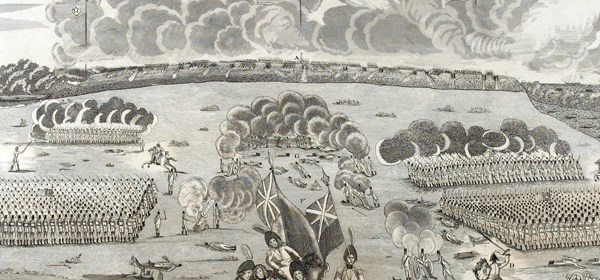
Let us not forget the 93rd Sutherland Highlanders – those Kilted Celts – who advanced across the open field in New Orleans with bagpipes blaring and drums a banging! After the battle, the American rebels described how the British soldiers had died with arms, legs, and heads blown-off – whilst the wounded sat (or lay) laughing – trying to regain their their often non-existent feet – and still follow orders to advance! How difference this behaviour was to the average American soldier who often ran-away in the face of the enemy. The British had freed US slaves and intended to build a country for Native Americans – but the nefarious Americans put an end to all these utopian ideas. Not only this, but Mississipi, Louisiana, and Florida wanted to secede from the US and join “British North America” (Canada) – even if Spain re-established sovereignty over those areas.

Scots on the March - US 1815

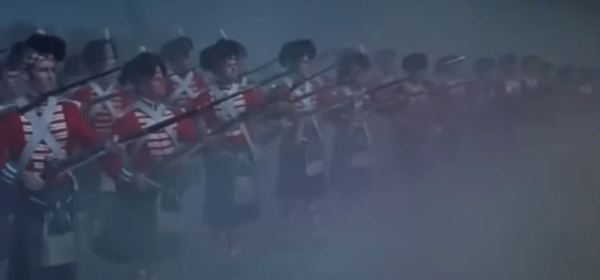
US: The Tartan Army Marched in Boston – Remember the Highlanders Who Marched in New Orleans! (21.6.2026)

Many Spanish, French and Native Americans wanted Florida and Louisiana to secede from the Union and become part of British Canada – and we would have been happy to have them! Arriving in Louisiana on December 23rd, 1814, the British Army was comprised of nearly 8,000 experienced soldiers – including 962 men from the 93rd (Sutherland) Highlanders. The battle plan to march up the Mississippi River and capture the city. The Scots knew a frontal assault was required and were completely unafraid and confident they would prevail over the ill-disciplined enemy. Although very well executed – in the end the front assault was disastrous as it came up against the American defensive earthworks at the Rodriguez Canal (Chalmette). Scotmen could be heard falling upon their deflating bagpipes – making an eery noise. Many Scots fell into the kneeling position with their bayoneted musket dug into the ground at the stock-end with jutting blade at 45 degrees – held in place by their upright dead bodies. This was a tactic taught in infantry school to scare the enemy. As a true Scotsman wears nothing under his kilt – this surprised many US soldiers (Celts used to strip naked to fight the enemy). Finally, I am Irish on my Dad’s side (the Irish wear a different type of tartan) [Kilmurray] and Scottish on my mother’s side (Gibson).

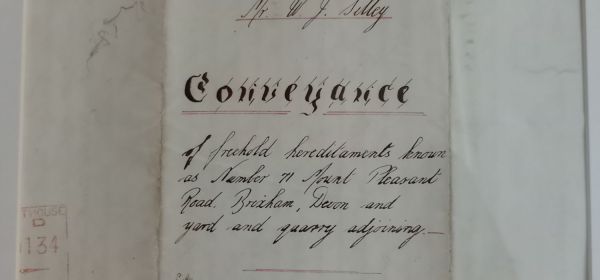
Conveyance Title - 71 Mount Pleasant Road, Brixhan

Brixham: Framed 1920 Conveyance Deed – Kai-Lin Helped Me Read It! (3.4.2026)

Today, such people are “preserved” as a “right” – as their presence helps us understand our own human history (the Celts – my ethnicity – used to strip naked, get drunk, and cover themselves in shit before a battle). But I digress. In the bedroom our two daughters are occupying – the above legal document has been “framed” and hung on the wall for all to see and admire. Indeed, until, this morning, none of us had actually noticed it. In 2026, this second-floor building (“71a” is beneath us) is termed “Rock Hopper” – and this is the name used in all the advertising literature. The back yard is a narrow strip of land – but I suspect that “71” and “71a” were originally one and the same dwelling. The steep rock-face at the end of the garden turns-out to be the edges of an old quarry – whatever that was used for – probably prior to these houses being built on a steep and narrow hill (incline).

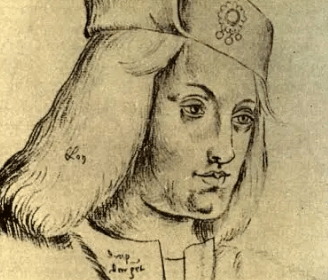
Perkin Warbeck

UK: Was Perkin Warbeck the True King Richard IV? (24.3.2026)

I mention this as large swathes of the UK retain a very strong Celtic identity. This includes Cornwall – one of the places that Perkin Warbeck landed with a small army that was immediately joined by the uprising Cornish people. The Cornish had risen-up earlier in 1497 against Henry VVII’s plans to go to war with Scotland – why should Celts fight Celts? Although the Tudors were from Wales (a Celtic country) – I believe they may be the descendants of the Roman officials that used to govern the area. Despite this, the Tudors tended to side with the English (Germanic) power-base. Whatever the case, I think the man we are told is “Perkin Warbeck” was in fact “Richard Plantagenet” or “King Richard IV” of England – the rightful King. The above documentary dramatizes the recorded interviews held between the English Authorities and “Perkin Warbeck”. He was crowned “King Richard IV” on Bodmin Moor and he then led an army that took Exeter – and then moved on to Taunton – where he was defeated and arrested. Following intense torture – this man was forced to deny his royal birth. He was then hanged like a common criminal at Tyburn.

Archaeologists made the discovery underneath layers of peat on Honeygar Farm in Westhay

UK: Neolithic “Trackway” Discovered by Archaeologists in Honeygar Farm [Somerset]! (22.3.2026)

Britain used to be full of marshes through which the Celts built trackways to travel about – probably between the various tribes. Presumably, these marshes ran through (and around) forests – as the UK used to be covered in dense foliage. Therefore, the Celts did build their own type of natural pathways – but these were “natural” and very different to the roads constructed by the Roman engineers – which seemed “severe” and “unnatural” by comparison. Furthermore, the Romans destroyed the traditional landscape that Druidism and Celtic culture developed and grew within. The Romans cleared the forests and drained the marshes – thus destroying the very essence of the British Celt culture that had existed for thousands of years. The Romans committed genocide, forcibly established their culture – and then left. Part of this Roman domination was that the Celts were “primitive” and possessed no culture of their own. A policy straight out of the imperialist play-book.

UK Celtic Christianity

UK: When Did the Celts Develop a Written Alphabet? (11.1.2026)

The Celts did not develop a written language until 500-years after coming into contact with the Greek people – which occurred during the late 3rd century BCE – when the Greeks established a colony in Southern France (suggesting that a Celtic alphabet was developed c. 200 CE). Considering Richardson also states that by 400 CE (just two-hundred years after the Celts developed that alphabet) – most of the Celtic languages were nolonger spoken (due to the successful Roman Conquest of Western Europe and Britain) – this must be considered a relatively late date for a Celtic written language (considering the Celtic languages were existent for thousands of years prior to this).

1 2 3 4