Simply being invited to stand in the same general area of a middleclass gathering, cannot be assumed as be the same as an ‘equal’ inclusiveness. Besides, as Marx continuously pointed-out, it is the middleclass who should change their naturally exploitative ways, so as to accommodate working class mores.
Tag: bourgeois
500 Miniature ‘Marx’ Statues Unveiled in Germany to Mark the 195th anniversary of his birth
Original Chinese Language Article: http://www.guancha.cn (Translated by Adrian Chan-Wyles PhD) Porta Nigra (Black Gate) Tier, Germany, 5.5.13. Here, on this day, 500 one meter
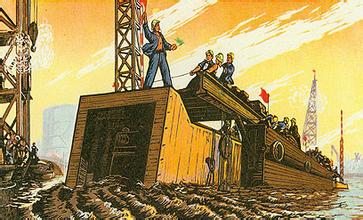
Reclaiming the Working Class
Under the influence of this distorted – and non-working class perspective – Marx is wrong, Lenin is mistaken, Stalin is evil, and China is not a Communist country. So desperate has the political Left become in the contemporary West, that one faction of it actually considers the totalitarian ideological leanings of Kim Jong Un’s North Korea (DPRK) as somehow ‘dialectically’ relevant to the British working classes who have had a thoroughly different trajectory of historical development to that of their Korean comrades.
Why the Bourgeois Will Never Allow True Democracy
It is interesting that Germany (the defeated enemy of WWII) lies at the heart of the EU policy of dismantling Welfare Systems and National Health
Superficial Zizek
The racist aspect lies with the fact that Zizek either knows about – but chooses to ignore – indigenous Asian culture, or that he is not interested in any interpretive narrative that lies outside of the scope of a Eurocentric thought. In short, Zizek is a postmodern bourgeois thinker, masquerading as a post-Marxist thinker. How did the dialectical forces of history create this Zizek figure?
Oliver Cromwell and the Abolition of State Sanctioned ‘Christmas’
Oliver Cromwell was a very civilised, intelligent and progressive individual. He was also a devout Christian. Why, then, did he agree to ‘ban’ Christmas? He carried out this progressive measure because he thought that it was a great evil for the State to ‘enforce’ a religious celebration upon its citizens. As a consequence, Cromwell oversaw the legislation that ‘banned’ the State sanctioning of a national holiday that had, in his and many other Christian’s eye, no connection with legitimate Christian practice.

