Translator’s Note: A Socialist society must balance “freedom” with “responsibility”. As the “family” is the basis of Socialist Reconstruction – the individual components of society must exercise discipline and responsibility toward the well-being of the collective whole. Of course, the State must stay out of the bedroom – but the benefits of a free and universal healthcare system must be properly understood and used to diagnose and treat all forms of sexually transmitted diseases and infections. There is nothing to be ashamed when citizens seeking assistance – as the healthcare workers are detached and professional. The onus is upon removing suffering from the individual and society – rather than morally judging the behaviour of individual concerned. Seeking treatment for sexual diseases should be no different to having a broken arm or leg appropriately treated. Young people are especially vulnerable and mature adults should ensure their care. Part of this is remaining vigilant for exploitation or abuse – which sometimes happens in Cuba when rich Westerners visit the island (targetting children and teenagers). Western paedophiles (sex tourists) from the US, UK, and EU are a major threat to the well-being of other-populations. ACW (15.10.2026)
by minsap – Wednesday, 14 October 2026
“Cuba does not escape all sexually transmitted infections and it is important for the population to know this because they are preventable and it is everyone’s responsibility,” said Dr. Manuel Romero Placeres, head of the National STIs, HIV and Hepatitis Programme of the Ministry of Public Health, in the magazine Buenos Días.
He said sexually transmitted infections (STIs) are not limited to HIV. “HIV is a chronic transmissible infection, within STIs it has a greater significance, but it does not mean that it is the only STI,” said the specialist.
In his speech, he explained that there are multiple sexually transmitted infections not only in Cuba, but in America and in the world. He mentioned high figures: more than seven million cases of syphilis in the world and more than forty-two million syphilis infections in America, with a sharp increase in recent years. Among the STIs, he also cited the condylomas produced by the human papillomavirus, chlamydia and gonococcal conjunctivitis.
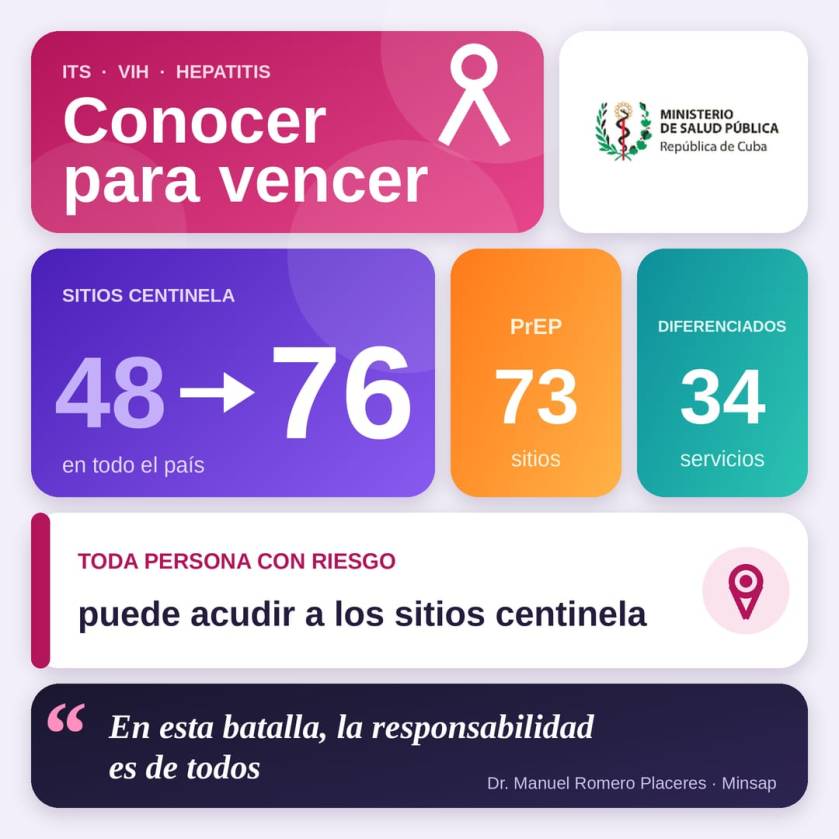
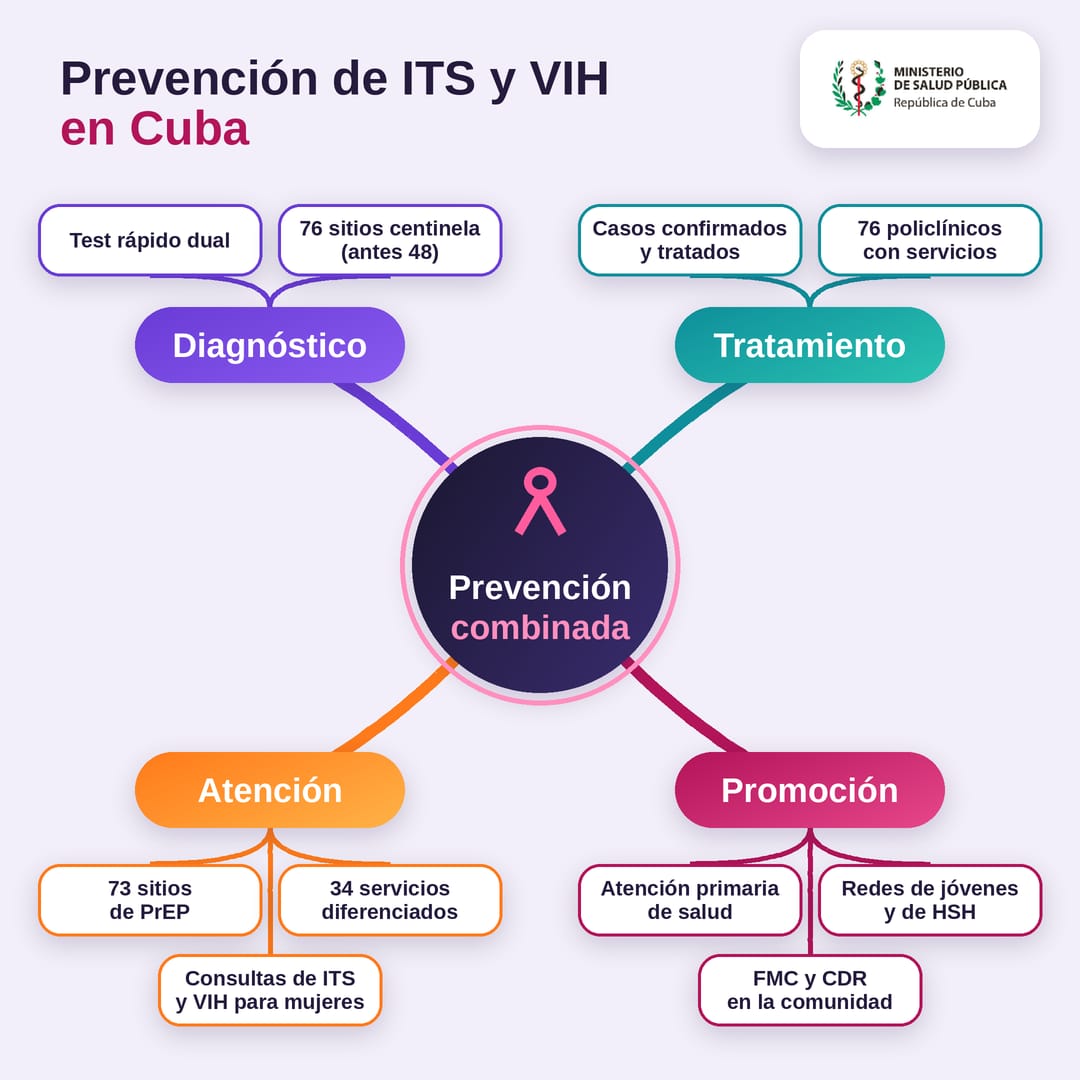
Regarding the dual tests that are applied in the country, he stressed that they are part of a combined prevention strategy, which integrates diagnosis, treatment, care and health promotion, and which began in June with the organization of sentinel sites. “Cuba initially had 48 sentinel sites and now has 76 throughout the national territory, many combined with differentiated or PrEP services.”
Dr. Romero Placeres highlighted the importance of these services for key populations, such as men who have sex with men (MSM) and the trans population, although he insisted that they are not the only ones. “There are people who do not consider themselves MSM or trans and do not attend these services thinking that they do not have the possibility to do so; however, anyone who has substantial risk related to sexually transmitted infections can attend these sentinel sites,” he said. The work in these spaces, he said, has made it possible to identify a greater number of cases, confirm them and treat them properly.
Subsequently, he referred to the prevention actions and strategies that are carried out in the different municipalities, and praised the work of primary health care professionals and youth and MSM networks that work at the community level, together with the Federation of Cuban Women and the CDRs. There are also consultations related to STIs, including HIV, aimed at women.
Finally, he specified that the services are available in 76 polyclinics in the country and that the population can approach health areas, civil society networks or provincial and municipal health promotion centres “to identify where the 76 sentinel sites, the 73 PrEP sites and the 34 differentiated services are in the localities with the highest incidence and prevalence. In this battle, the responsibility is everyone’s.”
#CubaPorLaVida Cuban Public Health
Spanish Language Text:
STIs, HIV and hepatitis prevention programmes: knowledge to overcome | MINSAP
Programas de prevención de las ITS, el VIH y las hepatitis: conocer para vencer
por minsap – Miércoles, 14 Octubre 2026
“Cuba no escapa de todas las infecciones de transmisión sexual y es importante que la población lo sepa porque son prevenibles y es responsabilidad de todos”, subrayó el doctor Manuel Romero Placeres, jefe del Programa Nacional de ITS, VIH y Hepatitis del Ministerio de Salud Pública, en la revista Buenos Días.
Dijo que las infecciones de transmisión sexual (ITS) no se limitan al VIH. “El VIH es una infección crónica transmisible, dentro de las ITS tiene un significado mayor, pero no quiere decir que es la única ITS”, afirmó el especialista.
En su intervención explicó que existen múltiples infecciones de transmisión sexual no solo en Cuba, sino en América y en el mundo. Mencionó cifras elevadas: más de siete millones de casos de sífilis en el mundo y más de cuarenta y dos millones de infecciones por sífilis en América, con un fuerte aumento en los últimos años. Entre las ITS citó además los condilomas producidos por el virus del papiloma humano, la clamidia y la conjuntivitis gonocócica.
Sobre los test duales que se aplican en el país, resaltó que forman parte de una estrategia de prevención combinada, que integra diagnóstico, tratamiento, atención y promoción de salud, y que comenzó en junio con la organización de sitios centinela. “Cuba contaba inicialmente con 48 sitios centinela y ya suma 76 en todo el territorio nacional, muchos combinados con los servicios diferenciados o de PrEP”.
El doctor Romero Placeres destacó la importancia de estos servicios para las poblaciones clave, como los hombres que tienen sexo con otros hombres (HSH) y la población trans, aunque insistió en que no son las únicas. “Hay personas que no se consideran ni HSH ni trans y no asisten a estos servicios pensando que no tienen la posibilidad de hacerlo; sin embargo, toda persona que tenga riesgo sustancial relacionado con las infecciones de transmisión sexual puede asistir a estos sitios centinela”, apuntó. El trabajo en estos espacios —aseveró— ha permitido identificar un mayor número de casos, confirmarlos y tratarlos adecuadamente.
Posteriormente se refirió a las acciones y estrategias de prevención que se realizan en los diferentes municipios, y ponderó la labor de los profesionales de la atención primaria de salud y de las redes de jóvenes y de HSH que trabajan a nivel comunitario, junto a la Federación de Mujeres Cubanas y los CDR. También existen consultas relacionadas con las ITS, incluido el VIH, dirigidas a mujeres.
Por último, precisó que los servicios están disponibles en 76 policlínicos del país y que la población puede acercarse a las áreas de salud, a las redes de la sociedad civil o a los centros de promoción de salud provinciales y municipales “para identificar dónde están los 76 sitios centinela, los 73 sitios de PrEP y los 34 servicios diferenciados en las localidades de mayor incidencia y prevalencia. En esta batalla, la responsabilidad es de todos”.

