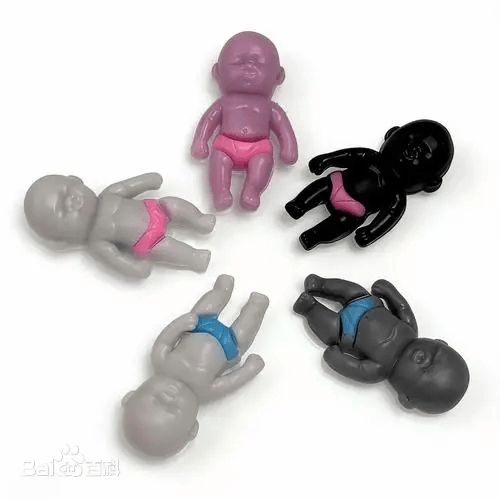
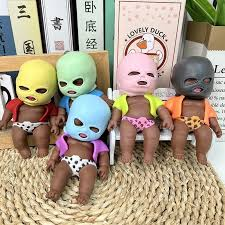
Translator’s Note: Squishies – of various types – are popular all-over the world, and I note many are manufactured in China for export. Most that I have seen are usually shaped oddly – usually like spikey-spheres – or similar. However, I have not seen this type and would certainly not permit my children to buy, own, or play with them. Least of all is because they seem racist to me. As the dolls include all skin-tones – the argument could be made that they are universally racist in that differing social groups could target the doll with the skin-tone disliked the most, and so on. Chinese-language texts state:
‘Natasha originated in March 2026 when netizen Cai Dabo (蔡大伯) created this in response to her mother’s pressure to get married, treating it like a baby and “raising” it. Once, a video of a doll being smashed to the ground suddenly went viral, prompting many netizens to make similar videos. On multiple short video platforms and social media, many netizens posted videos and pictures of doll pinching, including minors, such as pulling and deforming them, dropping them on the ground, or crushing them. Some even cut them apart, squeezed them loose, or filled them with water to burst them. Some even cut open the doll’s belly with a knife and pulled out a little doll, captioning it “Natasha has given birth.” The flood of related videos on social media has boosted the toy’s sales, Reporters searched e-commerce platforms and found that sales of related products from multiple stores have exceeded ten thousand units.’
The name “Natasha” could mean the following:
娜 (na) = Beautiful (Graceful)
塔 (ta) = Tower (Pagoda)
莎 (sha) = “Drop” – “Fall” – “Wither”
In a sense, the name is ironic and represents the Chinese sense of humour. To be far, despite developing and selling quickly, the Authorities and government have picked-up on its nefarious qualities quite quickly. I suspect the original version was not as diverse as later models became – and that numerous other business-people have taken the blue-print and run with it. Again, although different brands of dolls in the West now issue different skin-tones – this becomes problematic when the doll is designed for physical abuse. I have seen Western children “throw” and “squish” dolls like this that are not baby-shaped. And herein lies yet another contradiction. Children experience much emotional and psychological stress due to societal expectations – and the use of toys is often used as a form of relief. When I was a child – we used toy (plastic) soldiers and pretended we were fighting wars and killing each other. No one complained about that – even if the soldiers being killed were “Japanese”! I am also aware that in the West, quite often adult toys (in poor taste) are referred to as “executive toys” designed for use by rich and privileged individuals. Obviously, we cannot get started on the sex-toy industry – which is huge – by the way. ACW (2.6.2026)
(ECNS) – A stress-relief toy known as “Natasha,” a palm-sized squeeze doll marketed as “ugly-cute,” has gone viral on Chinese social media, raising concerns among parents and educators about its potential impact on children’s emotional development.
Unlike conventional toys designed for squeezing and stress relief, “Natasha” is made to resemble a baby. Popular online videos show users throwing, stomping on, piercing, injecting water into, and otherwise damaging the toy. Some users have shared images of heavily deformed dolls, while some posted videos cutting the doll’s belly and pulling out a smaller doll hidden inside, jokingly describing it as “Natasha giving birth.”
Psychologists warn that many of these videos adopt dark humor or prank-style themes. Because children may struggle to distinguish between entertainment and inappropriate behavior, experts say repeated exposure could normalize aggression and even contribute to bullying.
Treating a human-like toy violently risks sending the message that destruction is an acceptable way to relieve stress, experts said. Over time, such associations could lead some young people to view violence—or even self-harm—as legitimate outlets for emotional release.
Fang Zengquan, Party secretary of the School of Journalism and Communication at Beijing Normal University and director of the Centre for Minors’ Online Literacy, said the toy’s marketing strategy is particularly concerning.
Linking a baby-shaped toy directly to stress relief, Fang said, adding that it encourages users, especially teenagers, to derive pleasure from physically squeezing or damaging a baby-like object.
He warned that repeatedly associating infant imagery with destructive behaviour could weaken empathy and protective instincts toward real babies. In extreme cases, Fang said, it may foster unconscious aggressive impulses toward living beings.
As the toy continues to gain attention online, experts are calling for greater scrutiny of products and content targeted at young audiences, emphasizing the need to promote healthier and more constructive ways for children to manage stress and emotions.
(By Gong Weiwei)

