
Blogger’s Note: Religion is a major issue for human society. In the past, religion was the glue that held societies together, with poorer areas being more literally religious than richer areas. Modern capitalism, with its emphasis upon hyper-individualism (linked to citizenship premised upon the liberal democratic model) destroys collective identity and reduces everything to self-interest and blatant greed. Of course, the theistic religions of the West have lost their widespread political power – but retain influence by siding with predatory capitalism (and the fascism this produces). The hypocrisy and irony of religion can be seen in all areas. Edward Said, during the 1970s, coined the term “Orientalism” to describe the racist manner in which the West viewed Islam. The dishonesty of the American Said lay in the fact that he hijacked the dialectical deconstruction method developed by Karl Marx without admitting this – and then declared Marx to be a “Eurocentric” racist. This antagonism toward Mark is typical of Islamicists who want the left to support their campaigns for freedom from the Western imperialists – but simultaneously do not want their societies “freed” from religion that has enslaved their minds for centuries.

For such individuals, Marxism is both useful and a dangerous philosophy to be denied (this is why certain aspects of the Islamic world falsely accuses China of oppressing Uyghurs). The West is no better with Judaism embracing naked capitalism as a means to defend itself against anti-Semitism (much of it Christian generated). In many ways – the fascism inherent within Zionism – is a method developed to defend Jews from outside fascism. On the face of it – these developments, as irritating as they are – do represent a type of “studied” genius. This does not mean that the religious claims of Judaism are correct – or even rational. Do not forget that the telephone was originally developed not as a means of mass communication – but rather as a method enabling living people on this plane to contact disembodied beings existing on the spiritual plane. This Christian assumption turned-out to be false – and humanity was left with a piece of technology that linked living people on this plane – regardless of distance between callers. Religious myths often serve as the starting points for advanced technological developments. I remember on the early internet (c. 2000) when people encountered one another online and acted as if we were meeting one another on the street – or in a bar – using a measured politeness. Of course, the young messed it all up because they did not know any better (it is not their fault – but our fault as elders). I suspect people cannot stand me whilst I am alive – and certainly would not like to be reminded of “me” – once I have shuffled-off this mortal coil – as Shakespeare said. My father is nearing his physical end – he knows this and is happy with it. We hate capitalism – and he said to me that all the suffering will cease with a final, outward breath. So be it. ACW (9.2.2026)
Amy Mackrill – BBC Wales – 8.2.2026
If a loved-one died tomorrow, would you want to keep talking to them?
Not through memories or saved messages, but through artificial intelligence – a chatbot that uses their texts, emails and voice notes, to reply in their tone and style.
A growing number of technology companies now offer such services as part of the “digital afterlife” industry, which is worth more than £100bn, with some people using it as a way to deal with their grief.
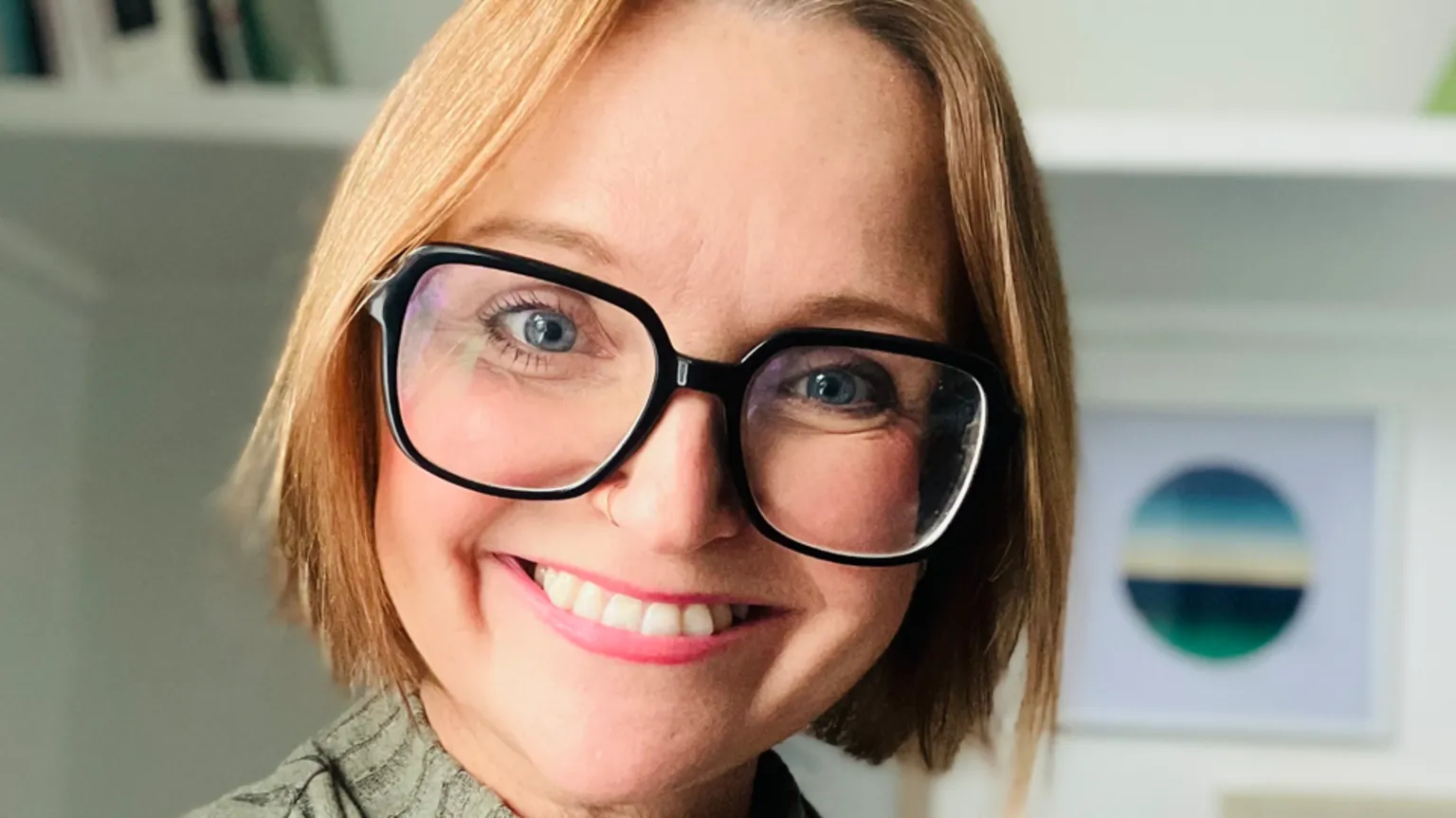
Cardiff University’s Dr Jenny Kidd has led research on so-called deathbots, published in the Cambridge University Press journal Memory, Mind and Media, and described the results as both “fascinating and unsettling”.
Attempts to communicate with the dead are not new.
From séances to spiritualist mediums, similar practices have existed for centuries.
But as technology advances, AI has the potential to make them more convincing, and far more scalable.
In 2024, James Vlahos told the BBC how he recorded his dad’s voice and created an AI chatbot after hearing the devastating news that he was dying from cancer.
He described how wonderful it was to keep a sense of his memory alive, and while it didn’t remove the pain of his death, he added: “I have this wonderful interactive compendium I can turn to.”
The Workplace Bereavement support group said it was not seeing widespread use of deathbots, but more curiosity from people.
“These deathbots and AI tools are only as good as the information they are given,” said founder Jacqueline Gunn.
“They don’t grow or adapt in the way grief does. For some they may offer a stepping stone, but they cannot be the destination.
“Grief is a deeply personal human response to death, needing time, understanding and human connection.”
Working with Eva Nieto McAvoy from King’s College London and Bethan Jones from Cardiff University, Kidd explored how these technologies function in practice.
They looked into how AI systems are designed to imitate the voices, speech patterns and personalities of people who have died, using their digital traces.
While they are often marketed as sources of comfort and connection, the researchers say they rely on a simplified understanding of memory, identity and relationships.
Kidd’s interest in the topic began during the Covid pandemic, when there was a sudden flood of AI-generated animated photographs on social media.
People were uploading old photographs of ancestors, then watching them blink, smile and move their heads as software “reanimated” their loved ones.
“These things were really creepy, but really quite interesting as well,” Kidd said.
“All of a sudden they were everywhere and millions of people were sharing them.
“That was us stumbling into this kind of work of AI revival.”
‘I sounded Australian’
The team decided to test some of the deathbots for themselves and explored four commercial platforms.
“It was weird interacting with ourselves in that way but largely unsatisfying because of the technical limitations of these platforms at the moment,” said Kidd.
In one experiment, Kidd used her own voice data to create a chatbot.
“It didn’t sound like me, in fact it it sounded quite Australian,” she added.
Kidd believes the technology will improve, but she is sceptical about whether a large market will emerge.
“We already have a lot of established rituals and traditions around death,” she said.
“The fact that there hasn’t really been a take-off technology in this space maybe indicates there isn’t much of a market for it.”
When asked whether they would want their own families to recreate them digitally after death, the researchers had mixed feelings.
“My initial gut reaction is if they want to do that and it’s kind of playful, that’s fine,” Kidd said.
“But if there’s any sense to which, certainly in the future, the persona continues to evolve or says things that I would never say, or has allegiances I would never have, and this begins to mangle people’s actual recollections of me and my values then I think I would have a big problem.”
Dr Nieto McAvoy said she was not “particularly bothered”.
“I’m not very religious and I don’t have strong thoughts about the afterlife, once I’m dead, who cares?
“If it helps them, you know… but it can be misconstrued for sure. And do I want my family to pay for a service… I don’t know, it’s complex.”
 SANGHA KOMMUNE (SSR)