Source: Xinhua Editor: huaxia 2025-12-07
Blogger’s Note: When Charles Darwin was challenged by all and sundry to prove his new theory of evolution through natural selection (co-founded with Alfred Russel Wallace – who disagreed with Darwin by thinking that human consciousness is “broadcast” into the brain of each individual through a mysterious outside force) he said that the evidence was all around – but yet undiscovered. Of course, his theory was in fact an integration of a number of older theories – coupled with then contemporary material scientific evidence gathered by the two men – who had travelled the world and examined nature. To the average, logical mind, Darwin’s statements seemed unlikely – as when seekers looked around – all they saw was a superficial world already explained by theological dogma. The reality was that not many people understood a) exactly what it was we were we looking for, and b) how we might set about looking for this evidence. A lot has changed in nearly 200-years. We visit Darwin’s House regularly to see how he organised his study – and keep updated on the substantial progression made in evolutionary biology. Marx and Engels were very enthusiastic about Darwin’s work (Marx and Darwin corresponded) as it was viewed as the scientific engine that drove Scientific Socialism. ACW (8.12.2025)
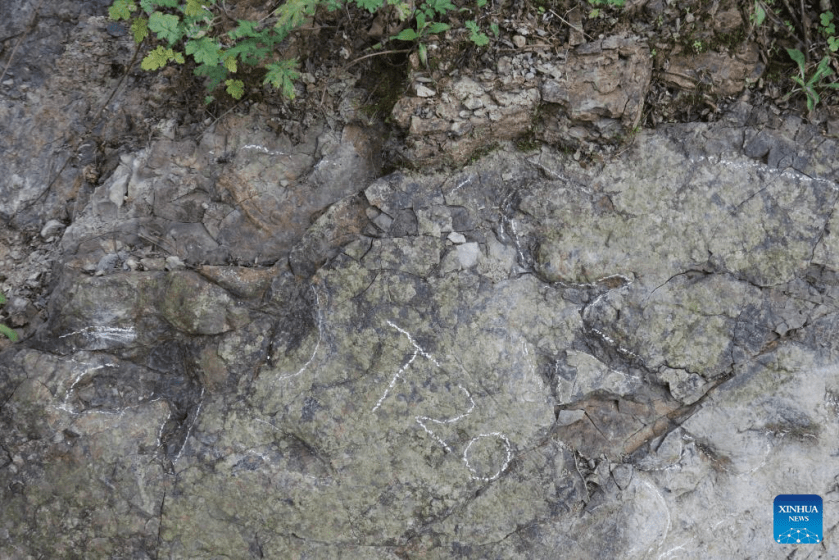
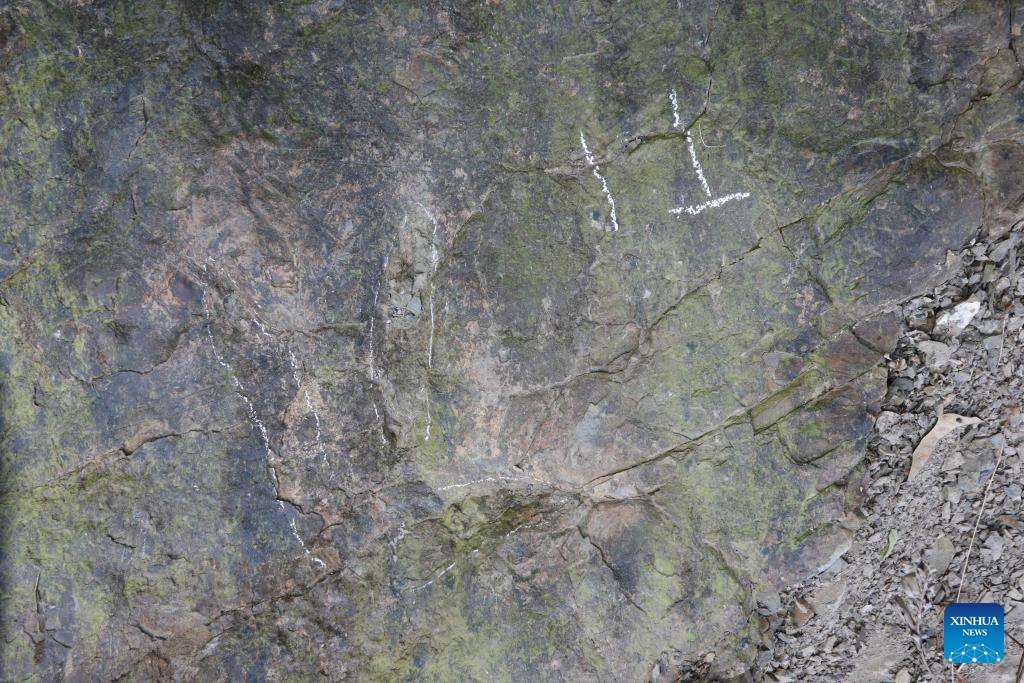
CHENGDU, Dec. 7 (Xinhua) — Palaeontologists have identified more than 20 dinosaur and other vertebrate footprints on a rock wall in southwest China’s Sichuan Province, a discovery they say sheds new light on early dinosaur evolution around 200 million years ago.
The tracks were found in the city of Dujiangyan by a hiker last month, and their authenticity was later confirmed by a research team led by Xing Lida, an associate professor at China University of Geosciences (Beijing). It is the first time dinosaur footprints have been reported in Dujiangyan.
Xing said these prints include theropod footprints of different sizes, left by meat-eating dinosaurs, as well as chirotherian-type tracks, which resemble a human hand and are attributed to early archosaur reptiles.
“What makes this site particularly valuable is that at least four layers preserve footprints, suggesting dinosaurs lived here for a long period,” Xing explained.
Researchers also found pieces of petrified wood near these tracks, including fallen logs and upright stumps preserved in place, providing additional information about the nature of the local ecosystem more than 200 million years ago.
Jiang Shan, a researcher at the Zigong Dinosaur Museum in Sichuan, said this newly identified material can help scientists better understand the early evolutionary history of dinosaurs in China.
 SANGHA KOMMUNE (SSR)