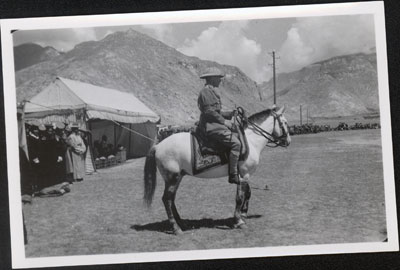
Author’s Note: This is a superb example of the BBC “lying” about historical issues once again. Although Lt Gen Sir Philip Neame was stationed in India during the 1930s – there is NO evidence he “trained” the Tibetan section of the Nationalist Chinese Forces. Indeed, there is NO evidence that a “separate” Tibetan Army existed – as implied by the BBC. By the 1930s, the UK had invaded Tibet at least three times – but Tibet had already been a part of China for over a thousand years – since Tibet invaded large swathes of China during the 10th century. Philip Neame served in India from 1925-1938 – but was mauled by a tiger in 1933 – requiring months of healing. He reutrned to duty in May 1934 – being promoted to the temporary rank of “Brigadier” (possibly a “Brevet” rank) in July. The only evidence of him being in Tibet at all is a single photograph dated “September 7th 1936” – taken by one “Evan Yorke Nepean” – which carries the following caption:
‘Brigadier Neame on horseback, inspecting troops at a military review near Trapshi held in September 1936. Spectators can be seen lining the parade ground in the background whilst Tibetan officials are seated and standing in and around a tent on the left.’
The BBC’s lying here – is beyond a joke – as it is usually far more sophisticated than this (the current Trump trouble excepted). Somehow “inspecting troops” when fed through the BBC propaganda filter suddenly becomes “went on to train the Tibetan army“! No. This never happened – as the warrior class of the Buddhist Tibet used traditional (feudal) bladed weapons with a sprinkling of old muskets, etc. He was probably invited by the Nationalist Chinese authorities to Tibet for a brief visit. Indeed, the category of the photograph concerned is entitled “British Diplomatic Mission to Lhasa 1936-37” – with Philip Neame supposedly tasked with giving military advice to the Tibetan government. This would have been Chinese officials appointed by Beijing – and/or local Buddhist Lamas breaking their monastic vows and interfering in secular politics. Whatever the case, there is no other – or substantial evidence – that Philip Neame provided any military training. Furthermore, Philip Neame only arrived in Tibet the day before this picture was taken. The British were probably trying to cause rebellion in the area – hence the BBC’s attitude today. The BBC now needs to be abolished for its continuous taking of the side of the Bourgeois State (whilst the working class is made to pay the abusive licence fee), its anti-working-class attitudes, and its anti-Socialist trajectory. Just look at the BBC’s support for Neo-Nazi Ukraine and Zionist Israel! ACW (11.11.2025)
Steve Ladner, in Faversham and Stuart Maisner, South East – 9.11.2025
Only one person has ever been awarded both the Victoria Cross and an Olympic gold medal.
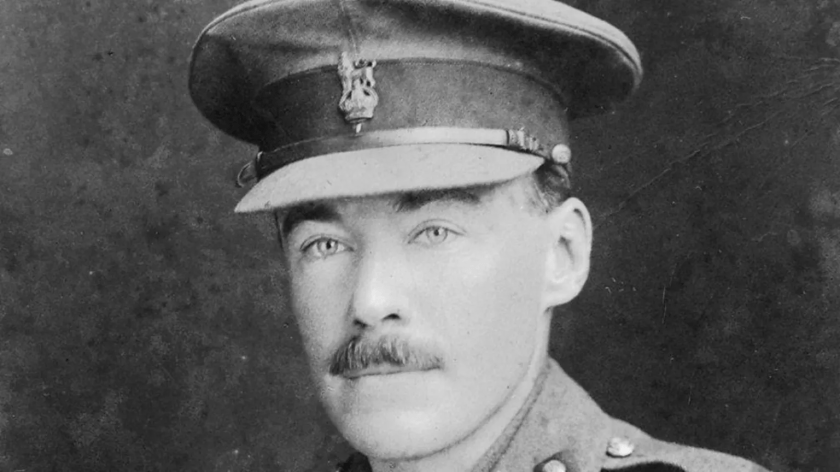
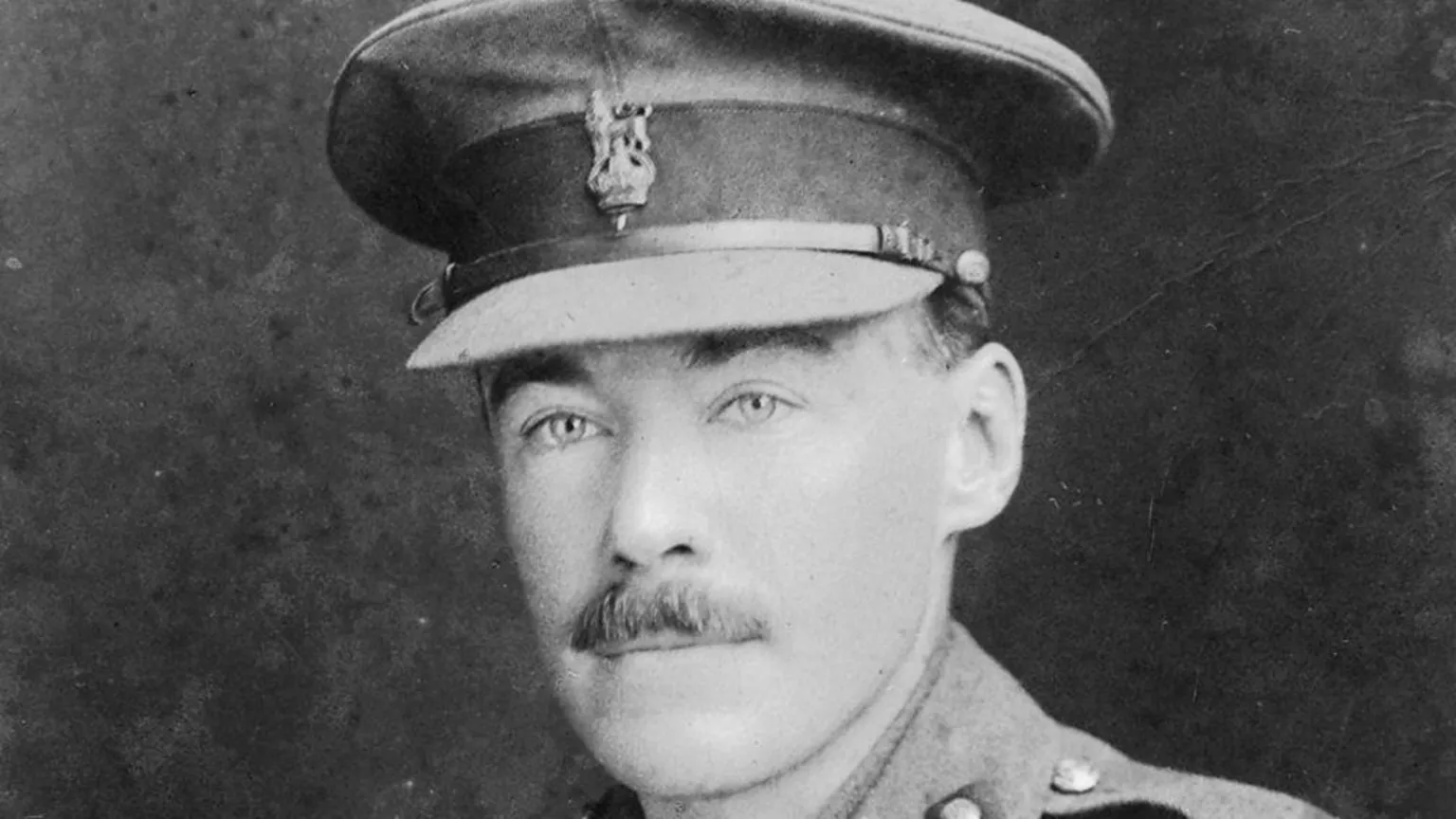
Lt Gen Sir Philip Neame, from Faversham, Kent, was commended for improvising grenades out of jam tins and running up to German lines during World War One to deliver them.
In 1924 he went on to win a shooting competition at the Paris Olympics.
Historian Neil Tonge said Neame was a “local hero” with a “derring-do” attitude.
Neame was born in 1888 into the Shepherd Neame family, owners of one of the oldest breweries in the UK.
Mr Tonge said: “He had all the privileges of a relatively wealthy upbringing and he took every advantage of that.”
Neame enlisted in the army as an engineer and went to the Western Front in France, where he fought in the trenches against the German forces.
“There was a shortage of weaponry, so Neame and his compatriots filled jam tins with gunpowder, bits of shrapnel, hobnails from their boots, all sorts of things,” said Mr Tonge.
“They attached the fuses to the jam tin which would then explode in under a minute.
“With this derring-do attitude they would then raid the enemy trenches.”
Neame survived and was decorated with the Victoria Cross, the highest accolade for valour in war.
He continued his career in the army while also pursuing an interest in rifle shooting, and competed in the 1924 Olympics with great success.
Neame went on to train the Tibetan army, before getting called up for World War Two.
He fought, and was captured, in North Africa, then was a prisoner of war in Italy before escaping back to Britain.
He died in 1978 and is buried in the village of Selling in Kent.
His son, with the same name, fought in the Falklands War in 1982.
In his home town of Faversham a plaque on the pavement near the guildhall commemorates Neame’s place in history.

