(Translated By Adrian Chan-Wyles PhD)
Translator’s Note: I have been approached “three” times in my own country of the UK when carrying the Red Flag on marches over the last ten-years – all three times by Estonians who took exception to me exercising my own lawful rights in my own country. This happened once in Torquay, once in Croydon, and once in Trafalgar Square. I instructed these stupid individuals that whilst their ancestors “collaborated” with Nazi Germany – my ancestors in the UK fought as allies with the USSR. I then suggested we summon a British Police Constable who might want to check their immigration status. This soon sent these cowards scurrying away back to their dark pits. Today, I happened to check the background of the Dr Who actress “Mary Tamm” (1950-2012) – who played the character Romana for a short-time in the 1980s. Apparently, in 2009 she wrote a biography which tells lies about Estonia’s Nazi past and Neo-Nazi present. The Wikipage about her, and the – Doctor Who Appreciation Society – all trumpet the ahistorical lies this ungrateful woman peddled about her family in Estonia. After WWII, the UK imported 10,000 Ukrainian SS veterans – and continued this dalliance with fascism by bringing in Estonians and Hungarians – two countries amongst many that contributed toward the murdering and maiming of around 40 million Soviet men, women, and children during WWII. It is disgusting that the BBC would employ a relative of Estonian Nazi War Criminals – and place her on a children’s programme to boot! Mary Tamm was only 3-years old when Joseph Stalin died in 1953. He had been voted into office at least six-times – but due to ill-health – he had been only the honorary General Security since 1948. He had tried to resign – but so popular was he that the people would not allow it. Tamm is very vague about when she came to the UK – but I suspect it was after Khrushchev betrayed Stalin in 1956 – and liberalised Soviet policy. I would think about 1960 – or there abouts. What Tamm does not want you to know is that the fabricated “gulags” (labour camps) the US invented during the Cold War to scare the working class – only supposedly existed during the 1930s – when her parents were very young and still children themselves. How could her brothers die in such non-existent entities? They could not. Of course, if her brothers were executed for being Nazi War Crimes – then fair enough – they quite rightly join thousands of others (East and West). My point is that Mary Tamm is a liar and should not have been allowed into the UK or to make a career at our expense. ACW (25.5.2025)
Original Author: ALEXEY IRYUTIN (АЛЕКСЕЙ ИРЮТИН)
Deputy Head of the Research Department of the Research Institute (Military History) – Military Academy of the General Staff – Armed Forces of the Russian Federation
What did the Estonian units really do during the Great Patriotic War and what mark did they leave in history? Let’s try to answer this question in this article.
On June 18, 2002, the Estonian parliament adopted a statement “On the Crimes of Occupation Regimes”, in which an attempt was made to put Estonia’s entry into the USSR on a par with the occupation of this country by Nazi Germany, to accuse the USSR of aggression, genocide, crimes against humanity and war crimes.
At the same time, since the 1990s, the Estonian Authorities have been defending the thesis of the participation of the Estonian SS Legion and other Estonian Nationalist Formations in the war exclusively at the front, presenting Nazi accomplices as fighters for the independence of Estonia – who had nothing to do with Punitive Operations in the Soviet territories occupied by Germany. And since that time, against the backdrop of attempts to rewrite the results of World War II, a policy of glorifying Nazi criminals has been pursued at the official level.
Indoctrinating hatred

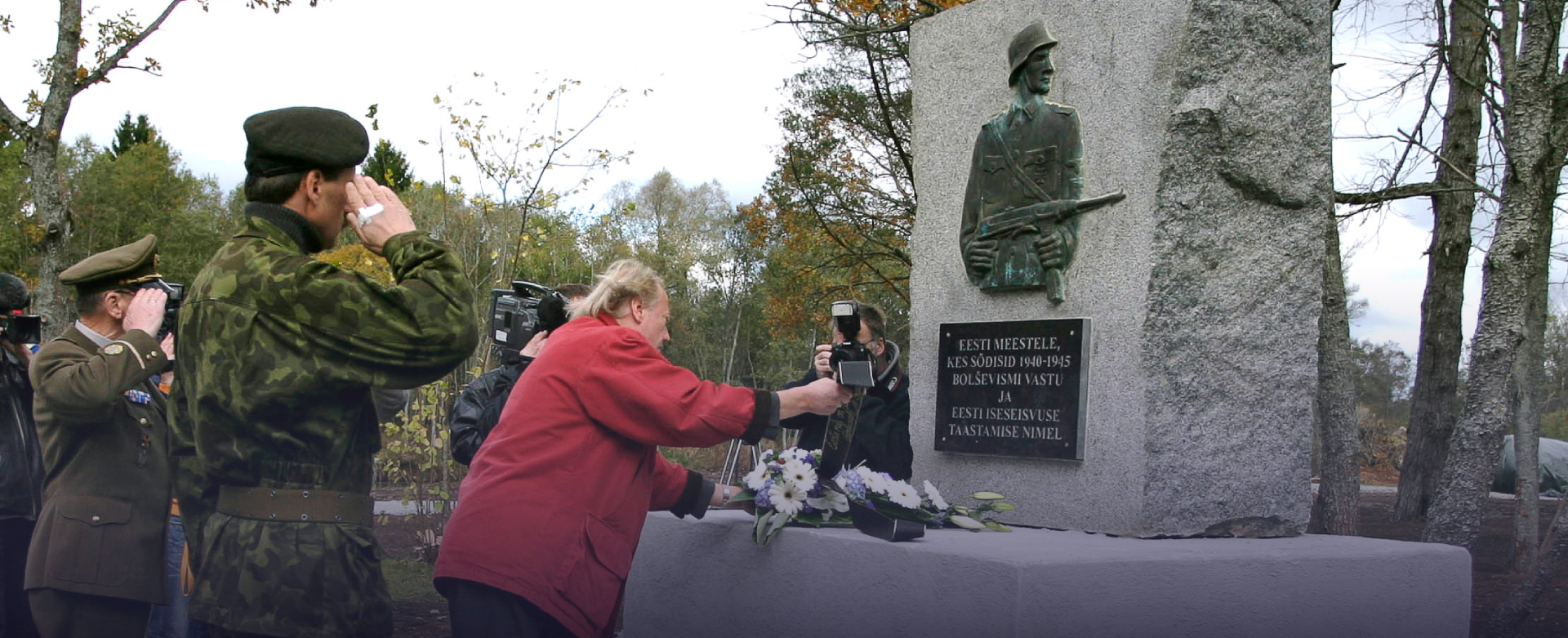
The “Military and Patriotic Experience” of the Estonian SS Legion and other Military Units that were part of the National Units of Nazi Germany is used in educational work with the younger generation in schools and in the Estonian Army, including in the organization “Defence League”, which was recreated as a Militia.
This is evidenced by the military sports competitions of the “Erna Campaign” regularly held under the auspices of officials in Tallinn, glorifying the “feats” of the Erna Sabotage Group operating in 1941 in the rear of the Soviet troops. This is not only the “rewriting” of the history of the Great Patriotic War and World War II, but also the denial of the responsibility of the Estonian Nazis for the crimes they committed on the territory of the Soviet Union, in particular on the territory of the Pskov region. In addition, educating young people in a clearly nationalist spirit inevitably leads to an increase in xenophobia and hatred of everything Russian. The glorification of Nazi criminals and the presentation of Estonia as an outpost on the border of the European Union intensified even more with the start of a Special Military Operation in Ukraine by the Armed Forces of the Russian Federation.
Nationalist and fascist organizations appeared in Estonia long before the outbreak of World War II and the entry of the Baltic states into the USSR.
From the beginning of the 1930s, the influence of the fascist movement of the Vaps began to grow rapidly in Estonia, which was originally founded as a Union of Veterans of the War of Independence of 1918–1920 (the Finnish fascist movement of the Lapuans was a model for the Vaps). The Vaps advocated the elimination of all political, economic and cultural rights of national minorities and were oriented towards Nazi Germany. In October 1933, the draft of a new Authoritarian Constitution of Estonia proposed by the Vaps received 56% of the votes in a Referendum. The movement also won the municipal elections in January 1934 (in Tallinn, 52% of the electorate voted for Vaps). In order to prevent Vaps from winning the upcoming Presidential Elections, the government of Konstantin Päts declared a State of Emergency on March 12, 1934, dissolving all political parties and Parliament.

In the subsequent period, the main exponents of right-wing nationalist ideas in Estonia was the Patriotic Union Party and the Paramilitary Organization Defence League. (2) After the establishment of Soviet Military Bases on the territory of Estonia on the basis of an Agreement between Estonia and the USSR in the autumn of 1939, activists of these Organizations, as well as supporters of the VAPS movement, created an illegal “Salvation Committee” to spy on Units of the Red Army in favour of Germany. After Estonia joined the USSR, German Intelligence intensified ties with them in order to prepare an armed rebellion by the time of the German attack on the USSR. Thanks to the actions of the State Security Agencies of the USSR, these plans were not implemented.
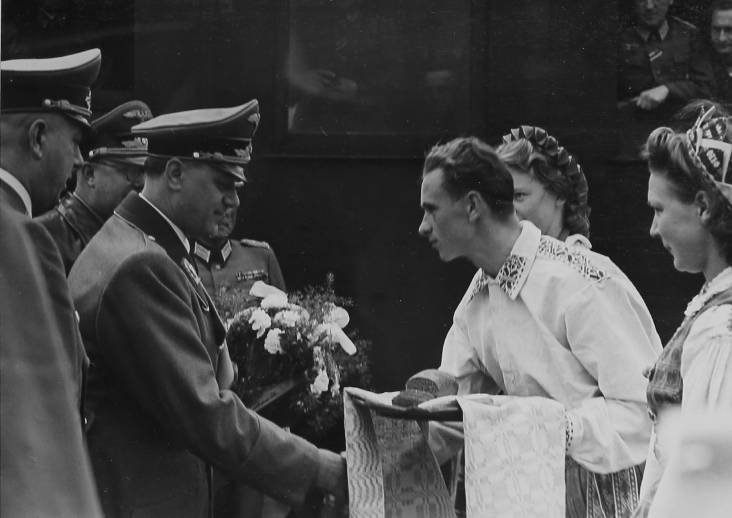
With the beginning of the Great Patriotic War, activists of Estonian Nationalist Organizations launched sabotage activities against the troops of the Red Army. After the occupation of Estonia by German troops, Estonian “Self-Defense Units” aided the German occupiers, participated in raids on Red Army soldiers, Soviet Party leaders and sympathizers of the Soviet regime. As the German fascist invaders advanced deep into the territory of the USSR, it became necessary to increase the number of the repressive apparatus of Nazi Germany in the Occupied Territories. To participate in military operations on the side of Nazi Germany, the formation of Estonian Regular Units began.
On August 25, 1941, in accordance with the order of the Commander of Army Group North, Field Marshal von Leeb, it was allowed to accept the Balts into the Wehrmacht and create Special Teams and Volunteer Battalions from them for Anti-Partisan Warfare.
In this regard, the Commander of the 18th Army, Colonel-General Küchler, formed six Estonian Security Detachments (No 181-186) on a voluntary basis (with the conclusion of a one-year contract) from the disparate “Omakaitse” (“Self-Defense”) Detachments. At the end of the same year, all six units were reorganized into three Eastern Battalions (No 645, 659 and 660) and one Eastern Company (No 657). In addition to the above-mentioned units for Security Service and the fight against the Partisan Movement in the rear of Army Group North, from September 1941, the German Command began to form Estonian Auxiliary Police Battalions (“shum”). A total of 26 “noise” Battalions were formed in Estonia during the war, numbered 29th to 45th, 50th and 286th to 293rd.
… to a painful death
Unlike similar units on the territory of Ukraine and Belarus, in which the entire Command Staff consisted of Germans, the Estonian Police Battalions, staffed by National Cadres, had only one German Observer Officer. An indicator of the special confidence of the Germans in the Estonian Police Battalions was the fact that the military ranks of the Wehrmacht were introduced there. On October 1, 1942, the entire Police Force of Estonia consisted of 10.4 thousand people, to which 591 Germans were attached. The Police and Eastern Battalions were used primarily to carry out punitive actions against the civilian population, to fight the Partisan Movement, and to guard Concentration Camps. The Estonian National Formations were not noted in any significant successes in combat operations against the units of the Red Army, and the Germans themselves preferred to use them to do the “dirty work”, which the Estonian Units performed with particular cruelty and thoroughness.
On July 9, 1941, Pskov was occupied by German troops, and the establishment of a “new order” immediately began, which provided for terror against Soviet activists, prisoners of war, partisans, as well as the broad masses of the civilian population.
A Police Administration was established in the Occupied Territories, subordinate to the Reichsführer SS and Chief of the German Police, Heinrich Himmler. The basis of the repressive machine was the Einsatzgruppen (deployment groups); In essence, they were a kind of headquarters that led all punitive police work and directly participated in it. Until March 1942, all units of the Security Police and SD were commanded by the Chiefs of the Einsatzgruppen, then the posts of commanders of the Security Police and SD were introduced. The Einsatzkommandos, groups and Sonderkommandos were subordinate to them. It should be noted that the apparatus of these bodies was divided into two parts: German and national. In the course of the structural transformations, the Estonian Criminal Police and the Estonian Political Police were merged under a common leadership. The newly formed structure was called “Sector B” or “Estonian Security Police” and SD.
Thus, since 1942, the Estonian Security Police and SD, which were subordinate to the Security Police and SD of the General District of Estonia, actively carried out punitive and counterintelligence activities in Pskov. Former leaders and employees of the Estonian police during the authoritarian regime of Konstantin Päts, members of paramilitary nationalist organizations (Defence League and Omakaitse), former officers and non-commissioned officers of the Estonian army and Border Guard were involved in this body.

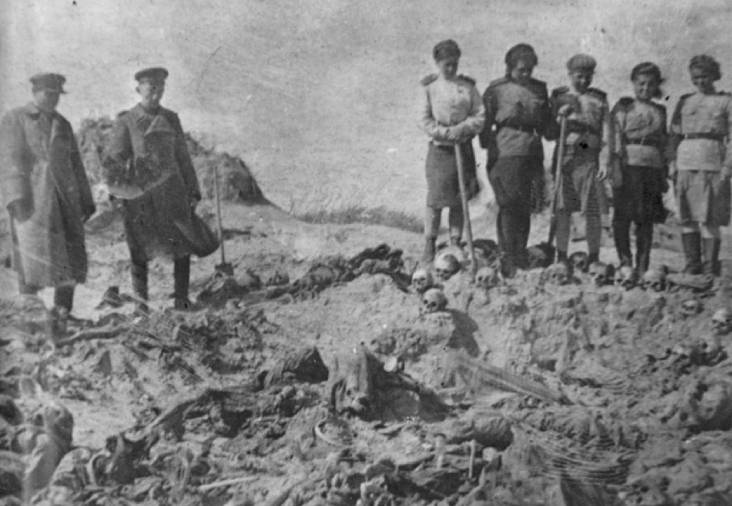
In fact, in parallel with the German repressive measures, repressions unleashed by the Estonian Security Police and SD were carried out on the territory of Pskov and the region. In the basement of the Pskov Police Building on Lenin Street, Soviet citizens were held during the so-called investigation and those in respect of whom the investigative measures had been completed. From here, once or twice a week, persons sentenced to extrajudicial execution were taken in groups by truck to the place of execution in the area of the village of Androkhnovo, in the area of the Vaulin Mountains or to the Berezka Station, to the house of the forester Pavlov. Those sentenced to stay in concentration camps were sent to the Moglinsky camp, and many of them were already doomed to a painful death. When a sufficient number of prisoners accumulated, they were taken to Pskov to be sent to forced labor in Germany or shot. Russians, Gypsies and Jews were held in the Moglino Camp, “executions” (shootings) of Jews and Gypsies, as well as Russians for escaping from the Camp, participating in partisan detachments or as hostages, were carried out there. Executions were carried out by the Camp Guard without any trial or investigation.
The executions of Soviet citizens were directly carried out by members of the Estonian “Security Team”, subordinate to the external department of the Estonian Security Police and SD. Members of this team received additional rations and alcoholic beverages. From the interrogations of Estonian Police Officers conducted by the State Security Agencies of the USSR after the war, it clearly follows that the murders of prisoners in the Camps in the Pskov region were carried out by Estonians, including for personal gain. Let us cite two examples of the appropriation by Nazi criminals of the personal belongings of the people they killed.
From the testimony of the Estonian policeman of the security team, Johannes Mauts: “I recall a case when the head of the guard, Sepp, once gave Premet the clothes of a man who had been shot for sale, because Premet had an extensive acquaintance in Pskov.”
From the testimony of Eduard Kingisepp, an employee of the Estonian Security Police and SD, dated September 9, 1948: “They began to tell me how Soviet citizens were shot. Kolina (a Security Guard in Pskov) said that at the time of the shooting, he took away a bag of gold items from an old woman. To this, the driver Harald Crispin (a driver of the Security Police, an active participant in the shootings, lived in the ESSR after the war), interrupting Kolina, said: “And I didn’t look at anything, I will grab one by the scruff of the neck, shoot him, push him into a pit, and then take the next one. I have enough strength to shoot these bastards.” (6)
It is indicative that Military Personnel who had stained themselves with serious Disciplinary Offenses were sent to guard Concentration Camps. In the Moglin Concentration Camp alone, up to 3000 people are believed to have been killed, but it is impossible to establish the exact number, as well as the total number of people who went through this hell on earth. In 1944, shortly before the Liberation of Pskov from the Nazi invaders, the camp was burned down, some of the prisoners were deported to Germany, and the other was destroyed. Estonian punishers played a key role in committing acts with signs of genocide against Soviet citizens in the Moglin Camp. Only in Pskov itself and its environs were there five Concentration Camps for various purposes, and in total there were 29 of them in the Pskov region (including Departments).
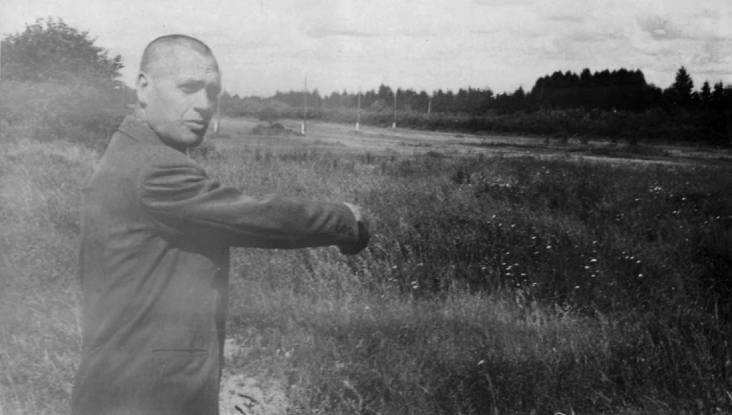
In addition to the murder of Soviet citizens, Hitler’s henchmen in Prisons and Concentration Camps carried out public executions of partisans and civilians suspected of collaborating with the partisans. The families of Communists, Komsomol members and Soviet activists were destroyed. Estonian units took a direct part in the barbaric destruction of towns and villages along with their populations during Punitive Operations. Here the “Baltic Volunteers” were the fittest, and are forever stained with shame. Unfortunately, not all of them were overtaken by the severe punishment of a fair trial.
Estonian Punitive Police Battalions and other collaboratoring units, which became the basis for the formation of the 20th Estonian SS Volunteer Division, left a bloody trail during World War II on the territory of Russia, Belarus, Ukraine, Poland and Estonia itself, taking an active part in the destruction of civilians.
Estonian SS men are classified as war criminals according to the verdict of the Nuremberg Military Tribunal: “In considering the question of the SS, the Tribunal includes all persons who have been officially accepted as members of the SS, including members of the General SS, Waffen-SS, SS Totenkopf formations, and members of any kind of Police Services who were members of the SS. The Tribunal does not include the so-called SS Cavalry Formations in this number.” (7)
Their crimes are not forgotten
It is clear from the tribunal’s ruling that the Estonian SS soldiers, among others like them, were convicted mainly of crimes against the civilian population. As an example, we will cite several interrogations of captured Estonian Nazis.
From the protocol of the interrogation of Alexander Kuusik, who participated in the Punitive Operations of the 40th Estonian Police Battalion on the territory of the Pskov, Leningrad, Kalinin and other regions of the USSR.

Soon Soviet Military Units began to advance, and our 3rd Company from the Seredkinsky District was withdrawn closer to the city of Pskov, to a distance of about 30 km. Our 3rd Company was given the premises of an Orthodox Church, where all the Personnel were accommodated. Inside, all the icons and utensils were broken, some were thrown away. At the end of February 1944, three people were brought to the Church by a detachment of our company – one man and two women. suspected of looking out for the location of Military Units, i.e. our 3rd Company. Oberleutnant Rätsep N. began to ask them why they were near the Church where the German Unit was located, to which the Detainees replied that they had potatoes buried in the haystacks in the field to eat. Oberleutnant Rätsep N. did not believe their statements, shouted at them, threatened to shoot them, and they said the same thing. As a result, Oberleutnant Rätsep N. gave the order to the soldiers: to be taken away from the Company’s location in the direction of the forest and shoot all three, immediately expressed himself angrily: “I will shoot them myself.” The detained man and two women were taken out of the room, followed by Rätsep N., as a result, all three were killed in the forest, not far from the Church. They were escorted to the place of execution by two soldiers, one with the name of Sibul, the other with the name I do not know. Oberleutnant Ryantsep Nikolai8 himself was present at the place of execution.
An even more terrible picture of the genocide of the civilian population is given by the tetimony of the Head of the 2nd Department of the UNKGB of the Pskov Region, V.V. Tsirul, about the mass killings of civilians, dated February 20, 1945:
In the Seredkinsky district.
Having occupied the district, the fascist invaders began the mass destruction of the Party, Soviet and Collective Farm activists. Only the Estonian Punitive Detachment, operating in the Kuroksha, Remdovskaya, Samolvo and Terebischenskaya volosts, tortured and shot about 100 activists. Among them were the instructor of the Central Committee of the All-Union Communist Party (Bolsheviks) Vlasov, the Chairman of the Village Aleksandrov and his son, a Komsomol member, the Director of an incomplete secondary school Vasilyev, the Chairman of the Collective Farm Simen. volost, the Chairman of the Executive Committee of the District Council Khobotov Mikhail Fedorovich, the Secretary of the Central Committee of the All-Union Communist Party (Bolsheviks) for Personnel Baskakov Alexander Ivanovich were killed, the Collective Farmer Koltsov was brutally tortured, the Chairman of the Collective Farm Ivanov was brutally tortured. The Chairmen of the Village Councils were tortured and then killed: Osvald Yuganovich Kulberg of Budylsky, Fyodor Gusev, candidate of the All-Union Communist Party (Bolsheviks), Order-Bearer, Deputy of the Regional Council of Workers’ Deputies, teacher Tatyana Vladimirovna Kuzmina. The Secretary of the Yerritorial Party Organization of the Novikov village Council Yazontov Pavel Stepanovich, the Secretary of the Budikh Komsomol Organization Kinus Adela, the Germans (here and hereinafter, the action was committed by the Estonian SS under the command of the Germans. – A.I.), before killing, cut off their tongues, subjected them to other tortures and mutilations. The head of the Zagotskot Arkhipov Pyotr Ivanovich had horseshoe nails brutally driven into the soles of his feet and was forced to flee. In the village of Podklinye, the Germans locked half of the houses along with the inhabitants inside, threw grenades and set them on fire, killing up to 50 people, including the elderly and children. At the Borovik Junction, the population was driven into houses, closed, pelted with grenades and set on fire, 28 people died. In the village of Zakhodtsy of the Novikovsky village Council, 85 people, including 18 children, were locked in a roofless cold storeroom, with grenades thrown in from above, and then checked if there were any alive, and those who turned out to be alive were shot with machine guns.
On February 13, 1944, a group of Germans came to the village of Kluka, gathered all the men in one place and opened fire on them with machine guns, as a result of which 12 people died. On the same day, 3 people were shot in the village of Zaluzhye, 7 people in the village of Kalyadukha, 3 people in the village of Borki, and 3 people in the village. Zabolotye – 2 people. In the village of Zakhody of the Novikovsky village council, the Germans shot 75 men and women in one day, among them a 90-year-old man Vasily Kuranov, a 7-month-old girl Anastasia Yakovleva, evacuated from the Pskov region. The wife of the executed activist, Teterina Evdokia Ivanovna, 68 years old, was thrown into the flames of a burning house.
About 370 people were tortured and killed in the district centre of Seredka, the bodies of the killed were buried in a ravine near the former building of the Veterinary Clinic and behind the building of the district hospital (9).
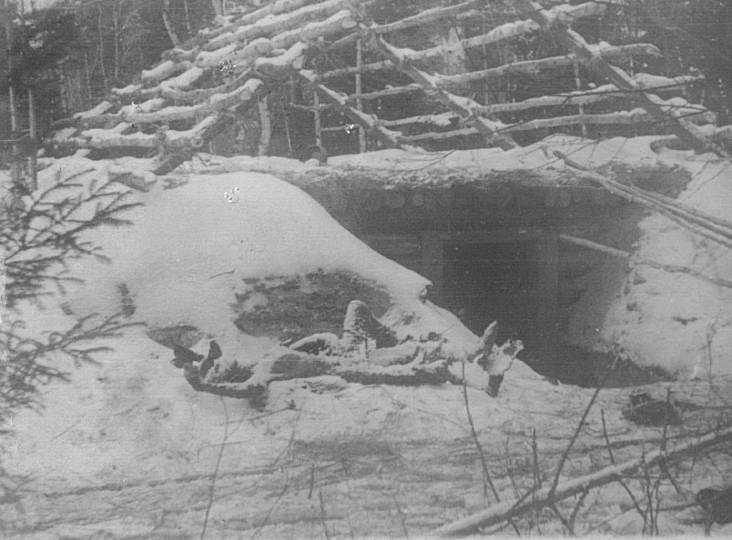
In the Slavkovsky district of the Pskov region in 1944, an Estonian punitive detachment in the village of Shishlovo of the Shishlovsky village council burned down 50 yards, shot 12 residents. In the village of Rybikha, 10 people were shot (10). This list of atrocities can be continued endlessly.
In addition to the destruction of the population of the region, the Estonian SS punitive forces carried-out the destruction of cultural and historical sites: “Priest Grigory Dobrovolsky said that in September 1943, the Germans and Estonians came to the village of Lanova Gora in order to take all the livestock, but this was prevented by the partisans. The Germans set fire to all the houses along with the inhabitants. Many tried to escape, but the Germans opened fire, and some were caught and thrown alive into the fire. On that day I had to bury 54 charred corpses of women, old people and children. The Germans in my parish committed other atrocities as well. The Church of St. Elijah in Dobrovitki was blown up along with 27 residents who lived in it. In the village of Skomorokhova Gora in the Tsaplensky village council, the Germans burned the old woman Ilyina and two children, and there, on the Golovanovo farms, the pregnant Kapitonova was killed and burned with her, along with her two children and old parents.” (11)
The population of the Pskov region bore the colossal blow of the Nazi extermination policy, which is still inflicting demographic consequences: the losses alone amounted to 371,755 people, this does not take into account those who were taken into slavery to work in Germany, Latvia and forcibly relocated Soviet citizens.
The crimes of the Estonian SS units fall under the definition of “genocide” and have no statute of limitations. Unfortunately, not all Nazi criminals and their accomplices were brought to justice and convicted, many managed to escape, but their crimes against humanity have not been forgotten.
1 – 0n the participation of the Estonian SS Legion in war crimes between 1941–1945 and attempts to review the verdict of the Nuremberg Tribunal in Estonia (reference information) https://www.mid.ru/ru/foreign_policy/news/1665282/: 13.02.2004. Accessed on 26.05.2024.
2 – Ibid.
3 – Ibidem.
4 – Alekseev Yu. “Moglino Concentration Camp”: the story of one small death factory. Moscow, 2020. P. 13.
5 – Ibidem. P. 18.
6 – Ibidem.
7 – Estonia. The bloody trail of Nazism: 1941–1944. Collection of archival documents. Moscow, 2006. P. 6.
8 – Ibidem. P. 30.
9 – Without a Statute of Limitations: Crimes of the Nazis and Their Accomplices against the Civilian Population in the Temporarily Occupied Territory of the USSR during the Great Patriotic War of 1941–1945. ed. by A.V. Yurasov; ed. by Y.M. Zlatkis; ed. E.V. Balushkina, K.M. Grinko, I.A. Zyuzina, O.V. Lavinskaya, A.M. Lavrenova, M.I. Meltyukhov, Yu.G. Orlova, E.V. Poltoratskaya, K.V. Sak. Moscow, 2020. P. 295.
10 – Ibidem. P. 297.
11 – Ibidem. P. 280.
12 – Ibidem. P. 301.
Russian Language Text:
https://vorontsovopole.ru/rubriki/tsekh-istorika/estonskiy-sled-germanskogo-natsizma
АЛЕКСЕЙ ИРЮТИН,
заместитель начальника научно-исследовательского отдела НИИ (военной истории)
Военной академии Генерального штаба ВС РФ
Чем же на самом деле занимались эстонские подразделения в годы Великой Отечественной войны и какой след они оставили в истории? Попробуем ответить на этот вопрос в этой статье.
Эстонский парламент 18 июня 2002 года принял заявление «О преступлениях оккупационных режимов», в котором была сделана попытка поставить в один ряд вхождение Эстонии в состав СССР с оккупацией этой страны фашистской Германией, обвинить СССР в агрессии, геноциде, преступлениях против человечности и военных преступлениях1.
Одновременно с этим эстонские власти, начиная с 1990-х годов, отстаивают тезис об участии в войне Эстонского легиона СС и других эстонских националистических формирований исключительно на фронте, представляя пособников нацистов как борцов за независимость Эстонии, не имеющих никакого отношения к карательным операциям на оккупированных Германией советских территориях. И с этого же времени на фоне попыток переписать итоги Второй мировой войны на официальном уровне проводится линия на героизацию нацистских преступников.
Воспитание ненависти
«Воинский и патриотический опыт» Эстонского легиона СС, других военных подразделений, входивших в состав национальных подразделений гитлеровской Германии, используется в воспитательной работе с подрастающим поколением в школах и в эстонской армии, в том числе в воссозданной в виде ополчения организации «Кайтселийт» («Союз защиты»).
Свидетельством этому являются регулярно проводимые под эгидой официального Таллина военно-спортивные соревнования «Эрнаский поход», прославляющие «подвиги» действовавшей в 1941 году в тылу советских войск диверсионной группы «Эрна». Налицо не только «переписывание» истории Великой Отечественной и Второй мировой войн, но и отрицание ответственности эстонских нацистов за преступления, совершённые ими на территории Советского Союза, в частности на территории Псковской области. Кроме того, воспитание молодёжи в явно националистическом духе неизбежно приводит к повышению ксенофобии и ненависти ко всему русскому. Прославление нацистских преступников, представление Эстонии как форпоста на границе Евросоюза ещё более усилились с началом Вооружёнными силами Российской Федерации специальной военной операции на Украине.
Националистические и фашистские организации в Эстонии появились задолго до начала Второй мировой войны и вхождения прибалтийских государств в состав СССР.
С начала 1930-х годов в Эстонии стало быстро расти влияние фашистского движения вапсов, которое первоначально было основано как союз ветеранов Освободительной войны 1918–1920 годов (образцом для вапсов было финское фашистское движение лапуасов). Вапсы выступали за ликвидацию всех политических, экономических и культурных прав нацменьшинств и ориентировались на нацистскую Германию. В октябре 1933 года предложенный вапсами проект новой авторитарной конституции Эстонии получил на референдуме 56% голосов. Движение одержало победу и на муниципальных выборах в январе 1934 года (в Таллине за вапсов проголосовали 52% избирателей). Чтобы воспрепятствовать победе вапсов на предстоящих президентских выборах, правительство Константина Пятса объявило 12 марта 1934 года чрезвычайное положение, распустив все политические партии и парламент.
Руководители вапсов приветствуют участников мероприятия вапсов на стадионе в Тарту. Около 1933 года. Фото: commons.wikimedia.org
Руководители вапсов приветствуют участников мероприятия вапсов на стадионе в Тарту. Около 1933 года. Фото: commons.wikimedia.org
В последующий период основными выразителями националистических идей правого толка в Эстонии стали партия «Патриотический союз» и военизированная организация «Кайтселийт»2. После создания на территории Эстонии на основе договора с СССР осенью 1939 года советских военных баз активисты этих организаций, а также сторонники движения вапсов создали нелегальный «Комитет спасения» для шпионажа за частями Красной армии в пользу Германии. После вступления Эстонии в СССР германская разведка активизировала связи с ними с целью подготовки вооружённого мятежа к моменту нападения Германии на СССР. Благодаря действиям органов государственной безопасности СССР эти планы не были реализованы.
С началом Великой Отечественной войны активистами эстонских националистических организаций была развёрнута диверсионная деятельность против войск Красной армии. После оккупации Эстонии немецкими войсками эстонские «отряды самообороны» пособничали немецким оккупантам, участвовали в облавах на красноармейцев, партийных советских деятелей и сочувствующих советской власти. По мере продвижения немецко-фашистских захватчиков вглубь территории СССР возникла необходимость увеличивать численность репрессивного аппарата гитлеровской Германии на оккупированных территориях. Для участия в военных действиях на стороне гитлеровской Германии началось формирование эстонских регулярных частей.
25 августа 1941 года в соответствии с приказом командующего группой армий «Север» генерал-фельдмаршала фон Лееба было разрешено принимать прибалтов на службу в вермахт и создавать из них особые команды и добровольческие батальоны для антипартизанской борьбы.
В этой связи командующим 18-й армией генерал-полковником Кюхлером из разрозненных отрядов «Омакайтсе» («Самооборона») на добровольной основе (с заключением контракта на один год) было сформировано шесть эстонских охранных отрядов (№ 181–186). В конце того же года все шесть подразделений были переформированы в три восточных батальона (№ 645, 659 и 660) и одну восточную роту (№ 657). В дополнение к вышеназванным частям для охранной службы и борьбы с партизанским движением в тылу группы армий «Север» с сентября 1941 года немецкое командование начало формирование эстонских батальонов вспомогательной полиции («шума»). Всего за время войны в Эстонии было сформировано 26 батальонов «шума», получивших номера с 29-го по 45-й, 50-й и с 286-го по 293-й.
…на мучительную смерть
В отличие от аналогичных частей на территории Украины и Белоруссии, в которых весь командный состав состоял из немцев, в эстонских полицейских батальонах, укомплектованных национальными кадрами, был только один немецкий офицер-наблюдатель. Показателем особого доверия немцев к эстонским полицейским батальонам было и то обстоятельство, что там были введены воинские звания вермахта. На 1 октября 1942 года все полицейские силы Эстонии составляли 10,4 тысячи человек, к которым был прикомандирован 591 немец. Полицейские и восточные батальоны использовались преимущественно для проведения карательных акций против гражданского населения, борьбы с партизанским движением и охраны концентрационных лагерей3. В каких-либо значительных успехах в боевых действиях против частей Красной армии эстонские национальные формирования не были отмечены, да и сами немцы предпочитали использовать их на «грязной работе», которую эстонские подразделения выполняли с особой жестокостью и тщательностью.
9 июля 1941 года Псков был оккупирован немецкими войсками, сразу же началось установление «нового порядка», который предусматривал террор против советских активистов, военнопленных, партизан, а также широких масс мирного населения.
На захваченных территориях учреждалась полицейская администрация, подчинявшаяся рейхсфюреру СС и шефу германской полиции Генриху Гиммлеру. Основой репрессивной машины стали айнзацгруппы (группы развёртывания); по своей сути они являлись подобием штабов, которые руководили всей карательно-полицейской работой и напрямую в ней участвовали. До марта 1942 года руководство всеми подразделениями полиции безопасности и СД осуществляли начальники айнзацгрупп, затем были введены должности командующих полиции безопасности и СД. Им подчинялись айнзацкоманды, группы и зондеркоманды. Следует отметить, что аппарат этих органов делился на две части: немецкую и национальную. В ходе структурных преобразований под общим руководством были объединены эстонская криминальная полиция и эстонская политическая полиция. Вновь образованную структуру назвали «сектор Б» или «эстонская полиция безопасности» и СД.
Таким образом, с 1942 года в Пскове активно проводила карательную и контрразведывательную деятельность эстонская полиция безопасности и СД, которая подчинялась полиции безопасности и СД Генерального округа Эстония. Для работы в этом органе привлекались бывшие руководители и сотрудники полиции Эстонии времён авторитарного режима Константина Пятса, участники военизированных националистических организаций («Кайтселийт» и «Омакайтсе»), бывшие офицеры и унтер-офицеры эстонской армии и пограничной стражи4.
Фактически параллельно с немецкими репрессивными мерами на территории Пскова и области проводились и репрессии, развязанные эстонской полицией безопасности и СД. В подвале здания полиции Пскова на улице Ленина содержались советские граждане в ходе так называемого следствия и те, в отношении которых следственные мероприятия были закончены. Отсюда на грузовой машине один-два раза в неделю приговорённые во внесудебном порядке к расстрелу лица группами вывозились к месту казни в район деревни Андрохново, в район Ваулиных гор или на станцию Берёзка, к домику лесника Павлова. Осуждённые к пребыванию в концлагерях отправлялись в Моглинский лагерь, причём многие из них уже были обречены на мучительную смерть. Когда же узников накапливалось достаточное количество, их отвозили в Псков для отправки на принудительную работу в Германию или же расстреливали. В лагере Моглино содержались русские, цыгане и евреи, там проводились «экзекуции» (расстрелы) евреев и цыган, а также русских — за побег из лагеря, участие в партизанских отрядах или в качестве заложников. Казни проводились лагерным караулом без всякого суда и следствия5.
Непосредственно расстрелами советских граждан занимались военнослужащие эстонской «охранной команды», подчинявшиеся внешнему отделу эстонской полиции безопасности и СД. Члены этой команды получали дополнительные пайки и спиртные напитки. Из допросов эстонских полицейских, проведённых органами госбезопасности СССР после войны, ясно следует, что убийства заключённых в лагерях на территории Псковской области производились эстонцами, в том числе и из личной выгоды. Приведём два примера присвоения нацистскими преступниками личных вещей убитых ими людей.
Из показаний эстонского полицейского охранной команды Иоганеса Маутса: «Припоминается случай, когда начальник караула Сепп однажды дал Премету одежду расстрелянного для продажи, потому что у Премета в Пскове было обширное знакомство».
Из показаний сотрудника эстонской полиции безопасности и СД Эдуарда Кингисеппа от 9 сентября 1948 года: «Они мне начали рассказывать, как расстреливали советских граждан. Колина (охранник полиции безопасности в Пскове) рассказал, что в момент расстрела он отобрал у одной старушки мешочек с золотыми вещами. На это шофёр Харальд Криспин (шофёр полиции безопасности, активный участник расстрелов, после войны проживал в ЭССР), перебивая Колину, заявил: “А я ничего не смотрел, схвачу одного за шиворот, расстреляю, толкну в яму, а потом беру следующего. У меня хватит сил расстреливать этих сволочей”»6.
Показательно, что в охрану концлагерей отправляли военнослужащих, запятнавших себя тяжёлыми дисциплинарными проступками. Только в одном Моглинском концлагере предположительно уничтожено до 3000 человек, однако установить точную цифру невозможно, как и общее количество людей, прошедших через этот ад на земле. В 1944 году, незадолго до освобождения Пскова от немецко-фашистских захватчиков, лагерь был сожжён, часть заключённых угнана в Германию, а другая — уничтожена. Ключевую роль в совершении действий с признаками геноцида по отношению к советским гражданам в Моглинском лагере играли эстонские каратели. Только в самом Пскове и его окрестностях было пять концлагерей различного назначения, а всего в Псковской области их насчитывалось 29 (включая отделения).
Кроме убийства советских граждан, гитлеровские приспешники в тюрьмах и концлагерях проводили публичные казни партизан и мирных жителей, заподозренных в сотрудничестве с партизанами. Осуществлялось уничтожение семей коммунистов, комсомольцев и советских активистов. Эстонские подразделения принимали непосредственное участие в варварском уничтожении деревень и сёл вместе с населением в ходе карательных операций. Тут как нельзя лучше подходили «прибалтийские добровольцы», навечно запятнавшие себя позором. К сожалению, не всех их настигла суровая кара справедливого суда.
Эстонские карательные полицейские батальоны и другие подразделения коллаборационистов, ставшие основой для формирования 20-й эстонской добровольческой дивизии войск СС, оставили кровавый след в годы Второй мировой войны на территории России, Белоруссии, Украины, Польши и самой Эстонии, принимая активное участие в уничтожении мирного населения.
Эстонские эсэсовцы квалифицируются как военные преступники согласно приговору Нюрнбергского военного трибунала: «Рассматривая вопрос об СС, Трибунал включает сюда всех лиц, которые были официально приняты в члены СС, включая членов «общих СС», войск СС, соединений СС «Мёртвая голова» и членов любого рода полицейских служб, которые были членами СС. Трибунал не включает в это число так называемые кавалерийские соединения СС»7.
Их преступления не забыты
Из определения трибунала ясно следует, что эстонские военнослужащие СС в числе других им подобных осуждены преимущественно за преступления против мирного населения. В качестве примера приведём несколько допросов захваченных в плен эстонских нацистов.
Из протокола допроса Александра Куузика, участвовавшего в карательных операциях 40-го эстонского полицейского батальона на территории Псковской, Ленинградской, Калининской и других областей СССР.
Вскоре стали наступать советские военные части, и наша 3-я рота из Серёдкинского района была отозвана ближе к городу Пскову, расстояние примерно 30 км от Пскова. Нашей 3-й роте было предоставлено помещение православной церкви, где размещался весь личный состав. Внутри все иконы и утварь разбили, часть выбросили. В конце февраля месяца 1944 года в помещение церкви были доставлены нарядом нашей роты три человека — один мужчина и две женщины, заподозренные в том, что они высматривали расположение воинских частей, т. е. нашей 3-й роты. Обер-лейтенант Рятсеп Н. стал их спрашивать, зачем они оказались вблизи церкви, где находится немецкая часть, на это задержанные отвечали, что у них в поле в стогах зарыт картофель, чтобы питаться. Обер-лейтенант Рятсеп Н. их заявлениям не поверил, кричал на них, грозил расстрелом, а те говорили одно и то же. В результате обер-лейтенант Рятсеп Н. отдал приказание солдатам: отвести подальше от расположения роты в сторону леса и всех троих расстрелять, тут же выразился со злостью: «Я сам буду их стрелять». Задержанных мужчину и двух женщин из помещения вывели, и вслед за ними пошёл Рятсеп Н., в результате все трое были убиты в лесу, недалеко от церкви. Конвоировали их к месту расстрела два солдата, одного фамилия Сибул, другого фамилию не знаю. На месте расстрела присутствовал сам обер-лейтенант Рятсеп Николай8.
Еще более страшную картину геноцида мирного населения даёт справка начальника 2-го отдела УНКГБ Псковской области В.B. Цируля о массовых убийствах мирных граждан, датированная 20 февраля 1945 года:
По Серёдкинскому району.
Оккупировав район, фашистские захватчики приступили к массовому уничтожению партийного, советского и колхозного актива. Только эстонским карательным отрядом, действовавшим в Курокшской, Ремдовской, Самолвовской и Теребищенской волости, замучено и расстреляно около 100 активистов. Среди них инструктор РК ВКП(б) Власов, председатель сельпо Александров и его сын, комсомолец, директор неполной средней школы Васильев, председатель колхоза Симен. Карательным отрядом, действовавшим в Калядухской волости, убиты председатель исполкома районного совета Хоботов Михаил Фёдорович, секретарь РК ВКП(б) по кадрам Баскаков Александр Иванович, зверски замучен колхозник Кольцов, председатель колхоза Иванов. Подвергнуты пыткам, а потом убиты председатели сельских советов: Будыльского — Кульберг Освальд Юганович, Гридинского — Гусев Фёдор, кандидат ВКП(б), орденоносец, депутат областного совета депутатов трудящихся, учительница Кузьмина Татьяна Владимировна. Секретарю территориальной парторганизации Новиковского сельского совета Язонтову Павлу Степановичу, секретарю Будихской комсомольской организации Кинус Аделе, немцы (здесь и далее, акция совершена эстонскими СС под командованием немцев. — А.И.), прежде чем убить, отрезали языки, подвергли другим мучениям и пыткам. Заведующему Заготскота Архипову Петру Ивановичу зверски вбили подковные гвозди в подошвы ног и заставили бежать. В деревне Подклинье немцы заперли половину домов вместе с жителями, забросали гранатами и подожгли, погибло до 50 человек, в том числе старики и дети. На разъезде Боровик население загнали в дома, закрыли, забросали гранатами и подожгли, погибло 28 человек. В деревне Заходцы Новиковского сельсовета в глинобитную, без крыши кладовую заперли 85 человек, среди них 18 детей, предварительно их продержали на морозе, сверху забросали гранатами, а потом проверили, нет ли живых, и тех, кто оказался живым, расстреляли из автоматов.
13 февраля 1944 года в деревню Клюка пришла группа немцев, собрали всех мужчин в одно место и открыли по ним огонь из автоматов, в результате погибло 12 человек. В тот же день в деревне Залужье расстреляно 3 человека, в деревне Калядуха — 7 человек, в деревне Борки — 3 человека, в дер. Заболотье — 2 человека. В деревне Заходы Новиковского сельсовета в один день немцы расстреляли 75 человек мужчин и женщин, среди них 90-летний старик Куранов Василий, 7-месячная девочка Яковлева Анастасия, эвакуированные из Псковского района. Жену расстрелянного активиста Тетерину Евдокию Ивановну, 68 лет, бросили в пламя горящего дома.
Замучено и убито в райцентре Серёдка около 370 человек, тела убитых захоронены в овраге вблизи бывшего здания ветлечебницы и за зданием районной больницы9.
В Славковском районе Псковской области в 1944 году эстонский карательный отряд в деревне Шишлово Шишловского сельсовета сжёг 50 дворов, расстрелял 12 человек жителей. В деревне Рыбиха расстреляли 10 человек10. Этот список злодеяний можно продолжать бесконечно.
Кроме уничтожения непосредственно населения области, эстонскими карателями СС практиковалось уничтожение культурных и исторических объектов: «Священник Григорий Добровольский рассказал, что в сентябре 1943 года немцы и эстонцы явились в д. Ланова Гора с целью забрать весь скот, но этому помешали партизаны. Немцы подожгли все дома вместе с жителями. Многие пытались бежать, но немцы открыли стрельбу, а некоторых ловили и живыми бросали в огонь. Мне пришлось хоронить в этот день 54 обгорелых трупа женщин, стариков и детей. Немцы в моём приходе совершили и другие зверства. Ильинская церковь в Добровитках была взорвана вместе с 27 жителями, проживавшими в ней. В деревне Скоморохова Гора Цапленского сельсовета немцы сожгли старуху Ильину и двух детей, там же на Головановских хуторах убита и сожжена беременная Капитонова и с нею двое её детей и старики родители»11.
Население Псковской области приняло на себя колоссальный удар нацистской истребительной политики, сказывающийся в демографическом отношении до сих пор: только убитыми потери насчитывали 371 755 человек, это без учёта угнанных в рабство на работы в Германию, Латвию и насильственно перемещённых советских граждан12.
Преступления эстонских подразделений СС подпадают под определение «геноцид» и не имеют срока давности. К сожалению, не все нацистские преступники и их пособники предстали перед судом и были осуждены, многим удалось скрыться, но их преступления перед человечеством не забыты.
1Об участии эстонского легиона СС в военных преступлениях в 1941–1945 годах и попытках пересмотра в Эстонии приговора Нюрнбергского трибунала (справочная информация) https://www.mid.ru/ru/foreign_policy/news/1665282/: 13.02.2004. Дата обращения: 26.05.2024.
2Там же.
3Там же.
4Алексеев Ю. «Концлагерь Моглино»: история одной маленькой фабрики смерти. М., 2020. С. 13.
5Там же. С. 18.
6Там же.
7Эстония. Кровавый след нацизма: 1941–1944 годы. Сборник архивных документов. М., 2006. С. 6.
8Там же. С. 30.
9Без срока давности: преступления нацистов и их пособников против мирного населения на временно оккупированной территории СССР в годы Великой Отечественной войны 1941–1945 гг. : Сборник документов: В 2 ч. Ч. 1 / отв. ред. А.В. Юрасов; отв. сост. Я.М. Златкис; сост. Е.В. Балушкина, К.М. Гринько, И.А. Зюзина, О.В. Лавинская, А.М. Лаврёнова, М.И. Мельтюхов, Ю.Г. Орлова, Е.В. Полторацкая, К.В. Сак. М., 2020. С. 295.
10Там же. С. 297.
11Там же. С. 280.
12Там же. С. 301.
 SANGHA KOMMUNE (SSR)