
Author’s Noe: Interestingly, I rarely receive any direct assistance or input from US academic sources when I enquire about Confederate history. One American colleague suggested it was because I am not “paying” and this is why no one will talk – another said that many Americans automatically associate the Confederacy with racism and the devil, etc. All very well and good – but these mercantile and infantile attitudes do not serve to enhance knowledge – or spread that knowledge once acquired. However, should I receive a constructive reply from the “Memoria Hall” – I will update this post.
And so to business. It was only after the last Confederate Veterans died (around 1924) that the Ku Klux Klan was able to hijack the Confederate Cause and associate it with the racism of 20th century fascism. Prior to this, the numerous Confederate Veteran Associations fervently “rejected” all earlier attempts by the KKK to infiltrate their ranks. Therefore, it is a simplistic myth to suggest that all White people inhabiting the Northern States were non-racist – whilst all White people inhabiting the Southern States were racist. Slaves certainly existed in the South – in high numbers – but few Southerners actually owned them. Slaves also existed in some Northern States – but it is also true that many Northerners owned shares in Southern plantations and made ample money out of slave labour – whilst supporting the Union Cause.

A little known point is that in French-dominated States – such as Louisiana (admitted into the Union in 1812) – the more liberal attitudes emanating from French Socialism granted Black people freedom and a type of dignity. There was plenty of race-mixing between Whites, Blacks, Chinese, Asians and Native Americans, etc. This admixture generated “Cajuns” (White French and Native Indians) and “Creoles” (White, Black, Asian, Chinese, and Indian, etc). The language these people spoke was a type of pigeon French – mixed with Spanish, English, Indian and other languages. As the Union won in the Civil War, Union propaganda has held sway ever since. Some researchers have told me that Black, Indian, and Chinese men formed Units in the Confederate Army – and fought bravely for they considered to be their “freedom”. I know this must be true, because every so often in the biographies of Union soldiers and Officers, I read that the dastardly Confederates had been fielding Armies of “Negroes” and “Indians”, etc. Furthermore, some of the exploits of these non-White Confederates are well-recorded. On the other hand, there are Civil War authors who state that there was never any non-White Confederate soldiers and what has been mistaken as such – were unarmed slaves forced into Confederate uniform. We know that this cannot be true – because Black Veterans of the Confederate Army campaigned to have their names and exploits recorded on official Confederate War Memorials after the war. My real objective is to work my way into this subject and discover primary sources that record “Chinese” people fighting in the Confederacy – as this is my academic subject (Chinese Studies). My enquiry below is essentially whether the “Louisiana Natives” were the same outfit as the “Louisiana Creoles”? Of course, I might be wrong and could be confusing two separate and distinct formations (the former “Black” – the latter “Mixed”) – as the book above seems to be suggesting that the “Cannoniers” were a well-known Unit. Either way, for the progression of research – no stone must be left unturned! ACW (6.2.2025)
Dear Memorial Hall
I am a British person from London, who has a connection with the Confederacy through my Irish (“Killmurray”) ancestry. As an academic, I am currently writing a number of articles regarding what I consider to be the progressive nature of the Confederacy. Of course, these are primarily for a non-US audience, so we are slowly manoeuvring our way through the layers of accrued history and interpretation.

I am currently researching the Louisiana Creole (Black) Native Artillary which formed part of the Confederate Army. I note in the book entitled “The Louisiana Native Guards: The Black Military Experience During the Civil War” by James G. Jr. Hollandsworth that it states:
‘Early in the Civil War, Louisiana’s Confederate government sanctioned a militia unit of black troops, the Louisiana Native Guards. Intended as a response to demands from members of New Orleans’ substantial free black population that they be permitted to participate in the defense of their state, the unit was used by Confederate authorities for public display and propaganda purposes but was not allowed to fight.’
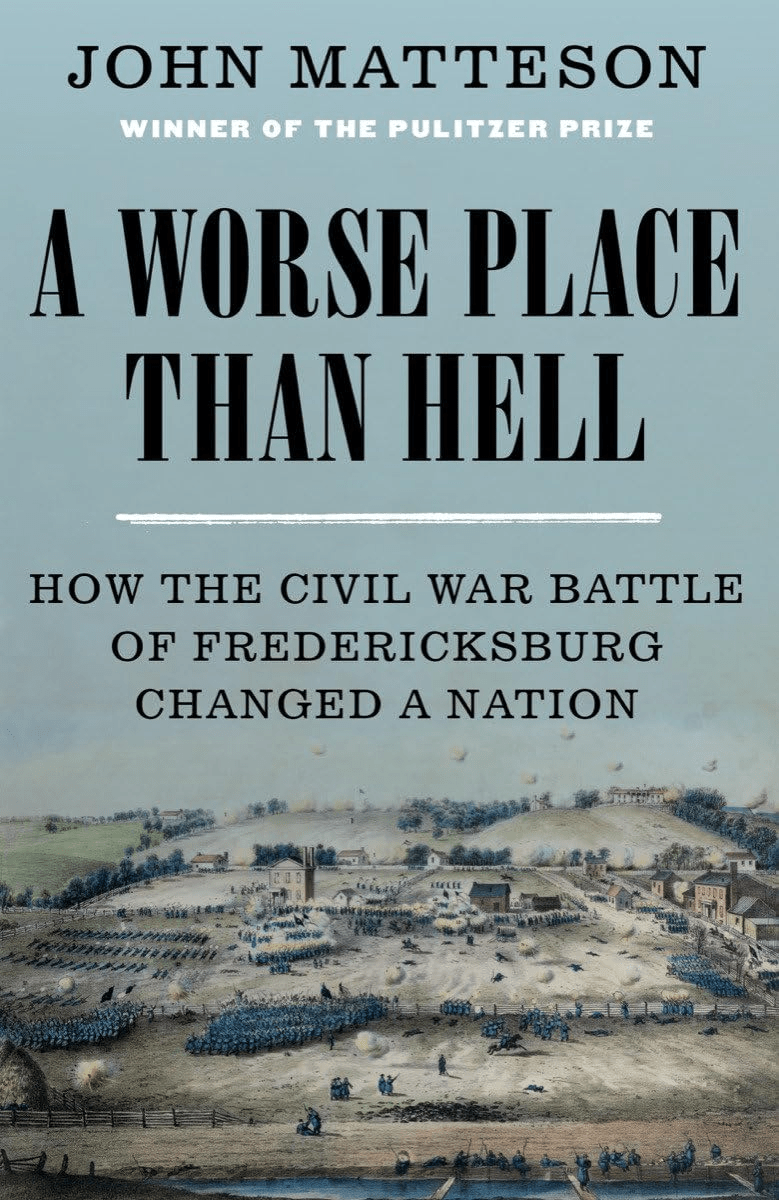
However, in John Matteson’s book entitled ‘Worse Place Than Hell – How the Battle of Fredericksburg Changed a Nature’ – (2021), Chapter 2, The Blonde Artillerist (Audible 2021) – it states:
‘On November 29th , 1861 [John] Pelham received orders to report to [JEB] Stuart, although still he had not been officially named as the Unit’s Commander, Pelham took assertive control of his de facto position. After Bull Run the war in Virginia slowed. Occasionally, a relatively small clash took place like the catastrophe at Bull’s Bluff – but Bull Run had made both sides painfully aware that their armies lacked training, and the autumn and winter of 1861-1862 were seasons of incessant drill. Pelham took advantage of the lull by returning on furlough to Alabama – where he recruited many men for the horse artillery. When finally assembled, the Unit comprised 153 men – culled from seven of the eleven seceded States – as well as Maryland. Among the most flamboyant contingents in Pelham’s Command was an assortment of French Creoles from Louisianna, given to singing lusty choruses of the “La Marseillaise” as they serviced their guns. The gunners had another favourite song contrasting sharply in mood with the work the singers performed. Its buoyant lyrics went “Ain’t you, ain’t you happy, anchor by-and-by, stand the storm – it won’t be long, anchor by-and-by.” The horse artillerists were, for the most part, a band of roughs.
A future memoirist rode with them. A Prussian-born soldier of fortune named Heros von Borcke had travelled to America to join the Confederate Cause. An imposing six-foot 4-inches tall, the barrel-chested von Borcke became one of Stuart’s closest confidants and served as his Chief-of-Staff. He was probably putting the matter gently when he wrote, “Many of these men (in the horse artillery) had not brought to the standard under which they served, an immaculate reputation.” Winning their respect, to say nothing of the grester task of turning them into crack artillerists, called for more than mere resourcefulness. When Pelham returned to camp in in March 1862, the relentless drill began again. It was no longer enough for Pelham’s men to be efficient gunners. He also needed to mould them into exceptional horsemen. For in agility would lie the special power of the horse artillery. Pelham, the West Point boxer, knew that the ability to dodge a blow was as essential as the capacity to land one. And Pelham the dancer knew the value of grace and precision – even when applied to the ponderous machinery of war…
Firm discipline was only part of what solidified the horse artillery. Few adhesives bind more powerfully than the satisfaction of well-executed team-work. As the gunnery crews grew in confidence and expertise, von Borcke marvelled at their transformations. “They established such an enviable character for daring and good conduct that the body was soon regarded as a corps d’elite by the whole army.” In the horse artillery’s first engagement at the Battle of Williamsburg in early May (1862) – Pelham dashed from one cannon to the next – maintain a rhythmic, co-ordinated fire that stunned a pummelled his antagonists. Several weeks later – at Gaines’ Mill – the third of the Seven Days Battles, he used a single cannon to battle two Unio batteries to a draw. Although his crew was loading and firing as quick as men could do, Pelham was not content. As at Bull Run, he dismounted and helped to work the gun himself. His work at Gaines’ Mill earned him a meeting with [Stone Wall] Jackson, who, although he had relied on Pelham at Bull Run, had evidently never met him.’
On the strength of Matteson’s award winning research, it would appear that the “Creoles” of Louisiana (which I am assuming were also termed “Black” and “Native”) were not only superior troops – but did in fact see combat as part of the Confederate Army in Virginia – being highly respccted and regarded as a consrquence. Given this is the case, it would seem odd that Hollandsworth would choose to omit this from his narrative (although he does acknowledge that the Union “forced” these men once captured – to fight the armies of their own Confederate States – a crime not forced on White soldiers of either side). Of course, I would be very grateful for any light you might be able to shed on this matter.
Yours Sincerely
Dr Adrian Wyles
Sutton – London (UK)
PS: I have audio typed the Matteson extract from the Audible edition – hence the British English.
 SANGHA KOMMUNE (SSR)