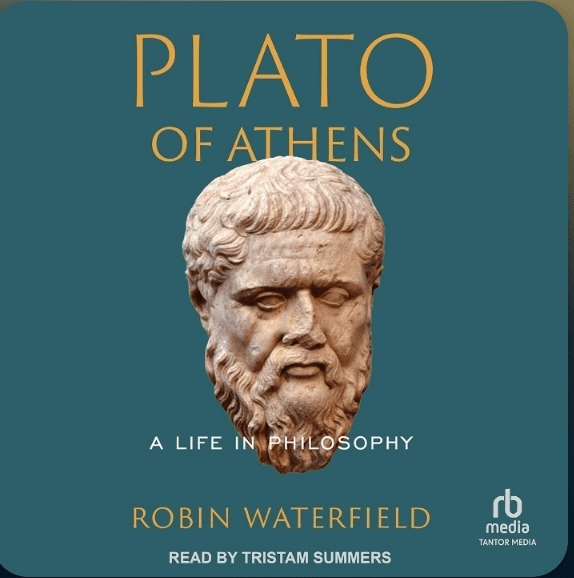
Author’s Note: I am of the opinion that Robin Waterfield advocates two things in his attempted biography pf Plato:
a) Sexual deviancy
b) Soviet disinformation
Waterfield suggests that the charge of “Impiety” levelled at Socrates was “unjust” – but not “empty” of any judicial meaning – as he thinks the “Stalinist” use of the word would suggest! Waterfield is of the opinion that Joseph Stalin merely “invented” charges to enforce his will throughout the USSR. This reveals a shocking US anti-intellectualism underlying Waterfield’s understanding of Soviet history. In a Soviet State (controlled by the workers) – would be “Returned” to the Publishers for verification and removal of all deficient content.
If Waterfield is wrong about the reality of the USSR – how can he be trusted to formulate a reliable biography about Plato? Stalin possessed no real power as an elected General Secretary. His elected post was one of “Regulation” – as all the decisions formulated by the numerous Committees (controlled by the workers) were passed through his Office for application and ideological verification. Suspect, incomplete or badly formulated decisions were “Returned” to the various Committees for reconsideration. Waterfield pursues a disturbing agenda which all readers must be suspicious of. ACW (20.7.2024)
A bizarre distortion of reality – deliberately employing inverted thinking – and a set of disturbing and dangerous straw dog arguments by an author who is attempting to convey his own insidious and hidden agenda. Indeed, Jacques Derrida’s Writing and Difference certainly comes into play as we strive to “deconstruct” the surface meaning from the deep intention the author applies whilst utilising all types of camouflage and deception. The author is set on justifying totalitarian, oppressive and fascistic attitudes – whilst simultaneously suggesting that a genuine criticism of moral deviancy is “misplaced” should a reader feel that the Greek (aristocratic) tradition of (routinely) sexually abusing male children is “wrong”.
Yes, Socrstes and Plato – for all their wisdom and genius of thought – were both sexually abused as children and were abusers of children when they were adults. Indeed, Socrates talks openly of abusing teenage boys – whilst Plato was never married (although advocating in Laws that all men should marry between 30-35). Many hundreds of years later, however, Plotinus fully rejects this old Greek tradition – which demonstrates that clear thinking need not be entwined with the politics of accommodating sexual deviancy.
The author is further mistaken when he assesses the notion of “Impiety” – a crime that Socrates committed – although not necessarily on purpose or with the original intent the crime defined. Socrates emphasised a multifaceted, open and free state of mind that can seriously consider more than one interpretation of reality without siding with one aspect of a duality. Socrates understood both “Piety” and “Impiety” with an equal vigour. The corrupt Greek State chose to interpret this in a partial manner – whilst Socrates chose to punish this corrupt behaviour by holding the corrupt officials to the consequences of their actions.
The author’s somewhat ahistorical and childish misappropriation of the name of Joseph Stalin may be rectified by accessing the work of Grover Furr and numerous other reliable historians. Needless to say, some of those modernists who like to pass themselves off as “Philosophers” – are often the worst type of manipulators. Remember to always think for yourselves. Extract what is useful from this self-serving work – and move on. As Hamlet says – “The rest is silence.”
 SANGHA KOMMUNE (SSR)