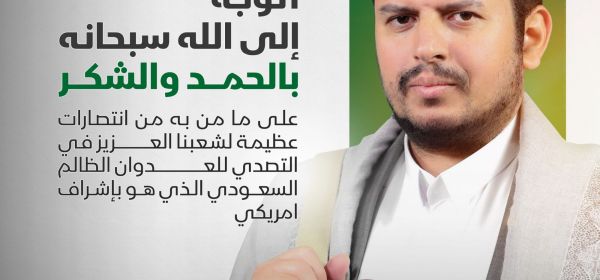
His Excellency Mr Abdulmalik Badr Al-Din Al Houthi

Yemen: His Excellency – Mr Abdulmalik Badr Al-Din Al Houthi – Explains the US & Israeli-Instigated [Saudi Arabian] Violence Against His Country! (17.9.2026)

The Saudi aggressor has killed thousands of women and targeted civilians in their homes, bombing cities, neighborhoods, and markets in a mass extermination.

– The Saudi aggressor has killed Yemenis in all places, in markets, homes, streets, hospitals, schools, and other places.

– The Saudi aggressor has targeted mosques in our country and has never respected or revered their sanctity.

– The Saudi aggressor has targeted more than two thousand mosques in our country, including historical mosques in remote areas, not on the front lines.

– The Saudi aggressor even targeted a shelter centre for the blind in Sana’a, and targeted cemeteries and historical sites.

– Crimes of rape against children and women have emerged in areas occupied by the Saudis, along with crimes of torture and brutal treatment of prisoners.

– The Saudi aggressor has committed heinous crimes that are unanimously classified as crimes on a global scale, and in a systematic manner.
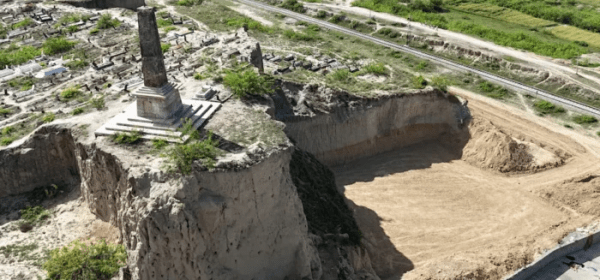
A Battle Over Memorial to British Empire Heroes

Pakistan: Battle to Relocate [1895] British Empire Military Monument! (1.9.2026)

British Imperialism in India has a long and bloody history. British business took over India and extracted trillions from its raw material and wealth – guaranteeing modern India’s impoverished situation – and modern Britain’s first-world status. To achieve this – the British government established the “East India Company” and the (private) “British Indian Army” (the latter comprised of ex-British Army Officers and NCOs and locally recruited ethnic Indians). This force was supplemented by the regular British Army (recruited in the UK from the working-class slums). Britain shamefully interfered in internal Indian politics and that is exactly why this situation arose in 1895. Encouraging assassinations and then stage-managing the transition of power was the playbook. The British would literally cause a conflict and then take umbrage that violence had ensued against them. This manufactured “victimhood” is exactly what the US practices today to justify its endless military attacks. In 1895, the tribal people of North-West India (Pakistan today) were once again caught daring to manifest self-determination – and the British Raj despatched 400 British Indian troops (mostly Sikhs and Kashmiris) Officered by 5 (White) British Officers to garrison the fort at Chitral. Around 3000 Pathans (and their allies) faced-off with just over 400 British troops in a seige which lasted six-weeks (3rd March-20th April 1895) – which ended with the arrival of a British Relief Column on April 20th – putting an end to the entire affair (the two Relief Columns lost over 400 killed and around 200 wounded in the fighting outside and around the fort). The Pathans lost around 500 men (probably many more) and the British in the besieged fort lost around 42 (dead) and 62 (wounded).

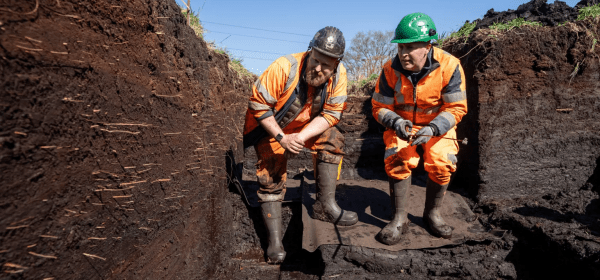
Archaeologists made the discovery underneath layers of peat on Honeygar Farm in Westhay

UK: Neolithic “Trackway” Discovered by Archaeologists in Honeygar Farm [Somerset]! (22.3.2026)

Britain used to be full of marshes through which the Celts built trackways to travel about – probably between the various tribes. Presumably, these marshes ran through (and around) forests – as the UK used to be covered in dense foliage. Therefore, the Celts did build their own type of natural pathways – but these were “natural” and very different to the roads constructed by the Roman engineers – which seemed “severe” and “unnatural” by comparison. Furthermore, the Romans destroyed the traditional landscape that Druidism and Celtic culture developed and grew within. The Romans cleared the forests and drained the marshes – thus destroying the very essence of the British Celt culture that had existed for thousands of years. The Romans committed genocide, forcibly established their culture – and then left. Part of this Roman domination was that the Celts were “primitive” and possessed no culture of their own. A policy straight out of the imperialist play-book.

Pytheas of Massalia (350-285 BCE)

UK: How Celtic Languages Spread Across Britain & Ireland! (2.1.2026)

I hesitate to “agree” regarding the Ogham script and would like to see the evidence (that it evolves from the Roman alphabet). I have seen Ogham etched along the side of clay tablets (which were then “dried” for preservation) and engraved along the edge of stone tablets (a much more difficult task). As in China, early reading and writing evolved around the ruling families – the kings – and their specially trained advisors. Why write along the edge of things? Romans did not do this. I suppose a case can be made that Ogham might be a development of Roman numerals – but I would like to see the evidence. My parents live in South Devon, and although born in Oxford, I was brought-up in Devon and Cornwall – two of the UK’s Celtic heartlands. I learned Country Dancing at school, and visited museums that contained the Celtic Coracle (round fishing boat). We also learned about the magic of Druidism and how the mighty Boudicca united the Celtic tribes and inflicted terrible defeats on the Roman invaders. I also drink cyder and eat clotted cream. All of this I have imparted to the Chinese members of my family (we take our children all over the Celtic South-West) – just as they have imparted Hakka culture to me. Of course, also possessing Irish ancestry (my father’s mother was from Mullingar) – this confirms the Celtic identity.

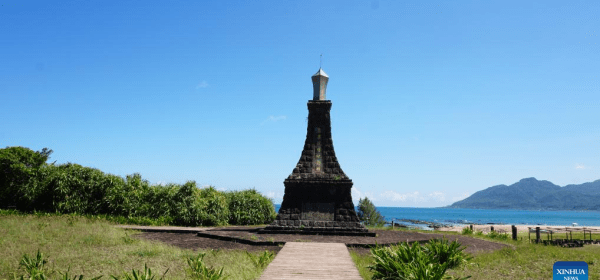
This photo taken on Oct. 13, 2025 shows a monument set up in memory of fights against Japanese invasion on the Yanliao shore of southeast China's Taiwan. (Xinhua/Qi Xianghui)

Taiwan: “Silent” Monuments Commemorate Chinese Resistance [1895-1945] to Imperial Japanese Occupation! (19.10.2025)

The Japanese encountered the largest scale resistance in the mountainous Changhua County in central Taiwan. In August 1895, thousands of local militia gathered alongside remnants of the Qing army to resist the Japanese on a local hill named Baguashan.

They were outnumbered five to one and poorly armed but fought relentlessly for days, killing over 1,000 Japanese soldiers, including a general, before being overwhelmed. Fewer than 50 survived.

One of the leaders, Xu Xiang, left behind words that still stir the heart: “If this land falls, Taiwan is lost. I will not live to see the motherland again.”

Seizing power on August 23, 1975,

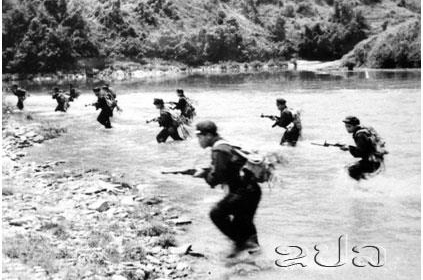
Laos Buddhist-Socialist Republic: Remembering “August 23rd” [1945] – and the Seizing of Power! (24.8.2025)

The day of seizing power on August 23, 1975 is of great significance to the entire Lao people, because such a victory is the fruit of the protracted Revolutionary struggle of the Lao people and the tribes under the leadership of the Lao People’s Revolutionary Party; It is the result of the ingenious courage of the use of the 3-step strategy to seize and hold power in the whole country without being overwhelmed, the victory of the correct Revolutionary line and the wise leadership of the Party, which knows how to creatively incorporate Marxism-Leninism into the actual behavior of the Revolution; It is the victory of the strength of unity, the unity of the whole nation, the unity of the army and the tribal people, the victory of the solidarity of the fighting alliance between the Lao people, the Vietnamese people and the Cambodian people who have stood shoulder to shoulder against the same enemy throughout the previous National Liberation Revolution, that is, in the mission of preserving and building the present nation.

1 2 3