Prolonged Bed-Tilt Tests Effects of Gravity Upon Body!

China: Cosmoonaut Research & Training Centre Seeks Bedridden Volunteers for Up to 70,000 Yuan – No Mobile ‘Phones – Exclusions Apply! (8.5.2026)

Volunteers will be randomly assigned to either a control or exercise group and will remain in bed for about 15 to 30 days, with the total period not exceeding 60 days.

Participants must stay in either a six-degree head-down or head-up bed position while eating, sleeping and undergoing medical tests. Those in the exercise group will also complete scheduled daily workouts.

Researchers use the head-down position to mimic the redistribution of body fluids and reduced muscle activity experienced by cosmonauts in space.

The study aims to examine effects on cardiovascular function, bone density and muscle loss, and to test countermeasures for long-term missions.

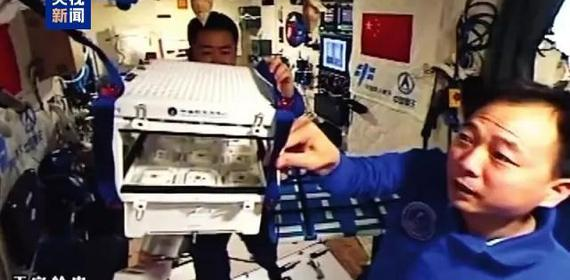
Footage from cameras aboard the spacecraft. (Photo courtesy of CCTV)

China’s “Red Menace” Grows in Space! (24.3.2026)

In September 2022, cosmonauts on the Shenzhou-14 mission became the first Chinese crew to eat vegetables they had grown in orbit. The mission completed full growth cycles for crops, including wheat and dwarf tomatoes. It also achieved the first full life-cycle cultivation of rice in space, from seed to seed.

Subsequent crews have continued to expand the range of crops grown aboard the station, including lettuce varieties and cherry tomatoes. More recently, astronauts have experimented with sweet potatoes, with samples returned to Earth for further study.

Space-based plant cultivation is aimed at supporting long-duration missions by providing food and aiding oxygen and water recycling, while advancing research for deep-space exploration. Microgravity may also alter plant growth cycles, offering insights into plant biology and potential applications on Earth.

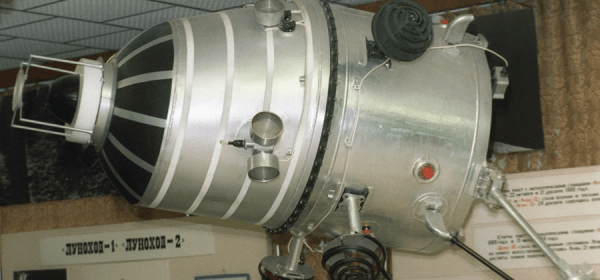
Soviet Probe Venera-8 - 1972

Russia: Soviet-Era Venera-8 [Venus] Probe – “Kosmos-482” – Falls into Indian Ocean! (10.5.2025)

The Soviet Space Programme had a tendency to send probes in supportive “pairs” (known as “Space Communism”). As the USSR was not interested in – or limited by – financial cost, the progressive technology generated through the use of Marxist-Leninist dialectics did not possess any material limitations premised upon monetary “profit”. Of course, modern Russia is “capitalist” and has not been able to replicate the innovation that came out of the Stalinist-era and the Soviet victory during WWII. Although the returning Soviet probe was launched in 1972 – the attitude is that “capitalist” Russia, if it had been able to retrieve the fallen probe, might well had benefitted from its decades-old technology! If you “click” on the link above – you will find my articles about the possibility that the Soviets discovered “life” on Venus!

PRC Moon Shot!

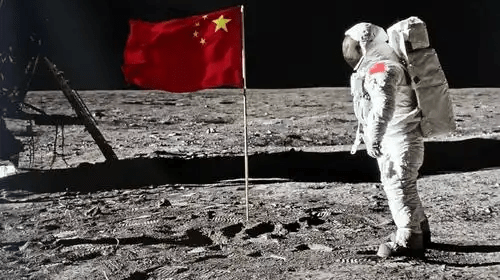
China: Manned Lunar Programme Adnvances for 2030 Moon Landing! (4.3.2025)

After reaching their pre-set orbital positions, the Lanyue lander and the Mengzhou vessel will rendezvous and dock. Two crew members will enter the lander, which will then undock and descend toward the lunar surface for an engine-assisted soft landing.

On the moon, the cosmonauts will drive a Tansuo rover to carry out scientific tasks and collect samples. Upon completion of their assignments, they will return to the Lanyue module, which will fly them back to their spaceship waiting in lunar orbit.

In the final stage, the astronauts will carry the samples into the Mengzhou spacecraft, which will then undock and carry the crew back to Earth.

To prepare for the challenging adventure, China has selected its fourth group of cosmonauts, who are currently training for lunar landing and surface operations.

Samples from Dark-Side Returns!

China: Spacecraft Returns with first Samples from Lunar Far-Side! (4.6.2024)

The control system of Chang’e-6 has also been enhanced to improve its autonomy, enabling it to complete lunar take-off and ascent with reduced reliance on the Queqiao-2 relay satellite and ground support, said Huang Hao, another space expert from the CASC.

The ascender is expected to carry out unmanned rendezvous and docking with the orbiter-returner combination in lunar orbit, and the samples will be transferred to the returner.

The orbiter-returner combination will orbit the moon, awaiting the optimal time to transfer back to Earth. When it approaches Earth, the returner carrying the lunar samples will re-enter the atmosphere, aiming for a touchdown at Siziwang Banner in north China’s Inner Mongolia Autonomous Region, the CNSA said.

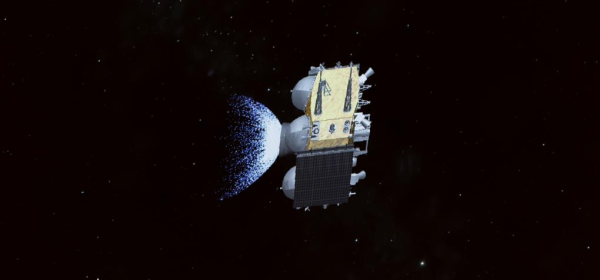
DPRK: New Reconnaissance Satellite -“Malligyong-1” – Successfully Launched! 23.11.2023)

The respected Comrade Kim Jong Un oversaw the launch and warmly congratulated all the cadres, scientists and technicians of the NATA and relevant institutions on having made a great contribution to enhancing the Republic’s war deterrent and most correctly and excellently implementing the resolution of the Eighth Congress of the WPK.

The NATA is to present to the 9th Plenary Meeting of the 8th WPK Central Committee a plan for continuing to secure the capability to reconnoitre the South Korean region and the region of operational interest of the DPRK armed forces by additionally launching several reconnaissance satellites in a short span of time.

1 2