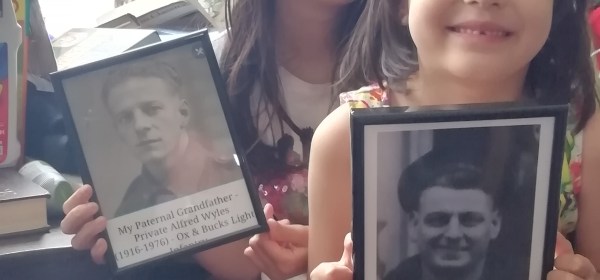
Veteran Star Medal: Alfred Gregory Wyles – WWII British Army Service [1940-1946]! (4.11.2023)

Although he joined the Royal Warwickshire Regiment – famous for its ‘Last Stand’ at Dunkirk – due to his ‘sharp-shooting’ ability he was soon transferred to the 1st Buckinghamshire Battalion (the ‘Light Bobs’) of the Oxford and Buckinghamshire Light Infantry (Territorial Army) where he was placed in an Anti-Tank Platoon. During D-Day, the ‘Light Bobs’ landed in the first-waves of Allied troops that hit ‘Sword Beach’. His Unit was tasked with fighting their way in-land ten-miles to Caen – where it was to relieve D Company of the Ox & Bucks Ligyt Infantry (Professional) – which had landed as ‘Glider Troops’ around midnight of June 6th, 1944. Due to these required military objectives – my grandfather trained with the Glider Troops around the Exeter Canal System – which resembled the canal system around Caen. Indeed, this association has sometimes ‘confused’ exactly what function my grandfather fulfilled due to him possessing a ‘Winged Pegasus’ badge!

Normandy: Remembering the Allied Sacrifices of D-Day (6.6.1944) – 79th Anniversary! (6.6.2023)

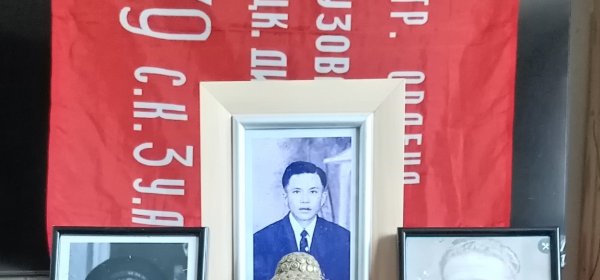
The British Glider Troops were tasked with seizing local landmarks (such as ‘Pegasus Bridge’) of tactical and strategic importance from the local Nazi German defenders – and hold these assets in the face of the expected Nazi German counter-attack. Meanwhile, Arthur Gibson (as a member of the Royal Navy) was busy protecting Northern Britain by preventing a Nazi German invasion – whilst keeping the sea lanes free of Nazi German ‘mines’ so that Allied Shipping could move (free of this risk) throughout the North Atlantic. This included the assisting of the Russian (Soviet) Arctic Convoys – although the presence of Nazi German U-Boats was an ever-present threat!

Alfred Gregory Wyles (1916-1976) – (WWII) War Record 1940-1946 (Military No: 5117194) 1st Buckinghamshire Battalion (LightBobs) – Oxford & Buckinghamshire Light Infantry (Territorial Army)

Military records are precise and concise and convey very little about the reality of war. As a family we do not subscribe to the notion of imperialist war, but we are proud that our grandfather volunteered to join the British Army to fight fascism in the 1940’s. 

1 2 3