The word “Asava” literally derives from the root “आसु” [“āsu”] “to press out juice” (to forcibly extract a substance from the inside the mind – to the outside of the mind) and to “distil” (the act of “gathering” in the mind through continuous and unchecked habit) – ultimately from Proto-Indo-European word “sewh” – (“to press out – extract”). It would seem that the “asava” are a) a polluting “problem” which distil in the mind, amd b) “flow-out” of the mind as habit (infecting the body and physical environment). Within Early Buddhism, the “asava” is used to explain that “ignorance” has an origin. The Buddha gained enlightenment by uprooting an ignorance premised upon delusion, belief in individuality, and sensuality. Ignorance = delusion, individuality, sensuality = asava. This four-linked chain of dependent origination was later extended to six, eight, and twelve links, etc, in the received chain of dependent origination. In the twelve-linked version, ignorance is presented as a primary mover – with many being surprised that via the asava – ignorance is understood to have an in-depth origination all of its own. Of course, all “kelsa” is uprooted by returning the six sense organs to the empty mind ground (the hua tou method of Ch’an) – where the six senses then become permanently purified.
Tag: Dhamma,
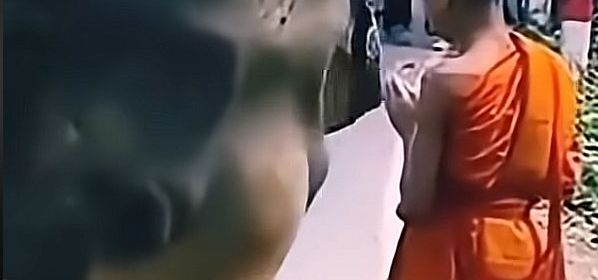
Thailand: Elephant in Deadly Rut “Bows” to Buddhist Monk! (16.11.2026)
The elephant then attacked 55-year-old Somsak, who was working at a nearby oil palm plantation, killing him before running into the forest.
Officials launched a search for the animal. It was found in a durian orchard. Wildlife officials used tranquilliser darts to calm him, and then restrained him with ropes and chains.
The elephant was later returned to its owner.
Reports said the owner had been providing support to the bereaved families, who are relatives.
The elephant, a bull aged at least 20 years, was kept in a nearby community. About three months ago it began showing signs of musth, a mating condition with heightened aggression, and was subsequently tied to a post about 500 metres from the scene.
It broke free, leading to the lethal rampage – before being calmed by a Buddhist monk.
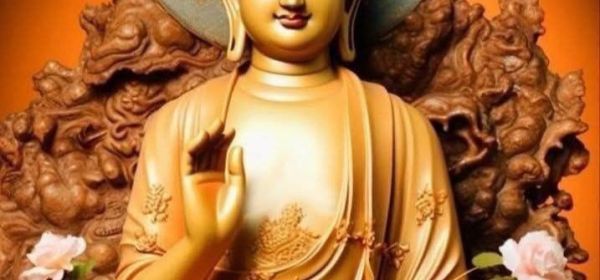
UK: The Buddha’s Path of Simplicity! (15.11.2026)
However, whilst managing his body in this manner, the Buddha applied the science of meditation and stripped the mind of all aspects of greed, hated, and delusion. He uprooted the “asava” (ignorance, delusion, belief in self, and sensuality), and fully perceived the empty nature of the underlying psychic fabric of the mind. A body sustained through its minimal daily requirements was all the Buddha required – as no further karma was created via the operating of the desire mechanism. Desire (burning), by its very nature, is never ending, and can never be realistically fulfilled regardless of what experiences of comfort and material goods are amassed. Desire, by its very nature, always assumes that there is more to be obtained.
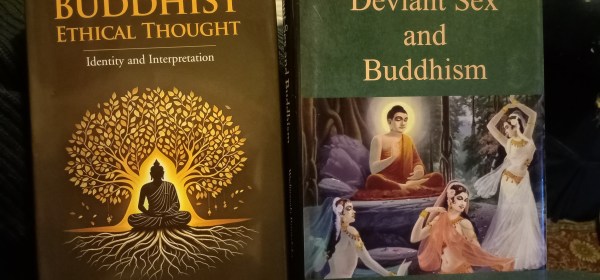
UK: What Do You Think of the Work of Ven. Pannaloka and His Latest Book? (14.11.2026)
Having said this, I do know a number of Taiwanese people in Taiwan who do possess a good and positive attitude – and there are many who view the Mainland as their cultural ancestor (not the US). Of course, none of this has anything to do with the Ven. Pannaloka – but I mention it as it contextualises my thoughts and opinions. Back to business. Although Ven. Pannaloka’s latest “published” book is his 2026 time – it is NOT his latest “written” book. Far from it, the basis of this text is the Venerable Bhikkhu’s PhD Dissertation written whilst he was studying in Taiwan (I cannot see an exact date for this text – but as the Venerable Bhikkhu was born in 1974 – I assume he may have been studying during the 1990s or thereafter). Twenty-years after writing my dissertation (2006) – I can safely say that accept in very broad assumptions – I probably no longer agree with any of it (as my thought processes have developed and moved onwards in understanding). As to the content, although the Ven. Pannaloka atempts a parallel between Theravada Buddhist ethics and the philosphy of Aristotle, John Stuart Mill, and Kant, etc.
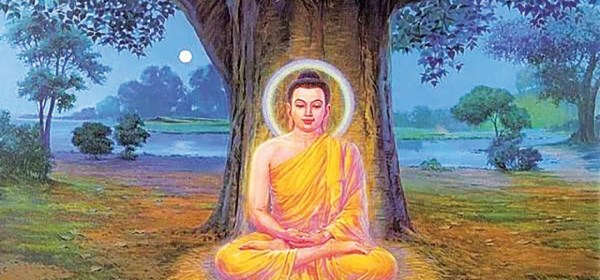
UK: The Buddha Practices “Bhavana” [भावना] and Uproots the Asava! (12.11.2026)
‘I have overcome all foes; I am all-wise; I am free from stains in every way; I have left everything; and have obtained emancipation by the destruction of desire. Having myself gained knowledge, whom should I call my master? I have no teacher; no one is equal to me; in the worli am the holy oned of men and of gods no being is like me; in the world of men and of gods no being is like me. I am the holy One in this world, I am the highest teacher, I alone am the absolute Sambuddha; I have gained coolness (by the extinction of all passion) and have obtained Nirvana. To found the Kingdom of Truth I go to the city of Kasla (Benares); I will beat the drum of the Immortal in the darkness of this world.’

BMA (UK) – Techno-Dhamma – Enlightenment Beyond the Body! (22.10.2026)
According to Buddhist theory, the content of the mind is imported a) from the material environment (via the six sense-organs interacting with six sense objects), and b) thought formations premised upon karmic traits laid-down (as “habit”) in previous existences. A previous existence does not have to have been “human” – but could involve any type of life-form – even on other planets situated in different universes and/or dimensions. As this type of existence is mysterious and not fully understood – existences may not unfold in a logical choreography. A past life might have happened in the future when compared to the present – or unfolded within a completely different time corridor not obviously related to the present (although there must be some kind of hidden karmic association). The mechanism of continuing thought-habit might be like one candle lighting another as the former burns-out and the latter blazes brightly. Of course, the Buddha asserts that rebirth (and karma) no longer exists in the enlightened state.

