Shi Da Dao - Ch'an Caodong School

UK: On Why Genuine Buddhism is “Anti-Capitalist”! (22.10.2026)

For most people the reality of everyday life involved a mutually supporting communal-activity (a “Sangha”) with “bartering” reserved for the importing or exporting of goods and services. Every member of such communities was a) entitled to all the goods and services of that community, and b) was expected to contribute to the generating of those goods and services. Within the Vinaya Discipline, the Buddha states that the lay-community may participate in any form of “honest” (bloodless) commerce that may (or may not) involve the handling of money (coinage or otherwise). A lay-household must ethically budget to a) supporting itself, and b) the broader community (through charitable donations) – as well as “saving” money (or goods) for emergencies and hard-times. Part of this lay-budgeting involves the lay-household giving waste food and water to the bhikkhus (beggars) of the Buddha as they slowly (and consciously) “walked” through their neighbourhood on a daily basis. The reward is karmically-premised – as this action permits these monastics to pursue the Dhamma in the purest manner. The bhikkhus are “freed” from the requirement of their participating in the world of cyclic existence and this attracts an immeasurable measure of great and good karma. (The situation in China is slightly different – as although the laity is free to donate as little or as much as they like [thus generating good karma] – the monastics must grow their own vegetarian food – and not be a burden to any other community). As for the bhikkhus (and bhikkhunis) there is to be NO participation in the worldly activities associated with commerce. This is because all greed, hatred, and delusion must be uprooted during meditation practice from the mind and body.
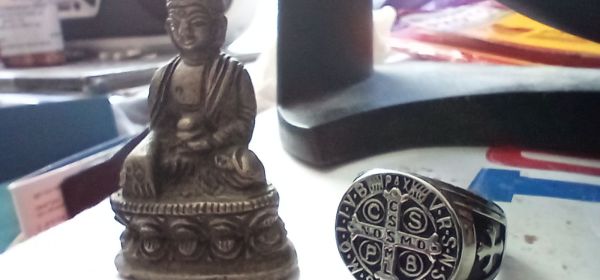
Buddha & St Benedict United!

UK: Buddha & St Benedict Entwined – a Retrospect! (10.9.2026)

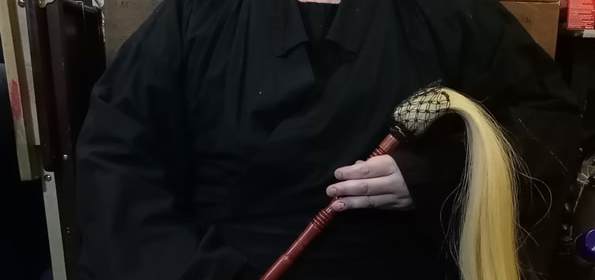
Now, whilst in Hereford I befriended an Irishman (my family are part Irish) named “Brian Gray” – who was training to be a Catholic Priest. He was fascinated by Buddhism and liked to “spar” with me in gloved-boxing matches (I was a nasty bit of work in my late teens – as I discovered my natural physical strength). He introduced me to a “Father Thomas” the Abbot of the Catholic Hereford Cathedral. He wanted me to go to the Vatican to meet the Pope – and to join the Catholic faith – but of course, this was not my path. I am not attuned to entering these paths that discriminate against non-members for not being members. Also, at that point I was learning about how the Vatican supported fascism before, during, and after WWII. So you can see my predicament. Although I had friendly interactions on the personal level, there were certain political realities that had to be acknowledged and balanced. Anyway, the upshot of all this was that I was introduced to the study of the Rule of St Benedict followed by the monastics of the Catholic Church (and given the ring you can see here – although I am unaware of its significance).

Becoming Aware of the Mind - Moment To Moment!

BMA-UK: Uprooting the Delusion that Underlies Racism! (21.9.2025)

Racism is learned on the outside of the body – and imported into the interior of the mind – where it becomes a habit of interpretation regarding other objects in the world. Perpetuating racism is one manifestation of racism – as is being a victim of racism – or the recipient of racism. In Asia, the Buddhist answer is to remove all klesa (defilements) – greed, hatred, and delusion – so that the conditions that allow racism to exist cannot function. Laws can be changed outlawing racism in the external world – this only deals with the superficiality that is racism – the tip of the iceberg so-to-speak.

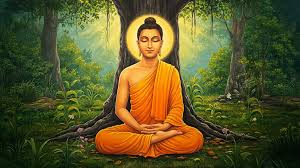
Life of the Buddha!

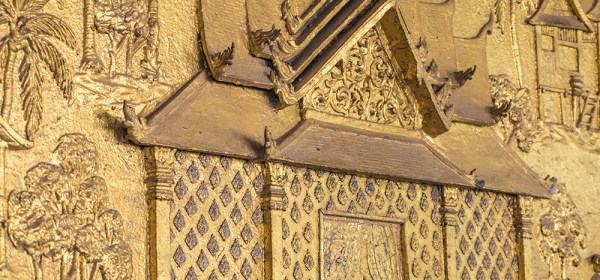
Laos: Buddhist Temple – “Golden Ground of Ram” [ວັດໃໝ່ ສຸວັນນະພູມາຣາມ – Wat Mai Suvanna Bhumi Ram]

Laos is a Socialist (Marxist-Leninist) State. Religious freedom is guaranteed as a private matter (through the separation of Temple and State) whilst Theravada Buddhism is the tradition religion of the people. Therefore, Laos may be considered a Buddhist-Socialist State – as the Buddhist Masters advocate Socialism and Dhamma in equal measure. In English, this old temple should be literally known as the “New Temple” – due to its relatively recent repair (just over 200-years) – by Royal Command. As to the Pali name – it translates as “Golden Ground of Ram” – “Ram” is an avatar of the Hindu god Vishnu. Throughout Southeast Asia and beyond, ancient Brahmanism spread far and wide from India – before the rise and spread of Buddhism. By the time Buddhism arrived in the region – Brahmanism was already in-place – with the Buddha being associated with Vishnu (even in modern India – many contemporary Hindus count the Buddha as an incarnation of Vishnu [Ram] sent to earth to encourage vegetarianism).

Buddhist Heritage in Laos!

Laos Buddhist-Socialist Republic – Preservation of Theravada Culture! (21.3.2024)

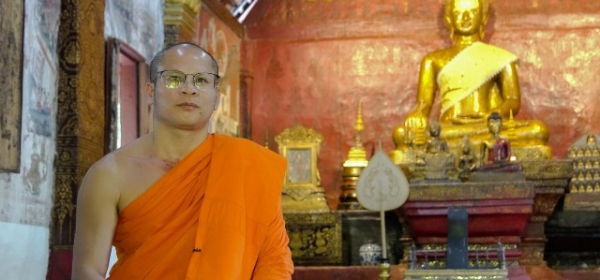
Phra Sombath Somepanno, Abbot of Wat Longkhoun Srikhounnaram, expressed that Wat Longkhoun holds a significant place in the Buddhist heritage of Luang Prabang, and it fills the people of Laos from various regions with pride.

The temple has a deep historical connection with Laos, and the monastic community, along with the lay followers, is dedicated to developing Wat Longkhoun into a beautiful and culturally rich Buddhist heritage site.

Laos Buddhist-Socialist Republic: First quarter of 2023 Saw Over 800,000 Tourists Visit! (11.5.2023)

There are various activities that are unique to the people of Luang Prabang, such as wearing traditional clothing, unique food and experiencing the lifestyle of the local people. In the past 2 years, there were 883,096 tourists who visited Luang Prabang. In this, 483,765 domestic tourists, 399,331 international tourists – with the average income from tourism amounting to more than 336 million US dollars. Along with this, Luang Prabang province has 97 hotels, many resorts, 400 guest houses, 311 restaurants, 97 travel companies, 19 entertainment stores, 36 massage and spa shops, 553 national tour guides (with at least 126 women performing this role) and 41 provincial tour guides (including 11 women). All of this development has continued to attract tourists to continuously visit Luang Prabang each year!

1 2