Laos Buddhist-Socialist Republic: Ta Bin Hydroelectricity Company – Pak Bang -Donates Vital Supplies to Local Villages! (11.4.2023)

The company realized that a number of people in Champa Village are still very poor – and motivated by Buddhist-Socialist morality – they mobilized all the company’s employees to contribute both materials and resources!

This included clothes, shoes, soccer balls, baskets of food and learning materials such as pens and writing books, etc. On the occasion of the handing over the donations to the village Administration – the person in charge of the company pointed out that the outbreak of the Covid-19 disease has created difficulties for the lives of ordinary people. Seeing this difficulty, the company, which has been investing in Laos for more than 10 years, wanted to contribute to the socio-economic (Socialist) development of Laos society!
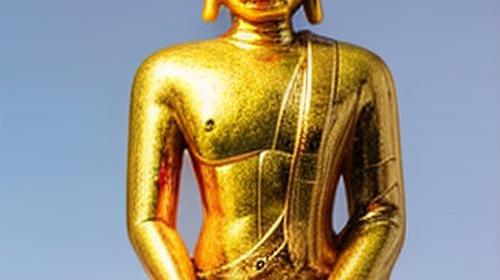
Transcending Budhha

Early Buddhism: How the Buddha ‘Rejected’ the Treasure-Seekers!

Most lay-people, however, practice Buddhism whilst being married, having children and holding-down a job. Even so, and despite all the extra entanglements and barriers of commitment, the Buddha still stated that lay-people, if devoted to their practice, can still realise enlightenment, even though it is not an easy task. A male lay-follower of the Buddha is referred to as an ‘Upasaka’, and a female practitioner as an ‘Upasika’.  These two terms refer to ‘lay’ practitioners that sit near to the Buddha (or his monastics) and ‘listen’ carefully (and with respect) to the Dhamma instruction being explained. These ‘lay’ practitioners then go back to their homes and carefully recall (and record) the Dhamma lesson which they put into their daily practice. However, the crux of this article is about two other categories of ‘lay’ person explained by the Buddha in his Suttas, but which are not often mentioned within Western discourse. This means that the Buddha actually explained ‘six’ (6) categories of human-beings in his Suttas – with four referring to his followers – and two to ‘non-believers’. Who are these ‘non-believers’, and why did the Buddha bother to explain their presence?

1 2