UK: “Soul” & “Psyche” (ψυχή) Are Not “Interchangeable” When Discussing Greek Philosophical Texts! (29.8.2026)

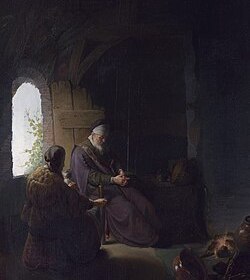
The term Tyndale translates as “soul” in English is the Greek term “psychas” (ψυχὰς) – is the “plural” the more familiar “psyche” (ψυχῇ) – which translates as “breath of life”, “to blow” and “to animate” (in Latin, the Greek term “psyche” is presented by the term “anima”). This probably represents the Hebrew term “Neshama” (נשמה) – meaning “breath”, “spirit”, or “essence” (inner self). The early Christians were radical Jews seeking to distinguish their thinking and practice from mainstream Judaism. The Gnostic Christians were content to use Greek philosophical terms and parallel many Greek paths of inner self-cultivation. Later, with the rise of the Catholic Church (empowered by the Roman State), the Gnostic Churches were suppressed and their scriptures outlawed. Catholic theologians, although continuing to use Greek terms (translated into Latin) – radically departed from the original philosophical meaning of those terms (the teaching and practice of Greek philosophy was banned). This process of moving away in meaning is particularly evident when it is understood that the Greek written form of “psyche” (ψυχῇ) has been replaced in translation by the Germanic (Pagan) term “soul”.

Krishna & mohsha

UK: Emails – Looking for “Inner” Moksha! (22.8.2026)

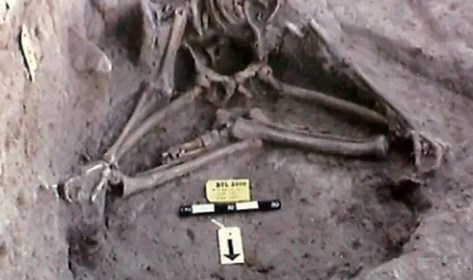
Younger people today, perhaps due to the instant gratification the internet entails, seem to lack the ability to be diplomatic and to ration perception. This leads to violence and aggression between groups due to differences in perception. The interior differences spill-out into the material world – and violence ensues. The stone passage in the temple prevents any unnecessary lateral movement of the body – but the individual should also limit the inner movement of the mind. Then it does not matter whether the body “moves” through the gap or not. Remember, Western sentiment does not operate in this temple. Even if the body “dies” – a mind free of the cycle of birth, life, and death – is a mind (and spiritual-being) free of all suffering. Losing the body in this context is viewed as a win-win for the liberated individual. A disembodied spiritual being is now free to roam in any dimension (and epoch of time) whilst being no longer limited to this plane of existence. What, then, is the issue? Well, it seems that a trapped-body results in a confused and frightened mind – which fastens the individual ever-tighter to the cycle of birth. life, and death. Once the Indian Fire Brigade extracts the compressed being from the birth-canal – an enhanced suffering unfolds!

UK: St Guthlac & the Wyles Family of Market Deeping! (19.8.2026)

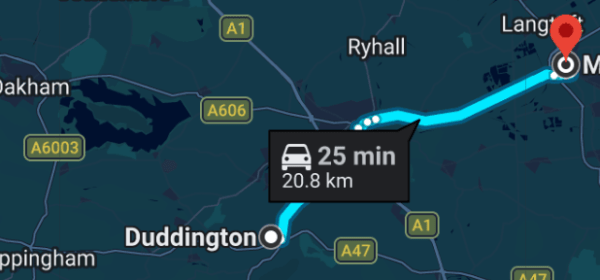
At the above link you will find a short blog post on the “Wyles Family of Duddington” site that we maintain. This has been built-up over many years and serves as depository for all of our research regarding my “Wyles” ancestors who lived in a single Northamptonshire village for well-over 500-years. Of course, branches of our family spread to places like King’s Cliffe, Ketton, East-on-the-Hill, Stamford, and Tixover, etc. Well, recently I was contacted by an individual who informed me that “Wyles” people also live in “Market Deeping” – a village around 13-miles north-east of Duddington. I cannot remember if we have driven through or by it – but we will certainly make an effort to stop and carry-out research in this place the next time we are in the Duddington area!

Gustave Doré: illustration of the Wandering Jew The Wandering Jew, illustration by Gustave Doré, 1856.

UK: Kartosphilus (Greek) – Cartaphilus (Latin) – Gate-Keeper of Pontius Pilate! (19.8.2026)

The name “Joseph” means “he will add” or “God will increase”. It comes from the Hebrew Book of Genesis and is used in the Greek New Testament to refer to the husband of Mary – the Mother who Immaculately Conceives Jesus Christ (Joshua Ben Joseph). Within the development of the English language, “J” only becomes the 26th letter of the alphabet during the 17th century – often replacing “i” in spellings. As for “Y” – it would appear that Christian missionaries brought this to England during the 7th century – but it was slow to catch-on. For instance, the Hebrew “Yosif” was rendered “Joseph” in English (with an “i”) but was never spelt “Yoseph”. Many centuries later, the “Y” would be completely bypassed and the name would be presented as “Joseph” – where it remains today. 

3D Reproduction of Royston Cave - Royston Council

UK: The Bell-Shaped “Royston Cave”! (17.7.2026)

The analysis found that the short male costumes and the headdresses and hairstyles of the women both point to a time between 1360-90, and the Saint Christopher carving was dated to the same era. The report concluded that it was unlikely that any of the carvings were executed before about 1350 – a century after the Templars were active in Royston, and decades after their widespread suppression. What’s more, the carvings feature Christian iconography, lacking the symbolism typically associated with the Templars – depictions of the Holy Sepulchre and Al Aqsa Mosque in Jerusalem, for example, or of two knights riding one horse.

Although the Knights Templar were known for building round churches, the circular shape of the cave does not necessitate a Templar link either – the greatest proliferation of round churches is in Scandinavia, where no Templars ever set foot. Nor is the presence of Pagan symbols such as the sheela na gig particularly mysterious; the same image appears in medieval churches across Britain and Europe.

Why, then, the supposed Templar connection? Perhaps the things that make for a good story now also made for a good story in 1742. “The risk here is people have been wanting to tell stories since day one: ‘Come and see the Templar cave!’,” said Tobit Curteis, the conservator of the cave. “Just because someone made up a story 300 years ago, it doesn’t mean it was any more true back then than it would be now.”

Worshippers at a Mass organised by the Society of Saint Pius X in Switzerland on Wednesday

Vatican: Followers of Global Catholic Sect [Society of St Pius X] Excommunicated! (3.7.2026)

More recently, efforts had been made to reconcile with the SSPX, but the Vatican’s response to this week’s events was more aggressive than before, and more severe than predicted.

It was widely expected that Wednesday’s event in Geneva would lead to excommunication of the bishops involved.

But the excommunication of all those lay people who continue to be a part of SSPX was a surprise to many, with the traditionalist group now as far from the centre of power of the Roman Catholic Church as it has ever been.

Excommunication is one of the harshest punishments that can be given by the Church, effectively expelling the offender from the religion and excluding them from Catholic life.

It means a baptised follower is “out of communion” with the Church – meaning they cannot receive the sacraments, for example going to confession, or get married within the Roman Catholic Church.

The Vatican said on Thursday: “The sacred ministers of the Society of St Pius X administer the sacraments illicitly, while the sacrament of penance they administer and the marriages they witness are invalid.”

It means SSPX members now have to choose whether to stay part of a group that is in “schism”, or leave behind the things they believe are right in order to stay part of the Catholic Church.

However it is clear that many SSPX members believe it is the Vatican that has moved away from true doctrine, not them.

1 2 3 100