This beautiful young woman is called Feng Timo (冯提莫) – and she uploads videos of herself singing in public places in China (through her mobile

Proletariat Blogging in the Heart of (UK) Predatory Capitalism! Exploring the Interface between Matter and Perception, Chinese Buddhism, Daoism, Hakka Ethnography, and All Aspects of Radical Politics, History, Psychology and Philosophy – 全世界无产者联合起来!
Anything that does not fit into to any of the other specific categories and is of general interest!
This beautiful young woman is called Feng Timo (冯提莫) – and she uploads videos of herself singing in public places in China (through her mobile
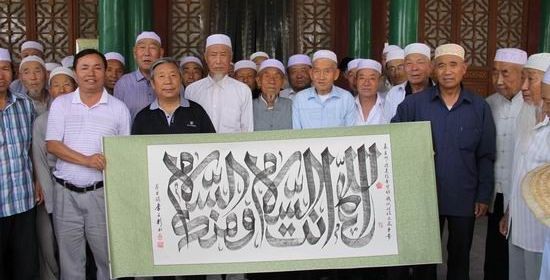
The Hui Chinese-Muslim population surrounding the Najiahu Mosque-area, were very appreciative of the efforts of their scholars associated with the Chinese and Arabic Painting and Calligraphy Institute, and were very enthusiastic about celebrating the 91st anniversary of the founding of the Communist Party of China.
President Obama – the architect of a resurgent neo-Nazism in the Ukraine and a supporter of Israeli terrorism – congratulates Myanmar’s Aung San Suu Kyi
Dear Mr Paul Scully MP Thank you for your most appreciated email and invitation. Unfortunately, since the Conservative-Liberal Democrat Coalition ’privatised’ the British National Health
The problem here is that we definitely have a political agenda overtly linked to the (non-violent) securing of Gay Rights (and Gay Freedom) – namely that of transitioning a state of predatory capitalism to one of compassionate Socialism – and the complete defeat and total destruction of the forces of fascism!

Consul General Isabel Perez stated that on behalf of the Cuban people, she was very impressed with the rich and profound level of traditional cultural preservation in Mainland China – and was particularly impressed with what she had seen at the Ch’an Martial Study Centre.
 SANGHA KOMMUNE (SSR)