Blogger’s Note: This 1511 book is written in what is today termed “Middle English” – carrying the title “ye Demaundes Ioyous” or “The Request(s) [of] Joy”. This is because the author is asking the reader a “question” – that is also a “request” for knowledge. Of course, each “riddle” is an absurdity – as the “answer(s)” contradict the logic (or “expected” answer) of the day. The term “Request” is used so as to mean “Question” – at the beginning of every “Riddle”. Each example is used to “confuse” and “astound” the audience. As the answers are also “funny” – many contemporary authors render “Demaundes” as something like “Telling” and “Ioyous” as “Jokes” – but this is a reaching gloss – despite being technically correct. It could better be rendered as “Asking Riddles” – but again there is a disconnect. There is a difference between the title and its meaning. Literally, the title could be “Requesting [for purpose of] Joy” or “Questions [the answers of which lead to] Joy”. Those who were literate in 1511, apparently understood exactly how the title “ye Demaundes Ioyous” was supposed to be understood. I have included the full Middle English text for the reader’s convience. You can see the other “Riddles” not included in the modern-update. As England was Catholic at the time, the first (omitted) section of jokes would be considered highly offensive toward the Virgin Mary, and other Biblical characters. ACW (29.11.2026)
Medievalists.net – Medieval Literature – 29.11.2026
25 Medieval Jokes from England’s Oldest Joke Book
What made people laugh 500 years ago? From clever riddles to bawdy humour, these questions and answers from 1511 reveal the medieval sense of humour.
What cannot freeze? What came first: the chicken or the egg? Why do men chase dogs out of churches? The answers can be found in England’s oldest printed joke book, a collection that offers a glimpse into medieval humour.
Wynkyn de Worde came to England to assist William Caxton in running the country’s first printing press. After Caxton died, Wynkyn took over the business and would go on to publish hundreds of books, ranging from religious texts and chivalric romances to children’s books. In 1511, he printed a short book called The Demaundes Joyous, which can be translated as Amusing Questions. Considered England’s oldest printed joke book, it contains 54 questions and answers, drawing on a medieval tradition of entertainment through riddles, wordplay and humorous puzzles.
While some of the jokes are surprisingly similar to those we tell today, others reflect the customs, beliefs and everyday life of the Middle Ages. Some are also rather crude, so much so that when Robert Chambers reproduced a selection in his nineteenth-century The Book of Days, he omitted many that he considered too indecent or profane. Here are 25 medieval jokes and riddles from The Demaundes Joyous, rendered into modern English.
1. What is it that never freezes?
Boiling water.
2. Which was first, the hen or the egg?
The hen, at the creation.
3. Why do men make an oven in a town?
Because they cannot make a town in an oven.
4. How many calves’ tails would it take to reach from the earth to the sky?
No more than one, if it be long enough.
5. What is the distance from the surface of the sea to the deepest part thereof?
Only a stone’s throw.
6. Why does a cow lie down?
Because it cannot sit.
7. Why do men chase dogs out of churches?
Because they never make offerings.
8. What is it that never was and never will be?
A mouse’s nest in a cat’s ear.
9. How many straws go to a goose’s nest?
Not one, for straws not having feet cannot go anywhere.
10. What animal has its tail between its eyes?
A cat when it licks its arse.
11. How may a man discern a cow in a flock of sheep?
By his eyesight.
12. Who killed the fourth part of all the people in the world?
Cain when he killed Abel.
13. On what day of the year are flies most afraid?
On Palm Sunday, when they see everyone carrying handfuls of palms with which to swat and kill them.
14. How would you say two paternosters, when you know God made but one paternoster?
Say one twice over.
15. Which are the cleanest leaves of all?
Holly leaves, because nobody wipes their arse with them.
16. Which are the most profitable saints of the church?
Those painted on the glass windows, for they keep the wind from wasting the candles.
17. Who were the persons that made all, and sold all, that bought all and lost all?
A smith made an awl and sold it to a shoemaker, who lost it.
18. Why does a dog turn around three times before he lies down?
Because he doesn’t know his bed’s head from the foot thereof.
19. What is the widest body of water that is the least dangerous to cross?
The dew.
20. What is the worst bestowed charity that one can give?
Alms to a blind man; for he would be glad to see the person hanged that gave it to him.
21. Why do we put roosters on church steeples instead of hens?
Because if we put hens there, they would lay eggs that would fall on our heads.
22. What is it that is a builder, and yet not a man, does what no man can do, and yet serves both God and man?
A bee.
23. What man makes his living backwards?
A ropemaker.
24. What is it that becomes more frightening the smaller it is?
A bridge.
25. What is the age of a field mouse?
A year.
And the age of a hedgehog is three times that of a mouse, and the life of a dog is three times that of a hedgehog, and the life of a horse is three times that of a dog, and the life of a man is three times that of a horse, and the life of a goose is three times that of a man, and the life of a swan is three times that of a goose, and the life of a swallow three times that of a swan, and the life of an eagle three times that of a swallow, and the life of a serpent three times that of an eagle, and the life of a raven is three times that of a serpent, and the life of a hart is three times that of a raven, and an oak grows five hundred years, and fades five hundred years.
Eighteen of these questions and answers from The Demaundes Joyous come from Robert Chambers’ The Book of Days: A Miscellany of Popular Antiquities in Connection with the Calendar, published in 1879. The remaining seven have been rendered into modern English from the original text.
You can read the complete collection online at Demaundes Joyous, while a transcription of the original 1511 edition is available through Early English Books Online. You can also find the work in The Demaundes Joyous: A Facsimile of the First English Riddle Book, edited by John Wardroper and published in 1971.
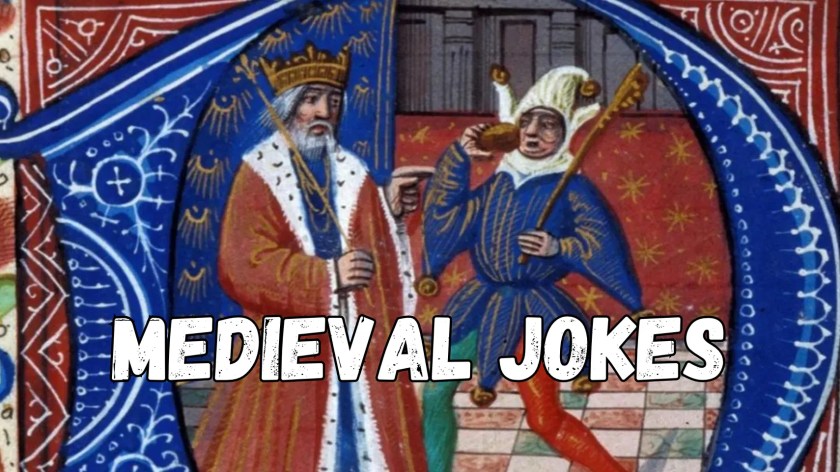
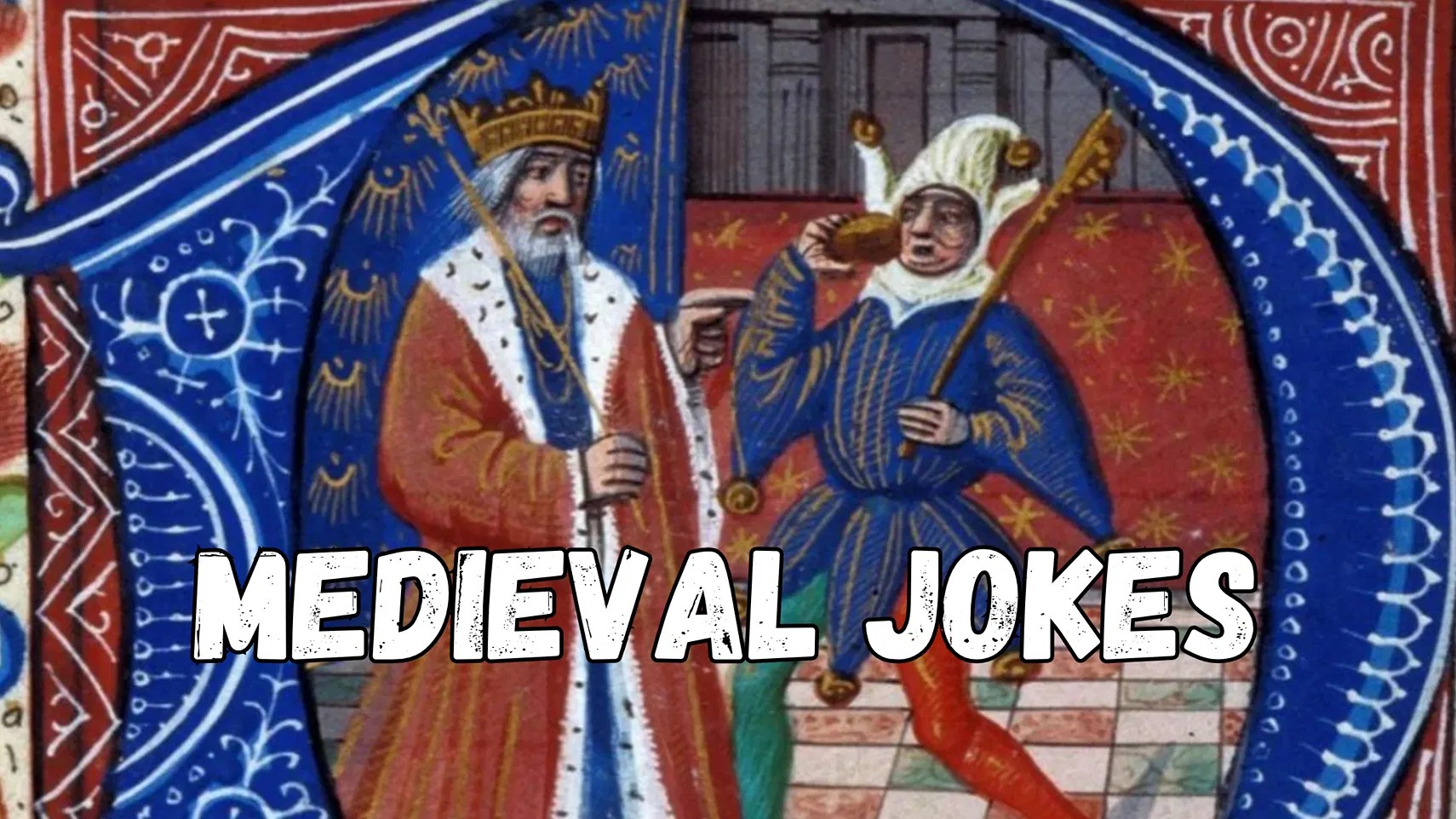
Top Image: British Library Harley MS 1892, fol. 68
Original Middle English Text:
https://quod.lib.umich.edu/e/eebo2/A20138.0001.001?rgn=main;view=fulltext
The demaūdes Joyous (ye Demaundes Ioyous)
Publication
[Enprynted at London :: In Flete strete at the sygne of the sonne by me wynkyn de worde,
In the yere of our lorde a M.CCCCC. and xi.] [1511]
PAGE [UNNUMBERED]
DEmaunde. who bare ye best burden that euer was borne. ℟. That bare ye asse whā our lady fled with our lorde in to egypte. ¶ Demaunde. where became ye asse that our lady rode vpon. ℟. Adams moder de de ete her. ¶ Demaunde. who was Adams moder. ℟. The erthe. ¶ Demaunde. what space is from ye hy est space of the se to the depest. ℟. But a stones cast ¶ Demaūde. whā autecryst is come in to this worl∣de what thynge shall be hardest to hym to knowe. ℟. A hande barowe / for of that he shall not knowe whi∣che ende shall goo before. ¶ Demaunde. How many calues tayles behoueth to reche frome the erthe to the skye. ℟. Nomore but one & it be longe ynough. ¶ Demaunde • How many holy dayes be there i the yere ye neuerfall on the sondayes. ℟. There be eyght that is to were ye thre holy dayes after Eester. iii. after whyt∣sondaye / the holy ascencyon daye / and corpus crysty daye. ¶ Demaūde. whiche ben ye trulyest tolde thyn∣ges in the worlde. ℟. Those be ye steyres of chambres and houses. ¶ Demaunde. whiche parte of asergeaū te loue ye best to warde you. ℟. His heles. ¶ Demaū∣de. whiche is the best wood and leest brente. ℟ Vy∣nes. ¶ Demaunde. whiche is the moost profytable beest & that men eteth leest of. ℟. That is bees. ¶ De maunde. whiche is the brodest water and leest Ieo∣perdye to passe ouer. ℟. The dewe. ¶ Demaunde. what thynges is it that the more that one drynketh ye lesse he shall pysse. ℟. It is fartes & fyestes / for Who that drynketh a hondreth thousande they shall neuer
PAGE [UNNUMBERED]
pysse a droppe. ¶ Demaunde what thynge is it that neuer was nor ne••• shall be. ℟. Neuer mouse ma∣de her nest in a cattes ere. ¶ Demaunde. why dryue men dogges out of the chyrche. ℟. Bycause they co∣me not vp and offre. ¶ Demaunde. why come dog∣ges so often to the chyrche. ℟. Bycause whan they se the aulters couered they wene theyr maysters goo thyder to dyner. ¶ Demaunde. why dooth a dogge thourne hym thryes aboute or ye he lyeth hym downe. ℟. Bycause he knoweth not his beddes hede frome the fete. ¶ Demaunde. why doo men make an ouen in the towne. ℟. For bycause they can not make the towne in the ouen. ¶ Demaunde. what beest is it that hath her tayle bytwene her eyen. ℟. it is a catte whan she lycketh her arse. ¶ Demaunde. whiche is the moost cleynelyest lefe amonge all other leues. ℟. it is holly leues / for noo body wyll not wype his arse with them. ¶ Demaunde. who was he that lete the fyrst farte at rome. ℟. That was the arse. ¶ Demaū∣de. How may a man knowe or perceyue acowe in a flocke of shepe. ℟. By syghte. ¶ Demaunde. what thynge is it that hathe hornes at the arse. ℟. It is a sacke. ¶ Demaunde. what almes is worst bestowed that men gyue. ℟. That is to a blynde man / for as he hathe ony thynge gyuen hym / he wolde with good wyll se hym hanged hy the necke that gaue it hym. ¶ Demaunde. wherfore set the• vpon chyrche ste∣ples more a cocke than a henne. ℟. yf men sholde sette there a henne seh wolde laye egges / and tehy wolde fall vpon mennes hedes. ¶ Demaunde what thynge is it that hathe none ende. ℟. A bowle. ¶ Demaun∣de.
PAGE [UNNUMBERED]
PAGE [UNNUMBERED]
PAGE [UNNUMBERED]
what wode is it that ne•… 〈…〉 reste vpon. ℟. The claper of a lazers dysshe. D••aūde how wolde ye saye two pater nosters for your frendes soule / and god neuer made but one pater noster. ℟. Saye one two tymes. Demaunde whiche ben the moost profy∣table sayntes in the chyrche. ℟. They that stonde in ye glasse wyndowes / for they kepe out ye wynde for was∣tynge of the lyght. Demaūde. what people be they ye neuer go a processyon. ℟. They be those that rynge ye belles ein ye meane season. Demaūde what is it ye fre∣seth neuer. ℟. That is hote water. Demaūde. what thȳge is that / yt is moost lykest vnto a hors. ℟. That is a mare. ¶ Demaūde. wherfore be there not as ma¦ny women conteyned in ye daunce of poules as there be men. ℟. By cause a women is so ferefull of herte that she had leuer daunce amonge quycke folke than deed. ¶ Demaunde whiche is the clenlyest occupacy∣on that is. ℟. That is a dauber / for he may neyther shyte nor ete tyll he hath wasshed his handes. ¶ De∣maunde. what daye in the yere ben the flyes moost a∣ferde. ℟. That is on palme sonday whā they se euery body haue an handeful of palme in theyr hande / they wene it is to kyll theym wt. ¶ Demaunde what tyme of the yere may maydens moost with theyr honeste fyest in the chyrche. ℟. In lent season / for than euery sayntes nose and face is couered so that they smell no thynge ¶ Demaunde. what thynge is it the lesse it is the more it is dredde. ℟. A brydge. ¶ Demaunde. wherfore is it that yonge chyldren wepe as soone as euer they ben borne. ℟. Bycause theyr moder is noo more mayden. ¶ Demaunde. wherfore is it that an
PAGE [UNNUMBERED]
asse hathe so grete 〈◊〉. ℟. Bycause het moder put no begyn on her heed in her yought. ¶ Demaūde what is it that is a wryte and is no man / and he do the that no man can / and yet it serueth bothe god and man, ℟. That is a be. ¶ Demaūde. whiche was fyrst ye henne or ye egge. ℟. The henne whā god made her. ¶ De∣maunde. why do the an oxe or a cowe lye. ℟. Bycau∣se she can not fytte. ¶ Demaūde what people be they that loue not in no wyse to be prayed for. ℟. They be beggers & poore people whā men say god helpe them whan they aske aimes. ¶ Demaūde How many stra wes go to a gose nest. ℟. None for lacke of fete. ¶ De¦maunde. what tyme in the yere bereth a gose moost feders. ℟. whan the gander is vpon her backe. ¶ De¦maunde what was he that flewe the fourth parte of the worlde. ℟. Cayne whan that he slewe his broder abell in the whiche tyme was but foure persones in the worlde. ¶ Demaunde. what was he that was be goten or his fader / and borne or his moder / and had the maydenhede of his beldame. ℟. That was Abell ¶ Demaunde. what thre thynges be they that the worlde is moost mayntened by. ℟. That is to were by wordes erbes and stones. why with wordes man worshyppeth god / and as of erbes that is all maner of corne that man is fedde with / and as stones one is that gryndeth the corne and the other encreaseth the worlde. De. what is ye aege of a felde mous. ℟. Ayere And a hedge may stande thre mous lyues / and the ly¦fe of a dogge is the terme of thre hedges standynge & the lyfe of a hors is thre dogges lyues / and the lyfe of a man is thre hors lyues / and the lyfe of a gose is thre
PAGE [UNNUMBERED]
mennes lyues / and ye lyfe of a swanns 〈…〉 and the lyfe of a swalowe is thre swanne lyues and the lyfe of an egle is thre swalowes lyues / and the ly∣fe of a serpent is thre egles lyues / and the lyfe of a ra∣uen is thre serpentes lyues / and the lyfe of a harte is thre rauens lyues / and an oke groweth. v. hondreth yere / and it standeth in one state fyue hondreth yere and it fadeth fyue hondreth yere besyde the rote why the doubleth thre tymes eueryche of the thre aeges a foresayd. ¶ Demaunde. A man had thre doughters of thre aeges / whiche doughters he delyuered to sell certayne apples / and he toke to the ledest doughter. l. apples / and to the seconde. xxx. apples / and to the yon¦gest ten apples / and all these thre solde in lyke many for a peny / and brought home in lyke moche money now how many solde eche of them for a peny. ℟. The yongest solde fyrst seuen for a peny / and the other two systers solde after the same pryce / than ye eldest syster had one odde apple lefte / and the seconde syster two / and the yongest thrs apples / now these apples lyked the byer soo well that in contynent he came agayne to the yongest syster and bought of her thre apples after thre pens a pece / than had she ten pens / and the secon be thoughte she wolde kepe the same pryce / and solde her two apples for thre pens a pece and than had she ten pens / & ye eldest solde her one apple for thre pens / & than had she ten pens / thus solde they in lyke many apples for a peny and broughte home in lyke moche money. ¶ Demaunde. what man is he that geteth his lyuynge bacwarde. res. That is rope maker. ¶ De∣maunde. what people be the that geteth theyr lyuyn∣ge
PAGE [UNNUMBERED]
moo•• merylyest. ℟. Tho be prestes & fullers / for one syngeth and the other daunceth. ¶ Demaunde. what is he that made all and solde all / & he ye bought all loste all ℟. Asmyth made an alle and solde it / and the shomaker ye bought it lost it. ¶ Demaunde whe∣ther is it bett to lyue by thefte or by almes dedes. ℟. The rewarde of thefte is to behanged / and yf thou ly ue by almes dedes that is by beggers tordes ⁂
¶ Thus endeth ye Demaundes Ioyous Enprynted at London in Flete stre te at the sygne of the sonne by me wynkynde worde. In the yere of our lorde a M. CCCCC. and xi. ⁂
PAGE [UNNUMBERED]
[illustration] printer’s device of Wynkyn de Worde
wynkyn de worde
PAGE [UNNUMBERED]

