Science – October 30, 2026
Cécile Breton – Journalist
Xavier Demeersman – Journalist
Some early hominin fossils do more than fill in the gaps in our evolutionary history: they challenge what we thought we knew. Discovered more than two decades ago in South Africa, an exceptionally well-preserved skeleton continues to reveal new secrets. According to recent analyses, it may belong to an entirely unknown hominin species, potentially reshaping our understanding of human evolution.
Unearthed in 1998 in South Africa’s Sterkfontein Caves, the skeleton known as StW 573, nicknamed Little Foot, is among the most complete early hominin fossils ever discovered. Its excavation was a lengthy and painstaking process that took years to complete. In 2019, paleoanthropologist Ronald Clarke proposed that the specimen belonged to Australopithecus prometheus, a controversial species first described in 1948 basedLittle Foot, on fossils found at Makapansgat. That hypothesis is now being reconsidered following new analyses published in the open-access American Journal of Biological Anthropology.
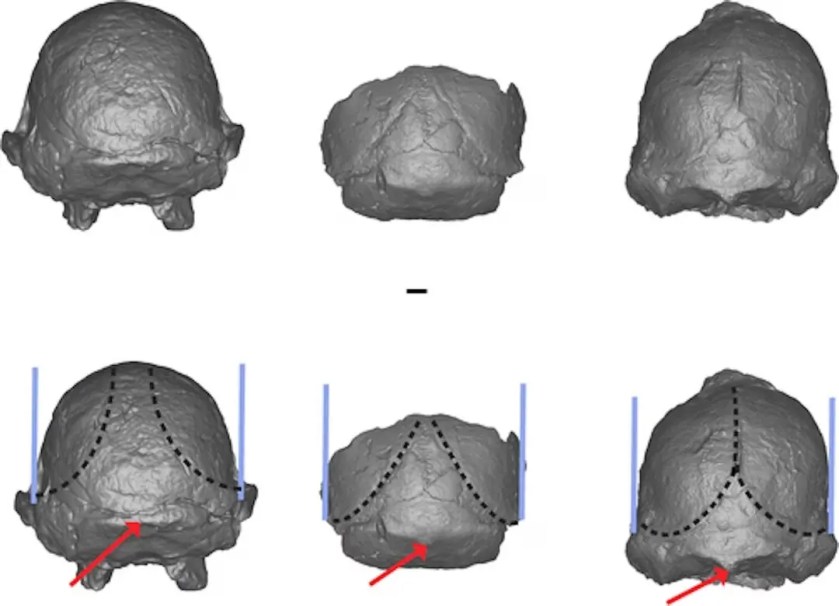
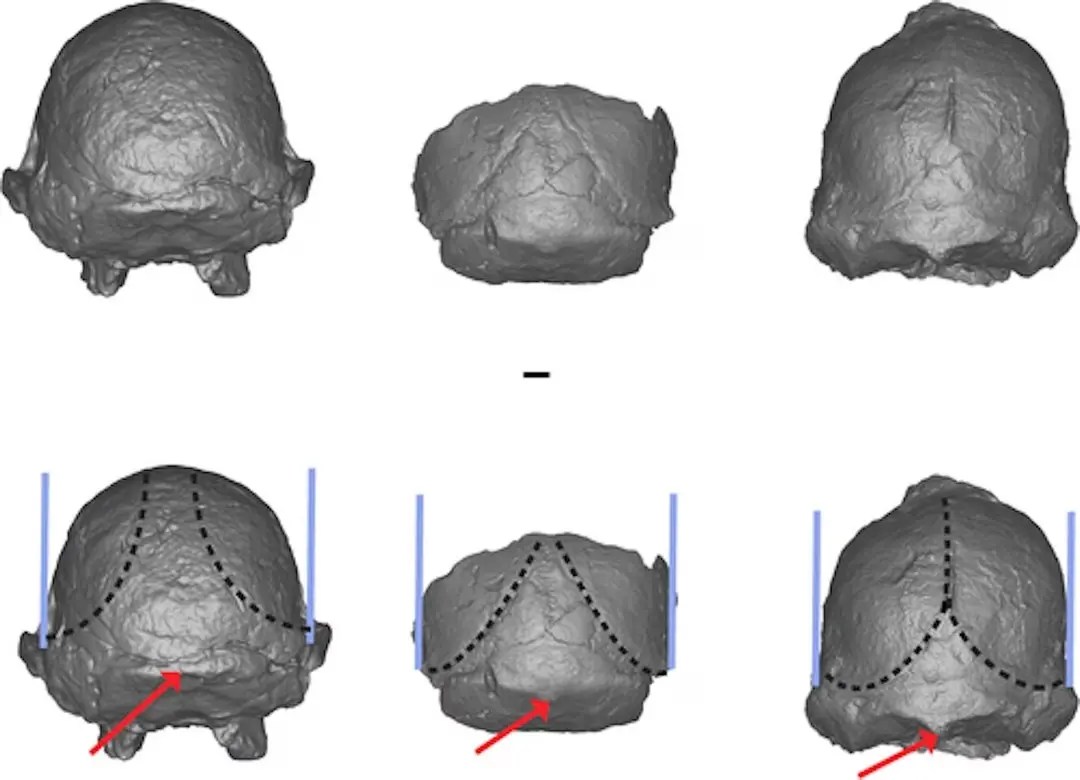
For years, most paleoanthropologists believed that A. prometheus and Australopithecus africanus were so similar that they probably belonged to the same species. Jesse Martin of La Trobe University initially shared this view. However, a detailed examination of a key region at the back of Little Foot’s skull changed his perspective. This area corresponds precisely to the fossil fragment originally used to define A. prometheus in 1948. The researchers identified at least three major anatomical differences. The skull’s morphology shows greater similarities to much older hominins than to A. africanus, while also ruling out the possibility that Little Foot was simply a late-surviving representative of an ancient lineage.
A new species that has yet to be named?
For the researchers, the conclusion is increasingly clear: Little Foot belongs to neither A. africanus nor A. prometheus. Instead, the skeleton most likely represents a previously unknown relative of modern humans. This hypothesis strengthens the idea that at least two hominin species coexisted at Sterkfontein, a possibility Ronald Clarke had already defended.
The fossil’s age also remains a subject of considerable debate. Some dating methods place it at approximately 2.6 million years old, while others suggest it is more than 3 million years old. Its exact position in the human evolutionary tree is equally uncertain. In this respect, Little Foot resembles other enigmatic hominins from the region, including Homo naledi, discovered just a few miles away and known for its remarkable combination of ancient and modern anatomical features.
Because the entire skeleton has not yet undergone comprehensive analysis, the researchers have decided against formally naming the proposed new species for now. Their next objective is to examine Little Foot in its entirety and reassess all the fossils previously attributed to A. africanus. This could help determine whether some of those specimens actually belong to the same mysterious hominin lineage.
As Jesse Martin points out, each new excavation in South Africa reveals an increasingly complex picture of ancient human diversity. These discoveries continue to challenge the long-standing notion that human evolution followed a simple, linear path.

