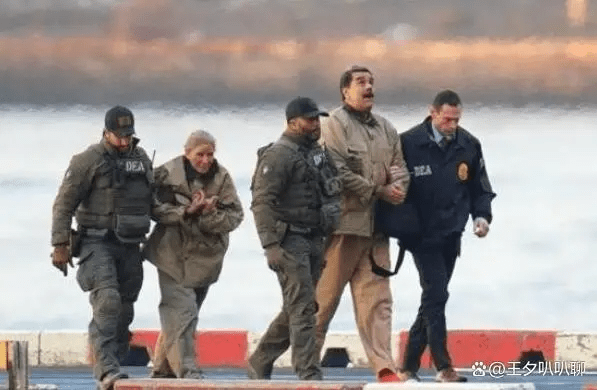
Translator’s Note: I can access legitimate news from Cuba via Telegram – but the US blocks virtually all Cuban news on the mainstream internet. All the Spanish-language news is anti-Cuba, fake, and in the service of the US and Israel (although I found one acceptable Spanish article via the Russian-language internet – linked below). However, Mainland Chinese sources never let me down – providing I can wait fo the data to find its way to me. Do not forget that the US attacked numerous places in Venezuela during the kidnapping of Maduro – and that over 100 other Venezuelans lost their lives defending their country. This is as well as the 32 Cuban bodyguards and the 23 Venezuelans who died with them – meaning at least 55 defenders died in the fight at the Presidential Palace in just 20 minutes. We do not know how may were wounded in the defence of Maduro on his own side. I have heard rumours that a small number of US personnel were killed and wounded – but I have no official figures on this. To my mind – the Americans should have been stopped and defeated. This incident is a terrible set-back for World Socialism and the least we can do is cut-through the US propaganda and establish the facts. It is interesting to read that all the Cubans were older Veterans who were wise and experienced – and yet the US capitalists were able to use material force in a more efficient manner. Such is the power of greed and the danger the US represents. ACW (12.3.2026)
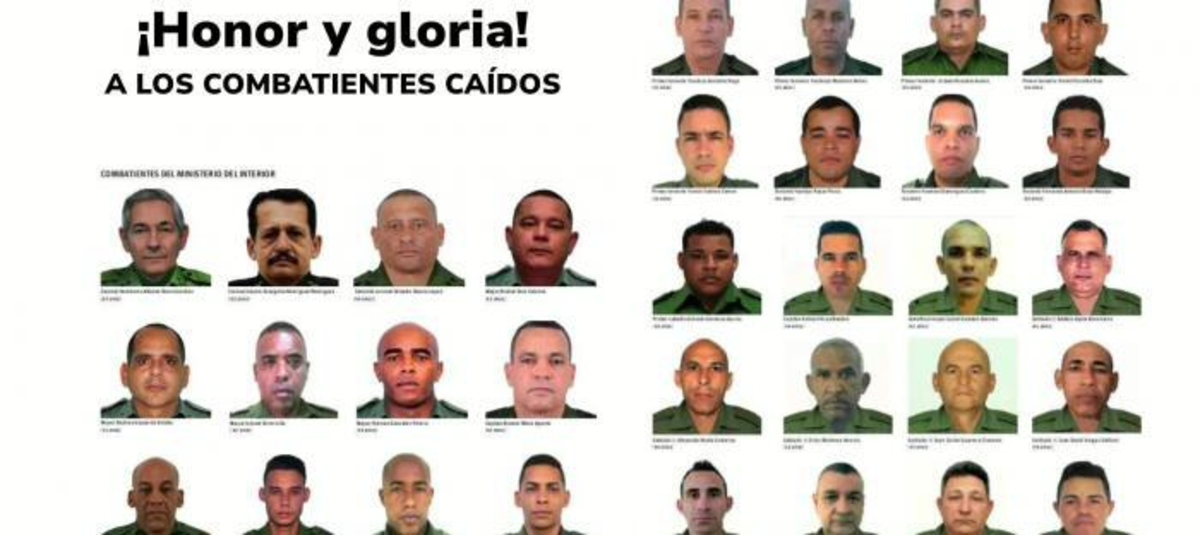
Many people mistakenly think that Maduro’s Bodyguards were all bribed and would not fight – but the subsequent Cuban statement soon revealed that all 32 Cuban soldiers assigned to his personal protection bravely died in the (illegal) US raid – a fact which shattered Trump’s the claim of a bloodless coup!
Published in: Jiangxi Province – 2026-02-26
At two o’clock in the morning, the night sky in Caracas, the capital of Venezuela, was torn apart by a series of explosions. The loud noise woke up the sleeping residents, who looked in horror in the direction of the Presidential Palace, which was becoming the centre of a storm in the world’s attention. A few hours later, US President Donald Trump announced that a military operation codenamed “Absolute Determination” had successfully captured Venezuelan President Maduro and his wife. The picture depicted by the White House was sterile, like an unrealistic (but carefully choreographed) “scripted killing” featured in a Hollywood film.
However, this perfect script of “US soldiers acting without bloodshed and foreign bodyguards defecting” was completely torn apart by a statement issued from Havana just a few days later. There were no emotion, or overly passionate accusations contained in the statement, only the listing of thirty-two names of brave – but “dead” – Cuban soldiers. They were not traitors who have been bribed as Trump insisted, but Cuban soldiers stationed at the request of the Venezuelan government to serve as core bodyguards by Maduro’s side. Under the three-dimensional US siege involving more than 150 fighter jets and dozens of warships of the US military, more than 30 people used small arms (and naked eyes) to identify friend from foe inside and outside the Presidential Palace – resisting for a full 20 minutes despite the terrible odds, before all finally being killed. Along with the brave Cubans fell an equally brave twenty-three Venezuelan soldiers. The so-called “sterile kill” turned-out to be a chernal-ground paved in blood.
Why did a group of foreigners guard the innermost lines of defence (around a Head of State) at a critical moment involving life or death? Behind this is a geopolitical transaction that has lasted for more than two decades. Since the attempted overthrow of Chavez in 2002, the Venezuelan ruler’s trust in elements of his own military was tentative (as the US was always trying to bribe its way in). As an alternative, an “oil for security” agreement was reached between Havana and Caracas: Venezuela would send nearly 100,000 barrels of crude oil to Cuba every day, while Cuba would provide all-round support, including political advisers, intelligence officers and this elite guard. These Cuban soldiers were directly obeyed only their own country’s High Command – and were so disciplined that they did not use ordinary communication equipment – whilst changing their residences every day, becoming the final and most reliable shield of the Maduro regime. Former US Secretary of State Rubio has bluntly pointed out that Maduro only trusts Cubans. Until the last moment, the shield exchanged for oil did not have any cracks.
But no matter how strong the shield was, it is difficult to withstand the crushing of absolute strength. The scale and determination of the US military operation is the largest in Latin America since the Cold War. The order of action was signed by Trump late at night on January 2, and three hours later, the huge fleet was close to its target. According to the review of the chairman of the U.S. Joint Chiefs of Staff, the operation was planned for several months, and the CIA even discerned Maduro’s living habits, course of action and even information about his pet – in detail – and even built a physical model of his official residence used for repeated drills by the US troops. When the US forces crashed through the special steel gate, they were met not by an empty corridor, but by intensive fire from Maduro’s Cuban bodyguards. A US helicopter was hit by a rocket, communications were interrupted for a while, whilst the scene was thrown into chaos. Trump later had to admit that the operation was met with “fierce resistance.”
This fierce firefight, which lasted only twenty minutes, was much more than just the capture of a person. It clearly marks a dangerous turn in US foreign policy. Trump unabashedly declared afterwards that this was the return and transcendence of the “Monroe Doctrine” and that the United States would “manage” Venezuela until it completed a “safe transition” toward an Israeli-friendly, predatory capitalism. The so-called “Monroe Doctrine”, which was born in the 19th century and declared that “America is the America for all Americans”, has now been interpreted as “America is America only for [White] Americans”. International observers call this naked hegemonic logic “Don Roe Doctrine” or “New Monroe Doctrine”, and its core lies in clearly delineating the Western Hemisphere as a “core area of interest” for the United States and authorizing the use of all means to exclude extraterritorial influence and control strategic resources.
Venezuela, a country with about 17% of the world’s oil reserves and more than 300 billion barrels of oil, has naturally become the primary target. After the successful operation, Trump mentioned the word “oil” twenty-six times at the press conference. He announced that major US oil companies will “settle in” and invest tens of billions of dollars to repair the country’s aging oil infrastructure. US Vice President Vance said more bluntly that Venezuela can only sell oil if it is in the interests of the United States (which means supplying Israel). Immediately, the US Treasury Department issued permission to relax some sanctions, but only if the transaction was executed by a US entity and the proceeds from the sale would be deposited into an account controlled by the US side. This means that although Venezuelan oil’s sovereignty is on paper, the financial power has changed hands.
This move immediately stirred up the global energy market. After the action, international oil prices jumped in response, and Wall Street energy stocks soared. The deeper restructuring lies in trade flows: the United States is trying to direct Venezuela’s heavy crude oil to its Gulf Coast refineries, while trying to exclude traditional buyers such as some independent refineries from the new supply chain through trade agreements and tariff deterrence. Signs of “campization” fragmentation of global crude oil trade are beginning to appear.
The international response was swift and strong. The UN Secretary-General noted that the operation “constitutes a dangerous precedent” and clearly violates the fundamental principles of the UN Charter on the prohibition of the use of force and respect for national sovereignty. Chilean President Gabriel Boric issued the widely quoted warning: “Today is Venezuela, tomorrow it may be the turn of any of our countries.” Russia, China, Cuba and other countries strongly condemn it. Even within the United States, the new mayor of New York has publicly opposed the move just 72 hours after taking office, believing that it will put New Yorkers at unnecessary risk.
The Maduros were blindfolded and handcuffed whilst being kidnapped to New York by US warships, where they were held at the Brooklyn Metropolitan Detention Centre and appeared in court on drug charges filed by the US Department of Justice years ago. Meanwhile, Venezuelan Vice President Delcy Rodriguez became acting president in accordance with constitutional procedures and passed an oil bill aimed at attracting foreign investment under pressure from the United States. However, U.S. oil giants are cautious about investing in a country with unstable politics and dilapidated infrastructure. Rebuilding Venezuela’s production capacity of more than one million barrels per day is expected to take hundreds of billions of dollars and a long time, which is far from being solved by a single order.
Those thirty-two names (and bodies) of those brave but deceased Revolutionary Soldiers were welcomed back to Havana by Cuba with the highest military honours. Their average age is older, most of them are officers who have served for decades, and some have even experienced overseas missions during the Cold War. Due to their “Internationalist” (Marxist-Leninist) education – these brave men fought to the last for a President who was not from their own country. Their sacrifices, like a heavy footnote, are nailed to the geopolitical map in early 2026. It questions the effectiveness of international law in the face of brutal (capitalist) power, and also reflects the helplessness and cost of small countries in seeking security. When the fire dissipates and the script is torn up, what is revealed is not the end of a story, but a new chapter in a more complex and cruel reality game. Power is still writing rules in the oldest way, and blood is often the most overworked ink
Chinese Language Text:
https://www.sohu.com/a/990038485_121200232
很多人以为,马杜罗那事,是保镖全被收买?古巴声明揭露,32名担任其警卫的古巴军人,在美军突袭中全部阵亡,已经粉碎了兵不血刃的剧本
2026-02-26 00:54
发布于:江西省
凌晨两点,委内瑞拉首都加拉加斯的夜空被一连串爆炸的火光撕裂。巨大的声响惊醒了睡梦中的居民,他们惊恐地望向总统府方向,那里正成为全球瞩目的风暴中心。几个小时后,美国总统特朗普宣布,一场代号“绝对决心”的军事行动已成功抓捕委内瑞拉总统马杜罗夫妇。白宫描绘的画面干净利落,仿佛一场精心编排的“剧本杀”。
然而,这份“兵不血刃、保镖倒戈”的完美剧本,在几天后被一份来自哈瓦那的声明彻底撕碎。声明里没有激昂的控诉,只有三十二个冰冷的名字。他们不是被收买的叛徒,而是应委内瑞拉政府请求派驻、在马杜罗身边担任核心警卫的古巴军人。在美军超过150架战机与数十艘战舰的立体围攻下,这三十多人在总统府内外,用轻武器与肉眼识别敌我,抵抗了整整二十分钟,最终全部阵亡。与他们一同倒下的,还有二十三名委内瑞拉士兵。所谓的“秒杀”,实则是用鲜血铺就的通道。
为什么在生死关头,守护一国元首最内层防线的,会是一群外国人?这背后是一段持续了二十多年的地缘交易。自2002年查韦斯遭遇未遂政变后,委内瑞拉执政者对本国军队的信任便降至冰点。作为替代方案,一项“石油换安全”的协议在哈瓦那与加拉加斯之间达成:委内瑞拉每日向古巴输送近十万桶原油,而古巴则提供包括政治顾问、情报人员和这支精锐卫队在内的全方位支持。这些古巴军人直接听命于本国高层,纪律严明到不使用普通通讯设备,每日更换住所,成为马杜罗政权最后、也最可信赖的盾牌。美国前国务卿鲁比奥曾直言不讳地指出,马杜罗只信任古巴人。直到最后一刻,这面用石油换来的盾牌,确实没有出现裂缝。
但盾牌再坚固,也难抵绝对实力的碾压。美军此次行动的规模与决心堪称冷战以来在拉美地区之最。行动命令由特朗普在1月2日深夜签署,三小时后,庞大的机群便已抵近目标。根据美军参谋长联席会议主席的复盘,行动策划长达数月,中央情报局甚至详细掌握了马杜罗的起居习惯、行动路线乃至其宠物的信息,并搭建了官邸的实体模型进行反复演练。当突击队撞开特制的钢制大门时,他们遭遇的并非空无一人的走廊,而是来自古巴警卫的密集火力。美军一架直升机被火箭弹击中,通讯一度中断,现场陷入混乱。特朗普后来也不得不承认,行动遭遇了“激烈的抵抗”。
这场持续仅二十分钟的激烈交火,其意义远不止于抓捕一个人。它清晰地标示了美国外交政策一次危险的转向。特朗普在事后毫不掩饰地宣称,这是“门罗主义”的回归与超越,美国将“管理”委内瑞拉直至其完成“安全过渡”。所谓“门罗主义”,这个诞生于19世纪、宣称“美洲是美洲人的美洲”的主义,如今已被诠释为“美洲是美国人的美洲”。国际观察家将这种赤裸裸的霸权逻辑称为“唐罗主义”或“新门罗主义”,其核心在于将西半球明确划定为美国的“核心利益区”,并授权使用一切手段排除域外影响力,控制战略资源。
委内瑞拉,这个坐拥全球约17%、超过3000亿桶石油储量的国家,自然成为首要目标。行动成功后,特朗普在发布会上二十六次提及“石油”一词。他宣布,美国大型石油公司将“组团进驻”,投资数百亿美元修复该国老化的石油基础设施。美国副总统万斯更直白地表示,委内瑞拉只有在符合美国利益的前提下才能出售石油。随即,美国财政部发布许可,放松部分制裁,但前提是交易必须由美国实体执行,销售所得资金将存入美方控制的账户。这意味着,委内瑞拉石油的主权虽在纸上,财权却已易手。
这一举动立刻搅动了全球能源市场。行动后国际油价应声跳涨,华尔街能源股飙升。更深层的重构在于贸易流向:美国试图将委内瑞拉的重质原油定向输往其墨西哥湾沿岸的炼厂,同时通过贸易协议与关税威慑,试图将传统买家如中国的一些独立炼厂排除在新的供应链之外。全球原油贸易的“阵营化”割裂迹象开始显现。
国际社会的反应迅速而强烈。联合国秘书长指出,此次行动“构成了危险的先例”,明显违反《联合国宪章》中关于禁止使用武力和尊重国家主权的基本原则。智利总统加布里埃尔·博里奇发出了那句被广泛引用的警告:“今天是委内瑞拉,明天就可能轮到我们任何一个国家。”俄罗斯、中国、古巴等国予以强烈谴责。即便在美国内部,新任纽约市长也在上任仅72小时后公开反对此举,认为这将使纽约市民陷入不必要的风险。
马杜罗夫妇被蒙眼铐手,经美军军舰转运至纽约,在布鲁克林大都会拘留中心关押,并因多年前美国司法部提出的毒品指控而出庭。与此同时,委内瑞拉副总统德尔西·罗德里格斯根据宪法程序出任代总统,并在美国压力下通过了旨在吸引外资的石油法案。然而,美国石油巨头们对投资这个政局未稳、基础设施破败的国家持谨慎态度。重建委内瑞拉日产百万桶以上的产能,预计需要上千亿美元和漫长的时间,这远非一纸命令可以解决。
那三十二个名字,被古巴以最高军事礼仪迎回哈瓦那。他们的平均年龄偏大,多是服役数十年的军官,有人甚至经历过冷战时期的海外任务。他们为一个并非自己祖国的总统战至最后一弹。他们的牺牲,像一枚沉重的注脚,钉在了2026年初的地缘政治版图上。它质问着国际法在强权面前的效力,也映照出小国在寻求安全时的无奈与代价。当火光散去,剧本被撕毁后露出的,并非一个故事的结束,而是一个更复杂、更残酷的现实博弈的新章节。强权依然在用最古老的方式书写规则,而鲜血,往往是最容易被忽略的墨水。
 SANGHA KOMMUNE (SSR)