Translator’s Note: The Socialist view in modern China is that “mixing” between Chinese and non-Chinese is good and productive (Internationalism). Indeed, whilst preserving a) Chinese traditional culture, and b) building a new and dynamic Socialist society – the CPC is “preserving” vital elements of Chinese culture through “mixing” – as “race” has nothing to do with it (that would be fascism). Bear in mind that for thousands of years the Confucian Chinese State advocated a strict sense of racial identity and cultural practice – which was said to be different from that of the “Barbarian”. Oddly, Confucius was of the opinion that it is behaviour and not race which decides civility – but various ideologues slowly morphed his reasoning into the exact opposite of what he intended it to be. Anyway, Hakka Chinese people were partly barbarian when they ruled China during the Qin Dynasty (half-wolf I am told) – and always mix wherever they go (I am the product of this policy). The authors of this article make one or two assumptions I do not concur with. For instance, due to Patriarchy in China, it was young men who migrated abroad (eve if the racist policies of target countries prevented women from travelling). My Chinese ancestor came to the UK in 1956 and worked for ten-years until 1966 – before he could afford to pay for the flights to bring his wife and two daughters here. My Singaporean friend describes herself as “Peranakan” – in that her (male) Chinese ancestor migrated to Southern Malaya and married an ethnic Malay woman. This pattern has been repeated all over the world (including Africa) and is the product of a lack of Chinese women in the migratory process. Of course, not all Chinese men do this – but many do it by choice (marrying Philippines women is another popular choice for Chinese males). My point is that – yes – racism can and does compound the issue – but “mixing” is not always the product of oppression – and neither is it “wrong”. I think that the Panama descendants of Chinese workers are following Confucian respect traditions very well by keeping their Chinese surnames and attending to the monument for Chinese workers. It is not their fault that other Panamanians were racist to Chinese people. During late December 2025, the Panamanian Government buckled to US pressure and gave the order for this monument to Chinese workers to be dug-up and destroyed! This Trump II action has broken the heart of Chinese people around the world. ACW (30.12.2025)
Translated By Adrian Chan-Wyles PhD
Sa Su [萨苏] Global Network (Original Author) – 13.10.2018
On one side of the bridge spanning the Panama Canal, there is a small garden by the roadside, with the words “China-Panama Park” inscribed at the Entrance – but the local Chinese community prefers to call it “Compatriots Park.” Today, as we walked to its Entrance with bouquets of flowers, we were filled with mixed emotions.
“Hello – my surname is Su (苏).”
“Hello – my surname is Wang (王).”
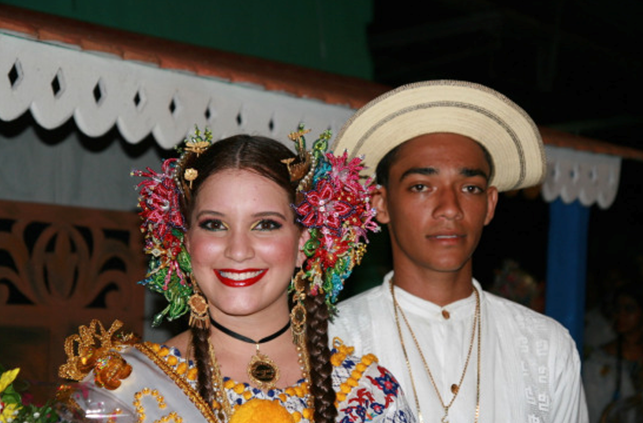
Although the accent is unusual for ethnic Chinese people – in Panama you will often hear such greetings. The person who greets you may have a dark skin-tone or a high nose bridge. However, they all have familiar Chinese surnames – and always show a natural friendly smile when they face us. This includes Nichol Wang, a young beauty in the Panamanian Cabinet, who serves as the Acting Deputy Foreign Minister – with “Wang” also being a Chinese surname.
Panama and China have officially established diplomatic relations for just over a year (in 2017, Panama switched recognition from Taiwan to the PRC), which makes us feel new about everything when we come here. For example, these various “Chinese” people (the product of inter-mixing) – always bring us a simple but sincere cordiality. Although Chinese companies are doing well in Panama, after all, Chinese people are few and far between and do not have much contact with each other. Now, it is confirmed that they are Compatriots who can meet in this country, even if it is for just a handshake. The Panamanian Chinese descendants are proud to display their Chinese ancestry and mix with other ethnic Chinese people – their excitement is touching. When we leave our home-country – we Chinese people are often isolated, discriminated against, and treated poorly. In Panama this treatment has come to an end after a hundred years.
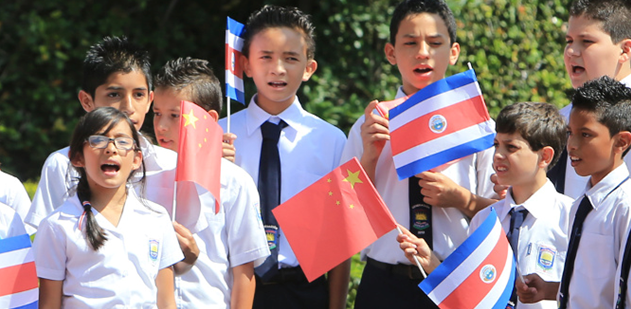
After all, our home country it is too far away. The mixed Chinese descendants are full of curiosity about “Tangshan” (and other specific places in China – the birth-place of their original Chinese ancestry) – and possess a kind of expectant gaze – when they meet people from the Chinese homeland. Such a greeting elicits a sweet and sour feeling – as we are surprised by their deep affection for an ancestral hometown they have never seen – or known.
There are no secrets to this, as it is permeated with the bitterness of the experience of being a Panamanian overseas Chinese in history. Most of the overseas Chinese in Panama today come from Chinese workers who came to the Americas in the late Qing Dynasty. Contrary to the friendly attitude of the Panamanian government towards China today, from the late Qing Dynasty to the Republic of China (1911), there have been many anti-China trends in the Americas, and Panama has also been involved in such turmoil. The main reason for this is that diligent and thrifty Chinese workers were more likely to accumulate wealth, and become the target of persecution – because they possessed no political status (such as citizenship). There was a time when Panama even legislated to deprive overseas Chinese of their property. In order to avoid the plundering of their hard-earned savings, Chinese workers in Panama (at that time) had to try to find women of other races to inter-marry with in order to transfer their property to their wives or children. This experience of racism has greatly changed the Chinese faces of Panama from that of their ancestors. Today, many look entirely “Panamanian” with only their surnames carrying a connection to the Chinese motherland and hometown.
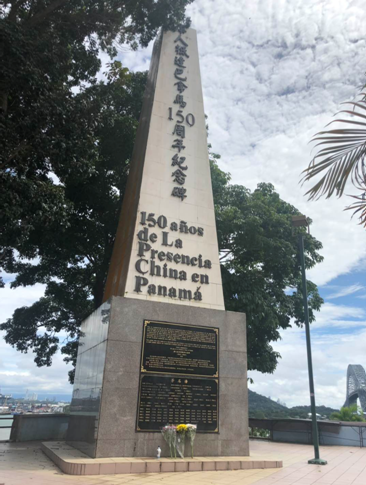
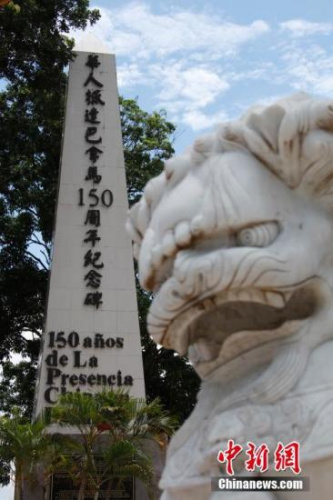
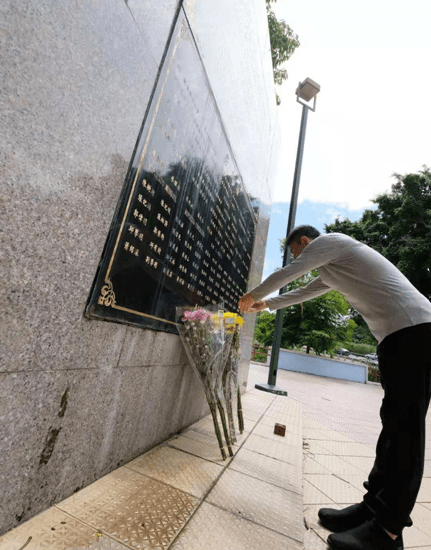
When we stand in front of the “Monument to the 150th Anniversary of the Arrival of Chinese in Panama” (raised in 2004), this feeling becomes even deeper.
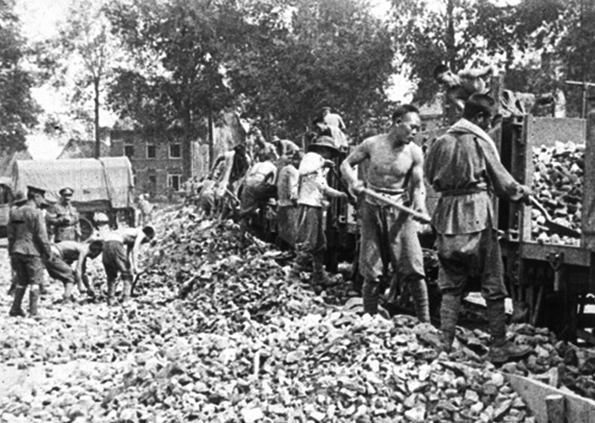
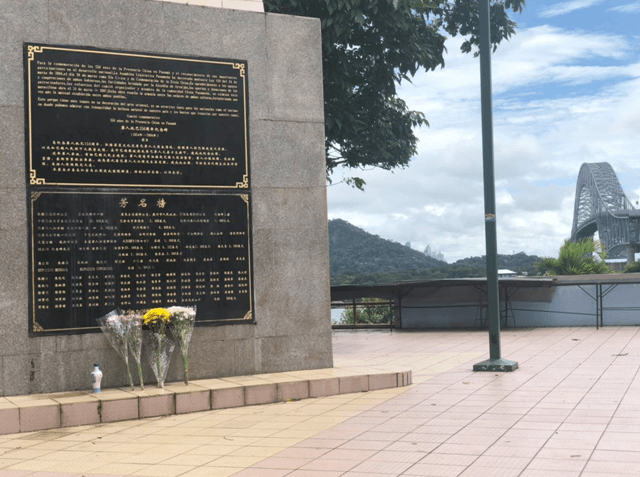
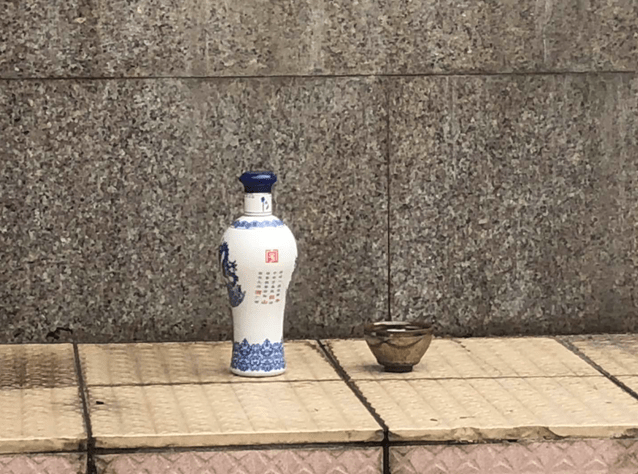
On October 12th, 2018, colleagues of the “China Internet Celebrity Global Tour to the Americas” organized by the Global Network came to this monument with wine from the Chinese homeland to pay tribute to the first generation of old Chinese workers who arrived in this country. Beginning in 1854, 20,000 Chinese labourers arrived in Panama one after another to devote themselves to the construction of the Trans-Oceanic Railway and the Panama Canal. Due to the harsh environment and cultural conflicts, many of them did not survive the building of the canal. Panama has become a popular destination for tourists from all over the world because of its tropical scenery, but it became the burial place for countless Chinese labourers during the canal construction era.
When they left, most of them were only in their twenties or thirties, and a few were over forty years old. So, we stand here, and it is difficult to call them “seniors”, even though they have long surpassed our grandfathers. We couldn’t help but want to call them – brothers. This is also one of the few Chinese words that many Panamanian Chinese people only recall in their memory, and you can imagine how important these two words were for the former Chinese workers.
Before leaving for Panama, we had decided that when we arrived here, we must go to the graves of these brothers and bring them greetings from their homeland. When we brothers leave, there is no respect in this new continent, and no one pays attention to death. We want them to know that in the hearts of the people of their homeland, the hundred years of loneliness has come to end.
![Hua An Cemetery (Thanks to Mr. Andre Li [李] - a Chinese Resident of Panama, for the Picture).](https://thesanghakommune.org/wp-content/uploads/2025/12/panama-grave-1.png)
a, we heard a story about Chinese workers.
According to the recollections of their descendants, Chinese workers continued to die of illness, accidents and suicides, and after their deaths, the colonial authorities (Panama was controlled by the United States at that time) took measures to randomly throw the bodies of Chinese workers into a certain wood, slightly covered the soil, and insert a numbered of iron stake on top. Witnessing the tragic aftermath of the brothers’ deaths, the surviving Chinese workers spontaneously organized and put together their meagre wages (only $4-8 per person per month), and after two years, they finally bought a piece of land, which was Panama’s first overseas Chinese cemetery – Hua An Cemetery. Their hard-earned money finally gave their brothers a place to rest. At first, all the Chinese workers had no families, and whenever someone died, it was the brothers who sent them to this final destination. Those who are gone, they are gone, and those who are alive continue to move forward. After a hundred years, this diligence and practicality have finally allowed their descendants to win the respect of society. Today, at least one-tenth of Panamanians are of Chinese descent, and most of them still use Chinese surnames brought from Tangshan.
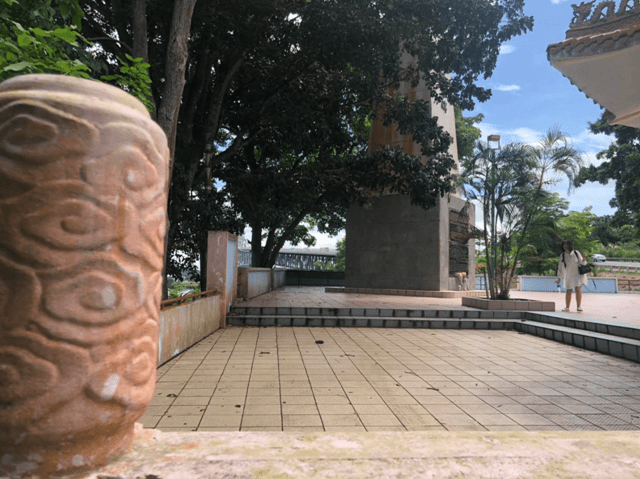
There are several cemeteries like Hua An Cemetery in Panama. They have all been established one after another in the past hundred years. The loyalty of the Chinese and the love of Chinese compatriots are all contained in this structure.
Unfortunately, Hua An Cemetery is located in a remote neighbourhood that is not very stable (early Chinese workers had no money to bury their brothers nearby). Due to the ongoing transportation construction in Panama, we arrived in Panama City and found that we could not go to Hua An Cemetery during our stay. Another option is the Chinese Workers’ Cemetery in the Canal District – where more than 100 sick Chinese workers committed suicide in the forest due to homesickness and were buried nearby. However, getting there required approval from the Canal Authority, and we were told there was no time to gain such permissions.
Late at night on the previous day, when we found that these problems could not be solved in the end, as Chinese of the same bloodline, we were so close, but so far, which made us very frustrated – how can we face the gaze of our brothers in the void?
Finally, a friend of the Panama China State Construction Company proposed a new plan. They remembered that there is another place in Panama where local Chinese are regarded as the link between Chinese and their motherland, which is the Compatriots Park.
At this moment, a Chinese friend named Tony Su called, he had been paying attention to our group and helped put us in contact with the local authorities controlling Hua’an Yizhuang, but unfortunately it was unsuccessful.
Hearing about this new location, he said that it is a memorial place that local Chinese go to every year, and in front of it is the Panama Canal where Chinese workers once worked.
So, we went – and took flowers and wine – and played the music of his hometown. When the music of our hometown sounded, we sprinkled wine on the petals, and the slightly hazy canal sky in the morning suddenly became clear. I hope that the souls of those brothers in the void can enjoy this sacrifice. As long as there is the same bloodline, the heart is the homeland. Coming and going, as we were leaving, Tony called and asked, “Have you been to Compatriots’ Park?” I couldn’t answer for a long time. Why, when I hear the word “compatriot”, my heart is so sour? Is the eye so obscured? Even if it is at the ends of the earth, even if it is a hundred years, when we hear these two words, we are brothers. Brothers, we will come again, definitely.
List of “China Internet Celebrities Global Tour Americas”:
Ding Gang (丁刚), Zhao Pu (赵普), Su Qin (苏芩), Zhang Peng (张鹏), Zhou Jiying (周骥莹), Liu Gehuan (刘舸欢), Sa Su (萨苏)
Thanks to the friends of the Panama branch of China State Construction Corporation, they provided flowers for us to complete this memorial activity and dispatched vehicles to help us solve the transportation problem of round-trip travelling.
Editor-in-charge: Zhao Jiandong
Copyrighted works, without the written authorization of the global network huanqiu.com, reproduction is strictly prohibited, violators will be held legally responsible.
Chinese Language Article:
百年不孤独——拜谒巴拿马运河上的华工之碑
2018-10-13 23:38 萨苏 环球网
在巴拿马跨越运河的大桥一侧,路边有一个不大的花园,入口处镶嵌着“中巴公园”的字样,而当地华侨华裔更愿意把它称作“同胞公园”。今天,当我们带着花束走到它的门前,心中百感交集。
“你好,我姓苏。”
“你好,我姓王。
口音虽然有些怪异,但在巴拿马,你经常会听到这样的问候。对你打招呼的,可能有着黝黑的皮肤,或者高高的鼻梁。然而,他们都有着我们熟悉的中国姓氏,面对我们总会露出天然的亲切笑容。包括尼科尔.王,巴拿马内阁年轻的美女代副外长,也有这样一个中国姓氏。
巴拿马与中国正式建交刚刚一年多一点,让我们在来到这里时对一切都充满新鲜感,比如,这些各式各样的“中国人”– 他们带给我们的,是一种淳朴的亲切。虽然中国企业在巴拿马的业务开展得很好,但毕竟在平时大家接触不多。如今,确认了是来自母国的同胞,哪怕只是握一握手,他们那种激动之情也令人动容。他们对母国来人的期待,或许已经超过一百年。
毕竟太遥远了,他们对“唐山”充满了好奇,那种期待的目光,让我们这些来自故国的人们,温暖而又酸楚,我们不知道用什么,能够抚慰他们对于祖辈故乡的深情。
这里面并没有什么秘密,反而渗透着巴拿马华侨华裔在历史上的辛酸。今天巴拿马的华侨华裔大多出自清末来到美洲的华工。与今天巴拿马政府对中国的友好态度相反,从清末到民国,美洲曾发生多次反华风潮,巴拿马也曾卷入这样的风波。这其中主要的原因是勤俭的华工更容易积蓄财富,但政治上没有地位,便经常成为迫害的对象。曾经有一段时间,巴拿马甚至立法剥夺华侨的财产。为了避免血汗积蓄被掠夺,那时在巴拿马的华工不得不尽量寻找其他种族女子通婚,以便将财产转移到妻子或子女的名下。这使巴拿马的华裔面孔与祖先发生了极大的变化,只有他们的姓氏,承载着对母国的眷恋和对故乡的相思。
2018年10月12日,环球网组织的“中国网络名人环球行美洲站”同仁们,带着故国的酒,来到这座纪念碑前,祭奠第一代到达这个国度的老华工们。从1854年开始,陆续有两万名中国劳工到达巴拿马,投入到对两洋铁路和巴拿马运河的建设。由于环境严酷和文化冲突,他们中的很多人没有能够活到运河的贯通。巴拿马因热带风光而成为世界各地旅游者趋之若鹜的地方,这里在修筑运河时代,却是无数中国劳工的埋骨之处。
他们走的时候,大多只有二三十岁,少数超过四十岁。所以,我们站在这里,很难用“前辈”来称呼他们,尽管他们的年龄早已超过我们的祖父。我们无法抑制地想叫他们– 兄弟。这也是很多巴拿马华裔仅存在记忆中的几个中文词语之一,可以想象这两个字在曾经的华工中有着怎样重要的意义。
在启程到巴拿马之前,我们已经决定,到了这里,一定要到这些兄弟的墓前,给他们带去故国的问候。我们这些兄弟们走的时候,在这片新大陆上生没有尊重,死无人关注。我们希望他们知道,在故国人们的心里,他们百年不孤独。
去哪里祭奠他们的灵魂呢?早在来巴拿马之前,我们便听到一个关于华工的故事。
根据他们的后代回忆,不断有华工病死,事故身亡和自杀,而他们死去后殖民地当局(当时巴拿马为美国所控)采取的措施,便是随意将华工遗体丢到某一片树林,略略覆土,顶上插一根带有编号的铁桩。目睹兄弟们死后的惨象,幸存的华工自发组织起来,将微薄的工钱(每个月每人拿到手的只有4-8美元)凑在一起,足足凑了两年的时间,终于买了一片地,便是巴拿马第一片华侨墓地– 华安义庄。他们的辛苦钱让客死异乡的兄弟们终于有了一片长眠之地。最初所有的华工都没有家庭,每当有人离世,都是兄弟们送他们到这最后的归宿。走了的,就走了,活着的,继续前行。一百年下来,这份勤奋和平实,终于让他们的后代赢得了社会的尊重。如今,至少十分之一的巴拿马人带有中国血脉,他们中的大多数,依然使用着从唐山带来的中国姓氏。
如华安义庄这样的墓地,在巴拿马还有好几个。都是这百多年来,陆续建立的。中国人的义气,中国人的同胞之情,都在这方寸之间。
可惜的是,华安义庄位于一处不甚安稳的偏僻街区(早期的华工无钱在更近的地方安葬他们的兄弟)。由于巴拿马正在进行的交通建设等原因,我们到达巴拿马城之后,才发现无法在停留期间前往华安义庄。另一个可选择的地方是位于运河区内的华工墓林– 那里当年最悲惨的时候,曾有一百名以上的生病华工,因思乡同时在林中自杀而亡,并被就近埋葬。然而,去那里需要运河管理局的批准,我们到达后的时间太紧,已经来不及了。
当前一天的深夜,发现这些问题最终无法解决的时候,作为同样血脉的中国人,已经近在咫尺,却咫尺天涯,让我们十分沮丧– 我们能怎样面对虚空中这些兄弟们的目光呢?
最后,还是巴拿马中建公司的朋友提出了一个新的方案。他们想起,当地华裔在巴拿马还有一处被视为华裔和母国纽带的地方,这就是同胞公园。
正在这时,一位名叫Tony.苏的华裔友人打来电话,他一直关注着我们一行,也曾帮我们联系前往华安义庄,可惜未能成功。
听到这个新的地点,他说,那里是当地华裔每年都去的慰灵之地,前面便是华工们曾经工作过的巴拿马运河,远眺过去,若是目光能够穿过太平洋,尽头便是故乡。
于是,我们便去了。
当故乡的音乐响起,当我们把酒液洒在花瓣上的时候,清晨略带阴霾的运河天空,忽然变得清朗。
希望虚空中那些兄弟们的灵魂,能够享用到这份祭奠。只要有同样的血脉,心中便是故国。
来去匆匆,当我们离开的时候,Tony打来电话,问:“你们去同胞公园了吗?”
我久久不能回答。
为什么,听到“同胞”这两个字的时候,心是这么的酸?眼是这样的涩?
哪怕是天涯海角,哪怕是百年时光,听到这两个字,我们就是兄弟。
兄弟们,我们还会再来,一定。
环球网“中国网络名人环球行美洲站”名单:
丁刚,赵普,苏芩,张鹏,周骥莹,刘舸欢,萨苏
感谢中建公司巴拿马分公司的朋友,为我们完成这一拜谒祭奠活动提供鲜花,并出动车辆帮助我们解决往返的交通问题
 SANGHA KOMMUNE (SSR)