
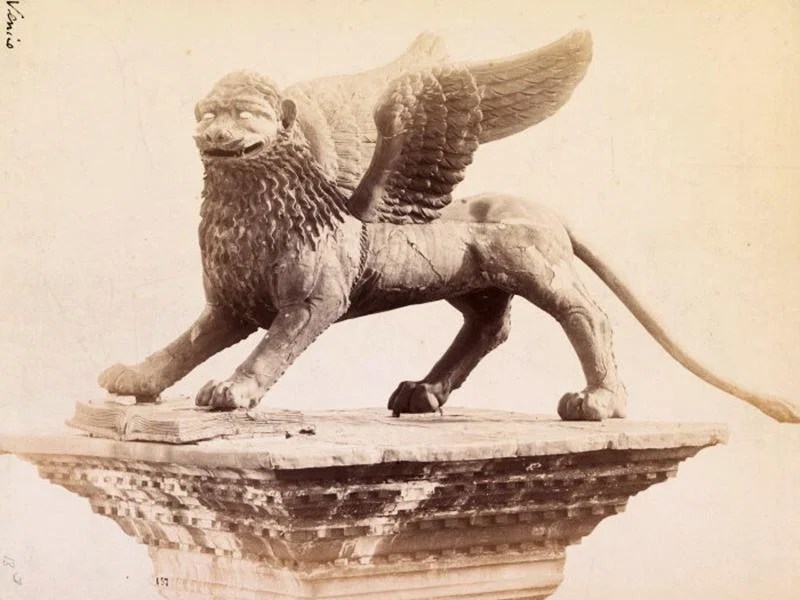
Blogger’s Note: Some years ago, I carried-out an extensive study of the life and work of British academic John Ruskin (1819-1900). Indeed, I visited his home (Brentwood House) situated in the Lake District (Cumbria) of the (Northern) UK at least twice (perhaps more) – which included a number of visits to his ornate grave in the nearby St Andrew’s Church. He was a great advocate for the welfare of the working-class, and believed all working-class people should be educated so that they could read and write – as well as learn a proper trade. Indeed, Ruskin self-financed a School for Workers in nearby Coniston – one of the first in the country – which is today a library if memory serves me right (I visited around 20-years ago). I wrote a pamphlet regarding the design and meaning of John Ruskin’s grave – which featured a survey of his broader artistic and philosophical work (I believe a copy of which was once featured in the John Ruskin Museum) – and this is where I first came into contact with St Mark’s “Lion of Venice”. At the time, I think the general idea was that this odd-looking metal construct had “Persian” origins (the lion is often featured in pre-Islamic Persian art) – with no one in the West knowing for sure. The problem was that even people of Persian ethnicity could not confirm this lion’s origin. I suspect Chinese experts had their suspicions that the deep structure of the Lion had Chinese origins – but this had to be proved scientifically before anyone in the West would listen. It is odd that Venice possesses no (historical) written records as to the origin of this Lion. Of course, there is the usual (Italian) speculation regarding Marco Polo (13th century – though many historically question this narrative) – even though the Lion has its origins somewhere between the 7th-10th centuries CE of the Tang Dynasty. It would seem that between the Tang and (Islamic) Yuan Dynasties (around six-hundred years) this Lion sat dutifully outside a temple (or a tomb) – before being transported to the West and extensively “altered” to suit Western sensitivities – although it is highly likely that very few Europeans knew what an African (or “Indian”) lion actually looked like at the time (was this Lion brought to Venice on one of China’s Treasure Fleets and presented to the Venetians as a gift?). As matters stand, Italian historians have idea when the statue arrived in Venice, when and where the alterations were carried-out, or who placed the finished Lion on a stone column in the centre of St Mark’s Square – and when? Most Chinese lions I have seen are sat-down and I have never seen such an object stood-up on all fours. It would be interesting to see what the Lion in question looked like before the alterations. Finally, it is interesting that the British author (and former Submarine Commander in the Royal Navy) – Gavin Menzies (1937-2020) – wrote a book entitled “1434: The Year a Chinese Fleet Sailed to Italy and Ignited the Renaissance” (2008). He discusses the Chinese delegation that met with Pope Eugenius IV in Florence (1434) – and suggests that China had some type of diplomatic connection with the City States (which included Venice). Those who criticise Menzies’ work – are the same people who would never have allowed for the speculative idea that St Mark’s Lion could be of “Chinese” origin. Given that this Lion arrived in Venice around 1264 – the 1434 Chinese Mission occurred only 166-years later. ACW (11.9.2025)
China Daily 2025-09-10
The famous and mysterious Winged Lion of Venice statue, which has watched over the beautiful Italian water city for more than 700 years, was made in China, scientists have discovered.
The ancient, 3,000-kilogram bronze lion that sits atop a granite column in Venice’s iconic St. Mark’s Square had long been thought to have been made in the “near East”, likely in Syria or the Armenian Kingdom of Cilicia, around the year 300 BC.
However, scientists at Italy’s University of Padua, who have analyzed the metal it is made from, are now certain that the statue was created in China during the Tang Dynasty (618-907) for use as a tomb guardian and subsequently taken to Europe, where it was modified to fit European expectations.
The startling discovery was revealed in a scientific study published in the latest edition of the journal Antiquity.
“It is possible that Marco Polo’s father and uncle, during the four years they spent at the court of Kublai Khan during their first journey, were responsible for the acquisition of the sculpture,” the researchers said, noting that the trip by the European explorers to the court of the ruler — who was also known as Emperor Shizu of Yuan — likely took place between 1264 and 1268.
In addition to deducing that components of the bronze were extracted from the Lower Yangtze River basin, the scientists observed that the 4-metre-long, 2.2-metre-tall statue originally featured horns and longer ears, with a nose resembling that of a Chinese lion statue rather than a European one.
They said it looks as if the statue was “discreetly and labouriously refitted” to make it look more like the winged lion, the holy emblem of St. Mark, the patron saint of Venice.
In addition, they said that the “puzzling absence of written information” about the statue’s early years in Europe means “the intention and logistics behind its journey to Venice remain elusive and open to interpretation”.
“If the installation … was meant to send a strong, defensive political message, we can now also read it as a symbol of the impressive connectedness of the medieval world,” they added.
They speculated that the statue may have been transported more than 9,500 kilometres along the Silk Road trading route between Asia and Europe.
“Venice is a city full of mysteries, but one has been solved,” Massimo Vidale, from the University of Padua, told the Press Association.
However, “when the sculpture arrived in Venice, where it was reworked, who did it, or when it was erected on the column where it is still visible today” remain unknown, he said.
Despite the uncertainties, the scientists say that lead isotope analysis indicates there is no doubt the statue originated from China, and that it had the posture and features of a tomb guardian.
Editor: Mo Honge
 SANGHA KOMMUNE (SSR)